
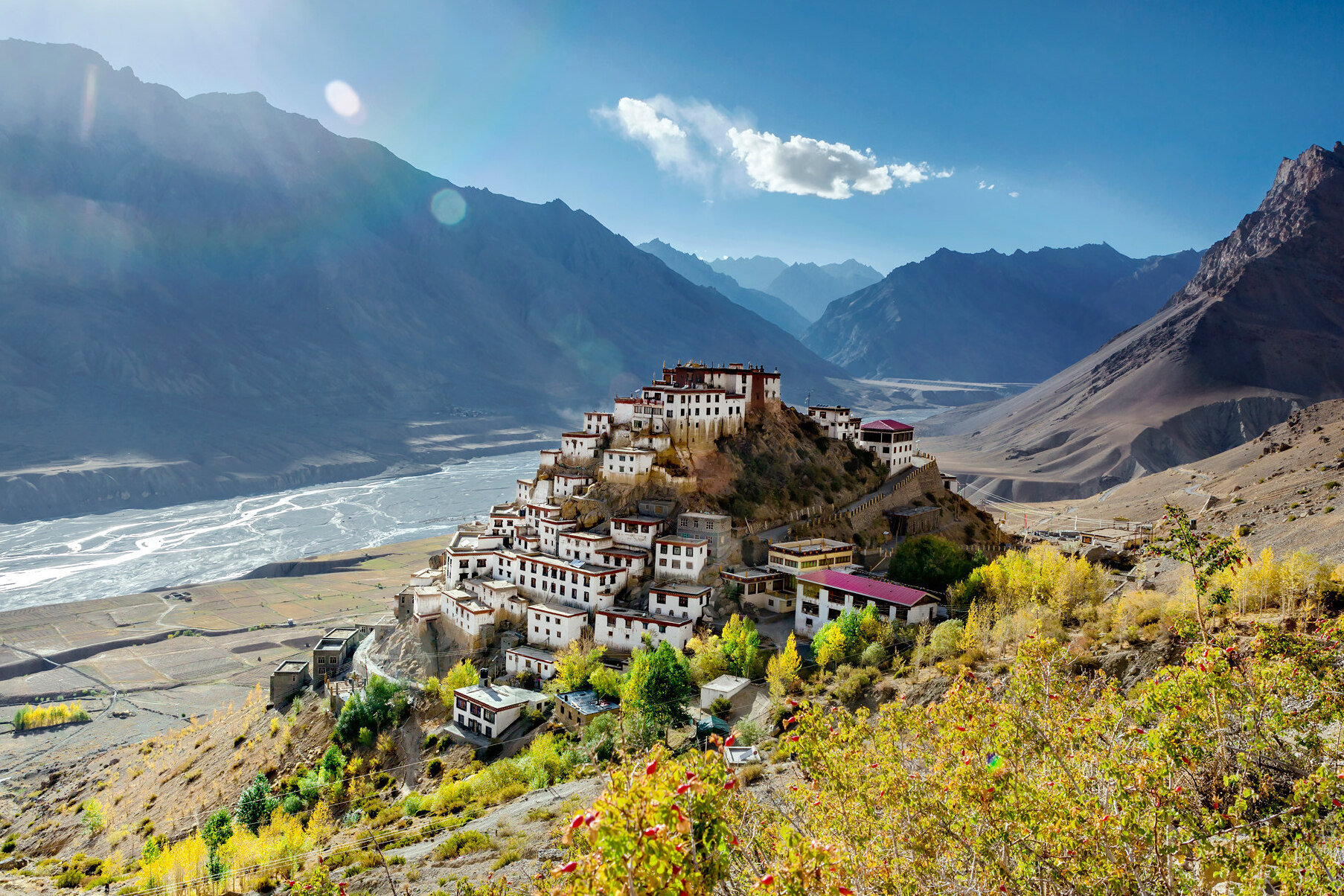

At an altitude of 3,810 meters (12,500 ft), Spiti Valley is a hidden gem nestled in the Himachal Pradesh region of northern India. Often overshadowed by the more frequented landscapes of Ladakh, Spiti is a mesmerizing blend of towering mountains, ancient monasteries, and vibrant local culture, offering a unique insight into the Buddhist heritage and the rich tapestry of life that thrives in this cold desert valley.
History and Origins
The history of Spiti Valley is as intricate as its rugged terrain. Believed to have been settled over a millennium ago, its name translates to "the middle land," reflecting its position between Tibet and India. The valley played a significant role in the ancient Silk Route, facilitating trade between the Indian subcontinent and Central Asia. One of the most notable historical figures linked to the region is Lha-chen Gyalpo, who is credited with establishing the Kingdom of Spiti in the 15th century. The region's historical tapestry is further enriched by the influence of Tibetan Buddhism, which took root here around the 7th century, leading to the construction of breathtaking monasteries like Key Monastery and Tabo Monastery, often referred to as the "Ajanta of the Himalayas" due to its stunning frescoes.
Art and Architecture
Spiti's architectural style is a stunning amalgamation of Tibetan influences and local craftsmanship. The whitewashed walls of the monasteries stand in stark contrast to the blue skies and brown mountains, creating a visually arresting landscape. Key Monastery, perched on a hilltop, features intricate murals depicting Buddhist deities and scenes from the life of the Buddha. The Tabo Monastery, founded in 996 AD, is home to ancient wall paintings that are over a thousand years old. These artworks are not merely decorative; they serve to narrate spiritual teachings and embody the region's cultural significance. The intricate woodwork and stone carvings found in local homes reflect the community's deep connection to their environment and their faith.
Local Culture and Traditions
The culture of Spiti is as captivating as its scenery. The local communities, primarily of Tibetan descent, uphold their traditions with pride. Festivals like Losar, the Tibetan New Year, are celebrated with vibrant dances, music, and communal feasting, showcasing the rich tapestry of life in this remote valley. Other important festivities include the Chham Dance, performed at monasteries during festivals, which brings together the community in a celebration of spirituality and heritage. The locals are known for their hospitality, often inviting travelers to share in their simple but hearty meals, which are a reflection of their agrarian lifestyle.
Gastronomy
Spiti's gastronomy is a testament to its unique geography and culture. The high-altitude conditions shape the local diet, heavily influenced by Tibetan cuisine. Thukpa, a noodle soup filled with vegetables and meat, is a warming dish that nourishes travelers against the cold. Momos, steamed or fried dumplings filled with meat or vegetables, are a popular snack that showcases local flavors. The region is also known for its traditional butter tea, or po cha, made from tea leaves, butter, and salt, providing a rich source of energy for locals. Additionally, chura, a local cheese made from cow or yak milk, is often enjoyed with barley flour, further highlighting the agricultural practices of the valley.
Lesser-known Curiosities
While Spiti is known for its breathtaking landscapes and monasteries, it holds a treasure trove of lesser-known curiosities. For instance, the Langza Village, famous for its fossil remains, is often called the "fossil village" due to the ancient marine fossils found in the surrounding hills. The valley is also home to the Kunzum Pass, a high mountain pass that offers stunning views but is often missed by travelers due to its challenging access. Interestingly, Spiti is one of the few places in India where one can see bitter apricot trees, which thrive in this harsh climate and produce a unique variety of apricots celebrated for their flavor.
Practical Visitor Information
The best time to visit Spiti Valley is from May to October, when the weather is milder, and the roads are more accessible. The journey to Spiti is an adventure in itself, often requiring travelers to navigate through Kinnaur, making the trip even more memorable. To fully experience the valley, consider staying in local homestays where you can immerse yourself in the culture and traditions of the Spitian people. Be sure to pack warm clothing, as even summer nights can be chilly, and carry cash, as ATMs are scarce.
With its breathtaking landscapes, rich history, and vibrant culture, Spiti Valley is a destination waiting to be explored. For a tailored experience that captures the essence of this stunning region, consider using the Secret World app to plan your personalized itinerary.


