


The skeletal structure that rises on the banks of the Motoyasu River needs no explanation. The gutted metal dome, the blackened brick walls barely holding up the empty windows: the former Hiroshima Prefectural Industrial Promotion Hall tells the story of what happened on August 6, 1945, when the atomic bomb exploded about 600 meters away and at about 600 meters in height. The building was almost directly under the hypocenter, the ground zero of the explosion, and that position paradoxically saved it: the shock waves, propagating laterally, did not bring down the vertical walls as happened to the surrounding buildings.
Designed by Czech architect Jan Letzel and inaugurated in 1915, the building was one of the most modern in Hiroshima, with its characteristic copper dome dominating the city center. Today, preserved exactly as it was immediately after the bombing, it has been listed as a UNESCO World Heritage Site since 1996 and serves as the focal point of the Peace Memorial Park, a green area of about 12 hectares in the heart of the city.
What to see in the Peace Memorial Park

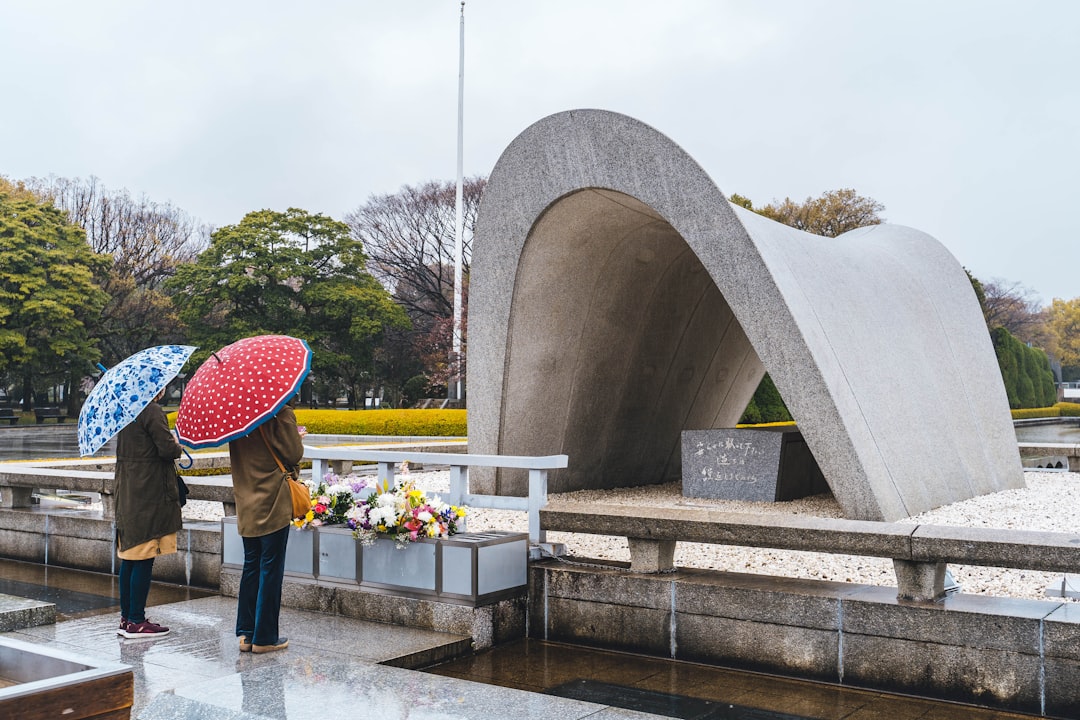
Walking in the park, the first thing that strikes you is the relative silence compared to the traffic of the surrounding city. The central visual axis is carefully designed: from the Flame of Peace, lit in 1964 and which will burn — according to the promise of the founders — as long as there are nuclear weapons in the world, the gaze flows through the arch of the Cenotaph of the Dead to the Atomic Bomb Dome in the background. This perspective is intentional and powerful.
The Children's Peace Monument, dedicated to Sadako Sasaki, the girl who died of leukemia in 1955 due to radiation and who became a symbol of peace with her thousand paper cranes, is surrounded by thousands of colorful crane garlands donated by schools from all over the world. The vibrant colors contrast with the gravity of the place so that it is not easily forgotten.

The Hiroshima Peace Memorial Museum: entering history
The Hiroshima Peace Memorial Museum, located within the park, underwent a significant renovation completed in 2019. The entrance ticket costs 200 yen for adults, a symbolic amount that makes the visit accessible to everyone. Inside, the exhibition path has been redesigned to center on the individual stories of the victims: personal items, photographs, effects found among the rubble, torn clothing.

One of the most difficult exhibitions to look at is the one showing the steps of the Hiroshima Bank, where the shadow of a seated person was imprinted on the stone after the heat of the explosion instantly incinerated them. The museum does not seek to shock for the sake of shocking: every displayed item has a name, a story, a family. This approach makes the experience deeply human rather than merely documentary.
The Dome Up Close: Details You Can See on Site

As you approach the Genbaku Dome — this is the Japanese name of the structure — you notice the details that photographs do not convey. The metal beams of the dome are rusty but held in place by almost invisible structural reinforcement interventions. The bricks of the walls still show the original burn marks. A perimeter fence prevents entry into the building, but the close distance allows you to observe every detail of the structure.
On the river side, the view of the dome reflected in the waters of the Motoyasu is one of the most photographed images in Japan. At sunset, when the orange light touches the metal beams, the visual effect is of an almost unbearable beauty, given the nature of the place.
Practical tips for the visit
The park is open 24 hours a day and admission is free. The museum is open from 8:30 AM to 6:00 PM (extended hours in summer, reduced in winter), closing on the third Monday of December. To get there, from JR Hiroshima Station take the tram on line 2 or 6 to the stop Genbaku Dome-mae: the journey takes about 15 minutes and costs less than 200 yen.
The best time to visit is early in the morning, when school groups have not yet filled the park's paths. Allow at least two hours for the museum and an hour for the park: rushing would be a mistake. On August 6, the anniversary of the bombing, the official memorial ceremony takes place: a unique experience, but it requires arriving very early to find a spot.


