
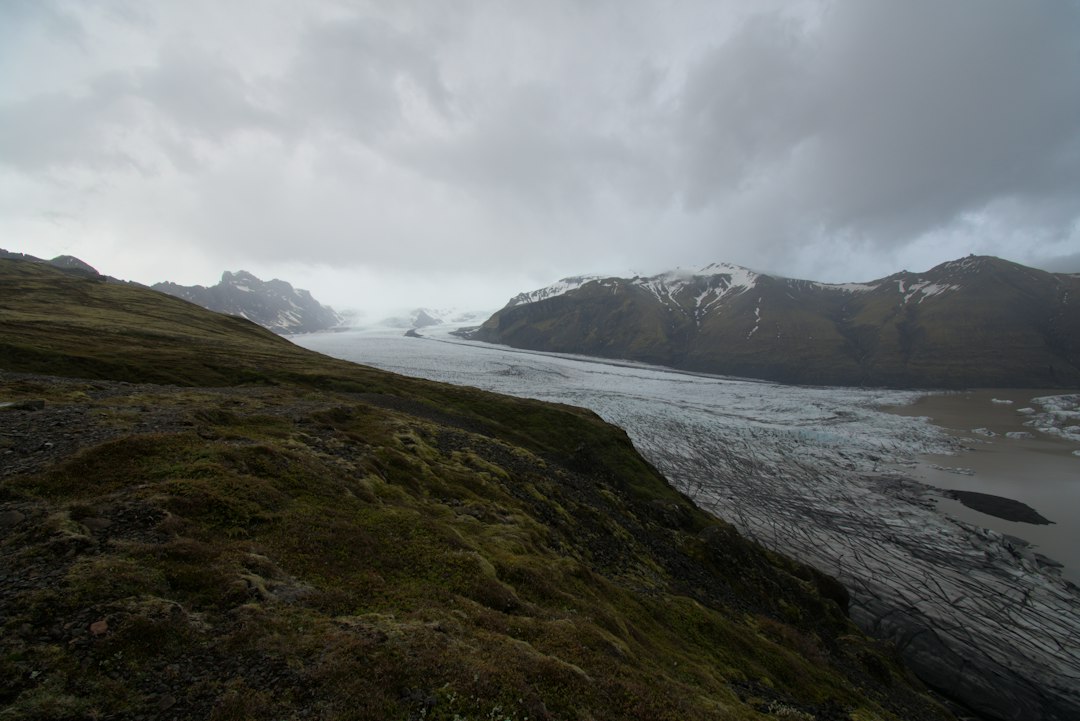

The silence is the first thing that strikes. Then, slowly, the eyes adjust and the walls of the cave begin to glow: a deep blue, almost unreal, fading to turquoise in the areas where the ice is thinner and light filters from above. You find yourself inside Vatnajökull, the largest glacier in Europe by volume, covering about 8,100 square kilometers — almost 8% of the entire Icelandic surface. What you see is not an artificial scenery: it is ancient ice, compressed for centuries, that has expelled almost all the air inside it, becoming so dense that it absorbs the red wavelengths of light and returns only the blue.
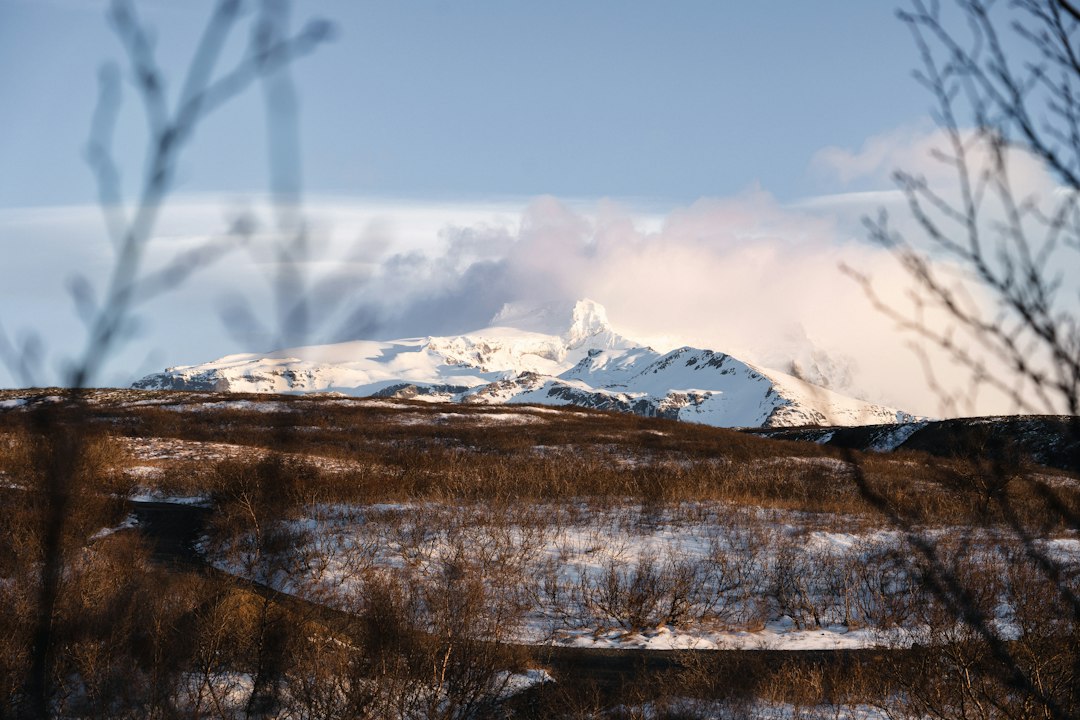
The ice caves that form in the Skaftafell area, within the Vatnajökull National Park in southern Iceland, are not permanent structures. They are created every winter thanks to the action of meltwater flowing beneath the glacier during the summer, carving natural tunnels that solidify with the cold temperatures between November and March. Every year the caves change shape, some collapse, new ones open. Visiting them means entering an environment in constant transformation, geologically alive.
How a natural ice cave forms
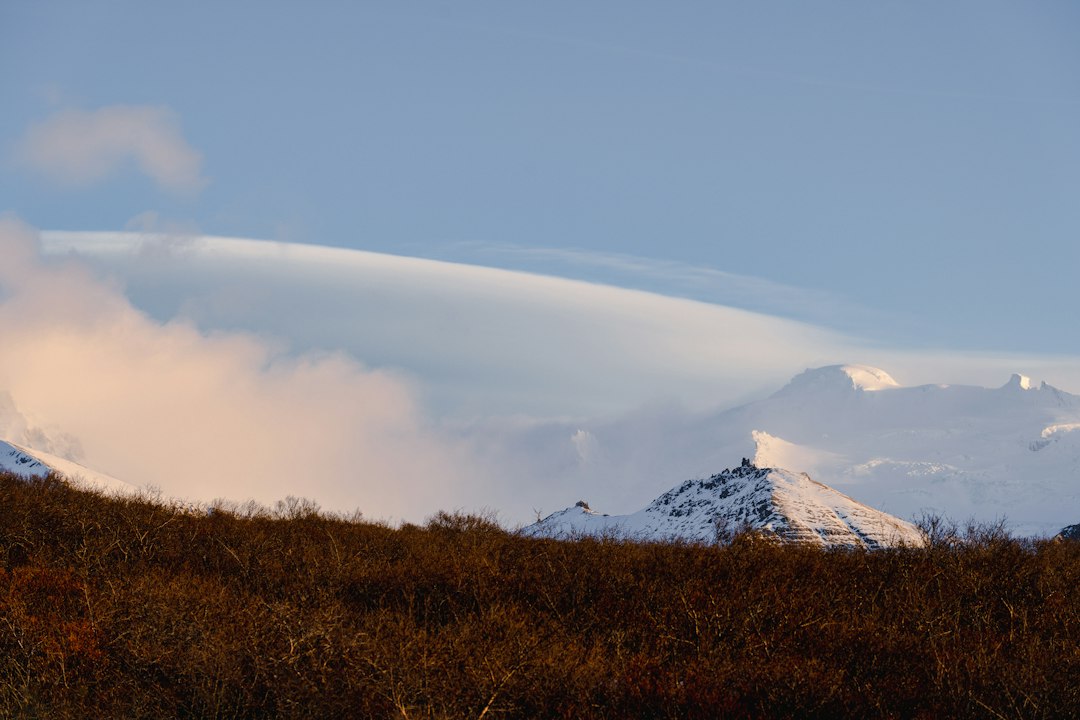
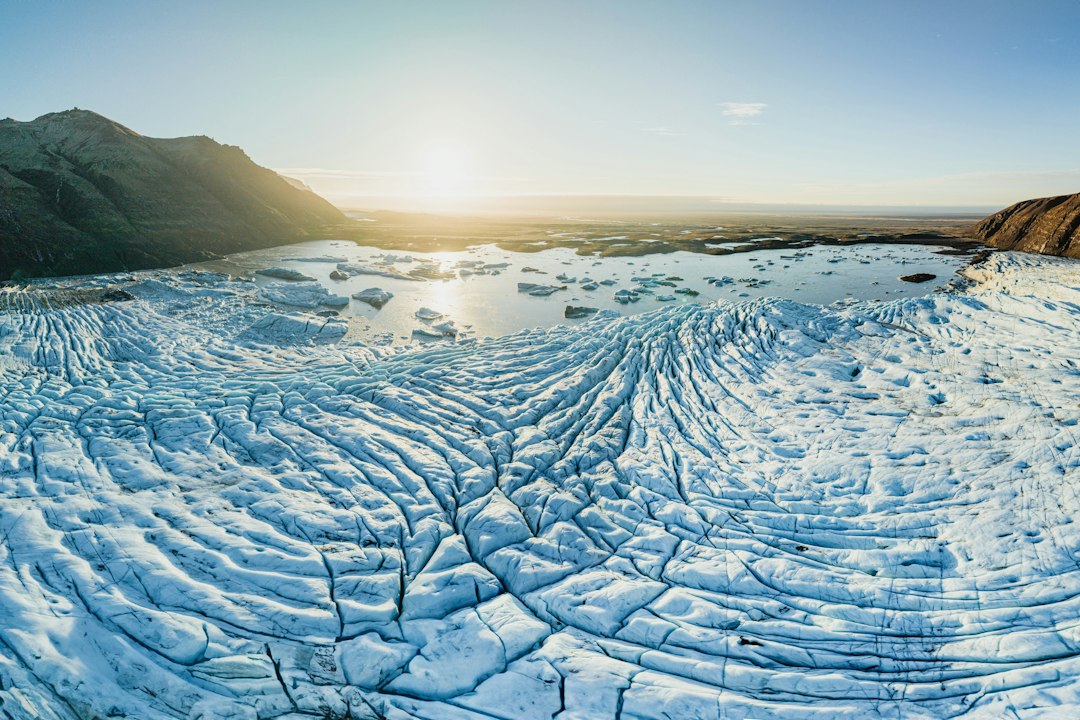
The process that generates these cavities is linked to the seasonal cycle of the glacier. During the summer months, meltwater flows along the surface and penetrates the cracks in the ice, eroding increasingly wider channels at the bottom of the glacier. When temperatures drop in autumn, these channels stop receiving water and empty out, creating walkable tunnels. The walls, now devoid of air bubbles due to the pressure accumulated over decades or centuries, take on that characteristic intense blue coloration that makes every photograph hard to believe is real.
The darker ice, almost black in certain spots, contains instead volcanic ash layered over time — a reminder that Iceland is built on one of the most volcanically active areas on the planet. Beneath Vatnajökull lie several active volcanoes, including Grímsvötn, which has erupted multiple times during the twentieth century. These dark layers visible in the walls of the cave are a kind of geological archive readable to the naked eye.
The physical experience of the visit
Entering an ice cave is not a casual excursion. The floor is icy and slippery, the walls come close together at certain points forcing you to bend down, and the temperature inside remains around zero degrees even on the least cold days. The guides provide crampons to attach to your boots — an essential tool — and a protective helmet. Moving slowly is crucial, not only for safety but because each step forward reveals a different detail: an air bubble trapped a hundred years ago, a crack that lets you glimpse the sky, a reflection that transforms the ice into something resembling Murano glass.
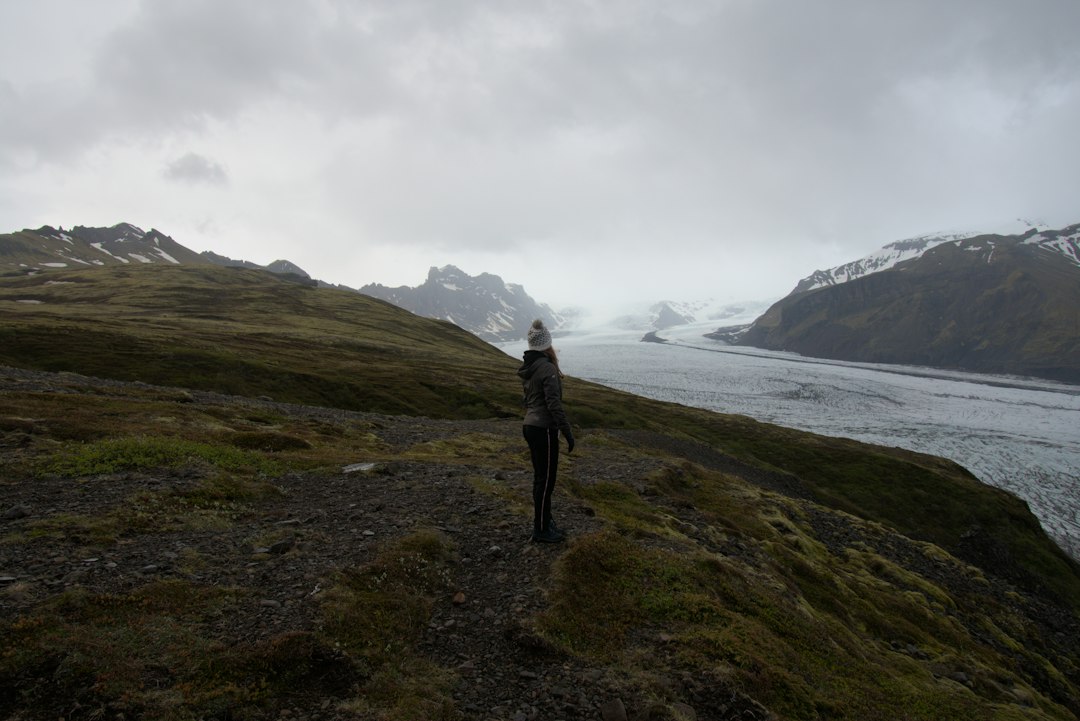
The light changes continuously during the visit. In the central hours of the Icelandic winter day — which in December means just four or five hours of sunlight — the brightness filtering through the ice is diffuse and uniform, almost cinematic. Bringing a camera with good performance in low-light conditions is advisable, but simply standing still for a few minutes without photographing allows you to perceive the quality of silence and light more directly.
Practical information for organizing the visit
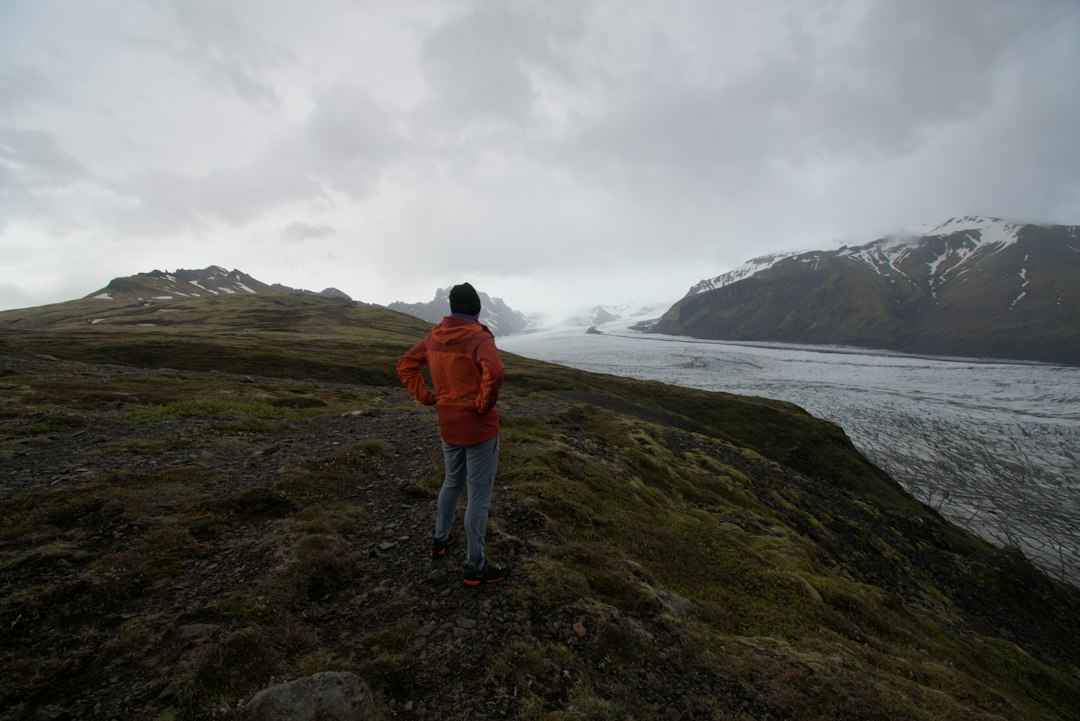
The natural ice caves of Skaftafell are accessible exclusively with certified guides, for safety reasons related to the structural instability of the ice. Several agencies operate in the area, including some based in the nearby town of Vík or directly at the Skaftafell visitor center. The average price of a guided tour of the caves ranges from 70 to 120 euros per person, depending on the duration and difficulty level of the chosen route.
The ideal time to visit is between December and February, when the temperatures ensure the stability of the caves and the short days create particularly evocative lighting conditions. It is strongly recommended to book weeks in advance, as groups are limited for safety reasons and spots fill up quickly. Skaftafell can be reached by traveling along the Ring Road (Road 1) that crosses Iceland: the park's visitor center is located about 330 kilometers from Reykjavík, a journey of about three and a half hours under normal road conditions. In winter, it is essential to check the weather conditions before departing and to have a vehicle suitable for snowy roads.
Why the trip is worth it
There are not many places in the world where you can literally walk inside a glacier of this scale. Vatnajökull is not only the largest glacier in Europe: it is a complex ecosystem, a climate archive, a landscape that changes measurably every year. The ice caves of Skaftafell offer a physical and visual access point to all of this, transforming abstract data about geology and climate into something that can be touched with gloves and seen shimmering just a few centimeters from the eyes.
Those who have visited these tunnels often report the same feeling: that of being in a place that has existed before us and will continue to transform after. The blue of the walls is not decorative — it is the color of compressed time. And it is hard to leave that cave without taking away something akin to wonder.


