
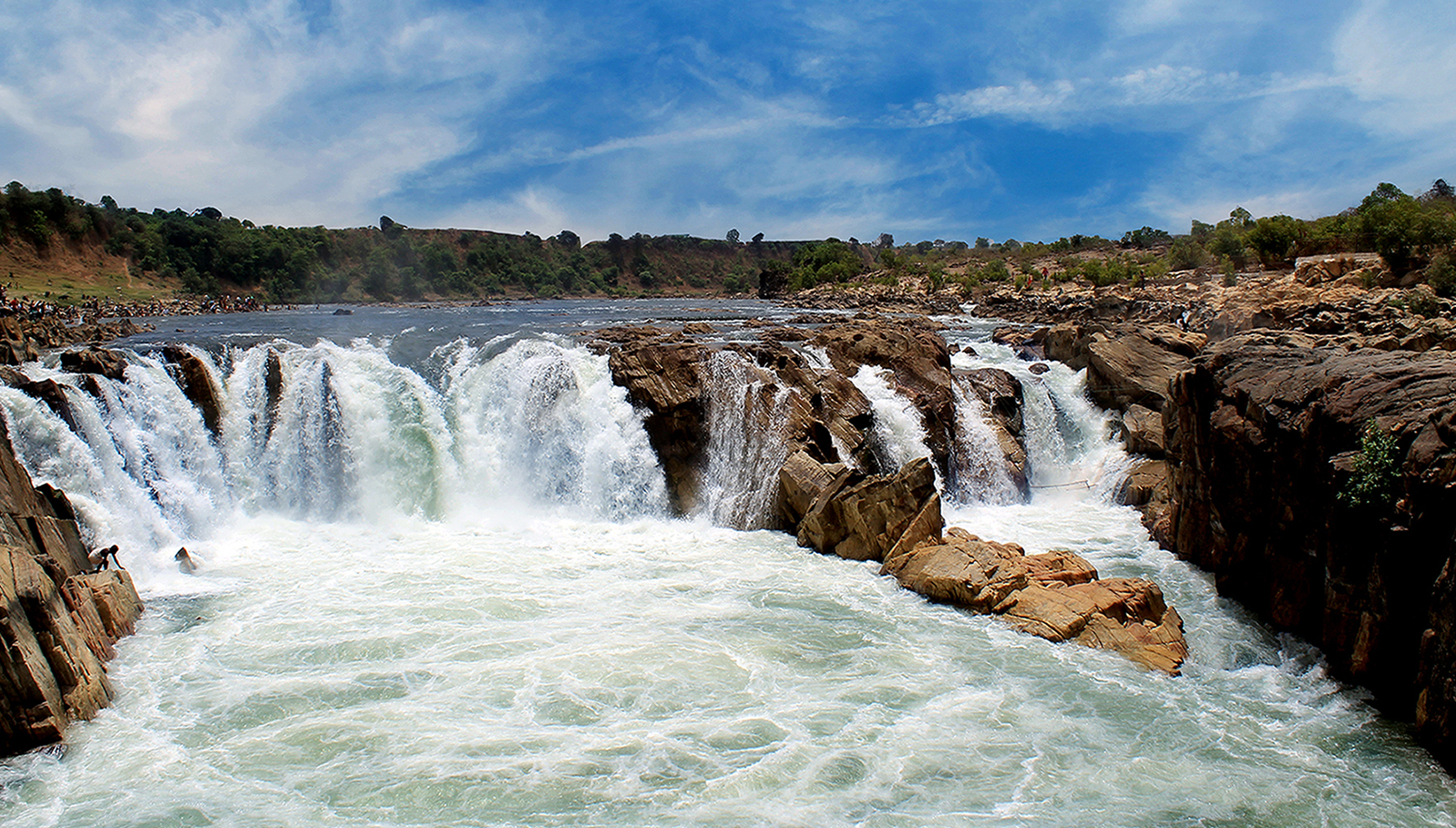

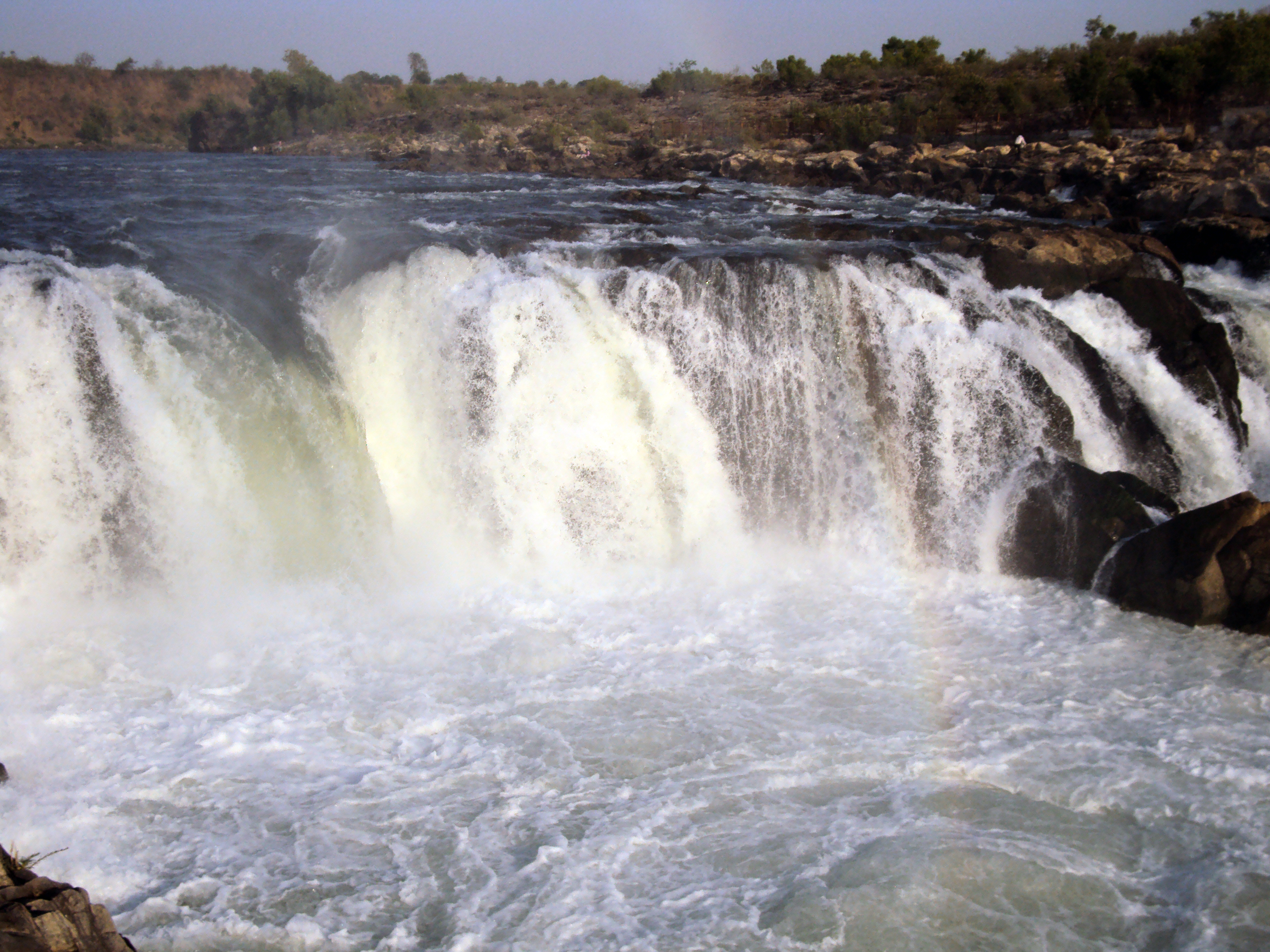
Amidst the rugged landscape of Madhya Pradesh, the Dhuandhar Falls emerge as a spectacular natural wonder, their name evocative of the misty spectacle they create. Derived from the Hindi words "dhuan" meaning smoke and "dhar" meaning flow, these falls are a breathtaking cascade where the Narmada River plummets nearly ten meters, enveloping the area in a perpetual mist. The falls are situated near the city of Jabalpur, a region steeped in both history and natural beauty.

The roots of the Dhuandhar Falls stretch deep into history, with the Narmada River itself being one of India's seven sacred rivers. The river has been a cradle of ancient civilizations, evidenced by the myriad archaeological sites dotting its banks. The importance of the Narmada dates back to the prehistoric era, with the river serving as a lifeline through the ages. The falls are part of the Marble Rocks region, a geographical marvel where the river has carved a stunning gorge through the soft, pristine marble over millennia. These marble cliffs, shimmering in the sunlight, have been the muse for countless artists, drawing visitors with their ethereal beauty.
The artistic allure of Dhuandhar Falls is deeply intertwined with the surrounding Marble Rocks, which rise to a height of about 100 feet on either side of the river. The region has inspired artistic expression for centuries, particularly in the form of intricate marble sculptures and carvings. These artworks often depict scenes from Hindu mythology and are prized for their craftsmanship and detail. The nearby Chausath Yogini Temple, dating back to the 10th century, offers an example of the architectural prowess of the era, with its circular design and intricate stonework providing a window into the past.
Culturally, the area around Dhuandhar Falls is a vibrant tapestry of traditions and customs. The falls are part of the Jabalpur district, a city with a rich cultural heritage. Local festivals such as Narmada Jayanti, which celebrates the birth of the river, draw pilgrims and tourists alike. During this festival, the riverbanks come alive with rituals, music, and dance, creating an atmosphere of spiritual fervor. The Navratri festival is also a time of great celebration, with the local community engaging in traditional dances such as Garba and Dandiya.
Gastronomically, the region offers a delightful array of local flavors that reflect the diversity of Madhya Pradesh. Visitors can savor traditional dishes like Bhutte ka Kees, a spicy corn dish, and Poha, a popular breakfast item made from flattened rice. The area is also known for its sweet delicacies like Jalebi and Mawa Bati, which provide a sugary counterpoint to the savory offerings. The influence of Marwari, Gujarati, and Maharashtrian cuisines is evident, making the local gastronomy a melting pot of flavors.
While the Dhuandhar Falls are a popular tourist destination, there are lesser-known aspects that add depth to the experience. For instance, the falls are best viewed during the monsoon season when the river is at its fullest, creating a more dramatic curtain of water and mist. A boat ride through the Marble Rocks is another hidden gem, offering a unique perspective of the gorge and an opportunity to see the falls from the water. Local folklore speaks of the river's mythical origins, adding a layer of mysticism to the natural beauty of the area.
For those planning a visit, the best time to experience Dhuandhar Falls is between September and March, when the weather is pleasant and the falls are in full flow post-monsoon. Early morning or late afternoon visits provide the best light for photography, capturing the falls in all their glory. Practical tips for visitors include wearing sturdy shoes for walking on the sometimes slippery rocks and being prepared for the inevitable spray from the falls. The area is equipped with viewing platforms and railings for safety, but a sense of adventure will enhance the experience.
In conclusion, the Dhuandhar Falls are not just a stunning natural spectacle but a confluence of history, art, and culture. They offer a glimpse into the heart of India's spiritual and geological heritage, providing a journey through time and tradition. Whether drawn by the allure of the cascading waters or the cultural richness of the region, visitors are sure to leave with memories as enduring as the marble rocks themselves.


