
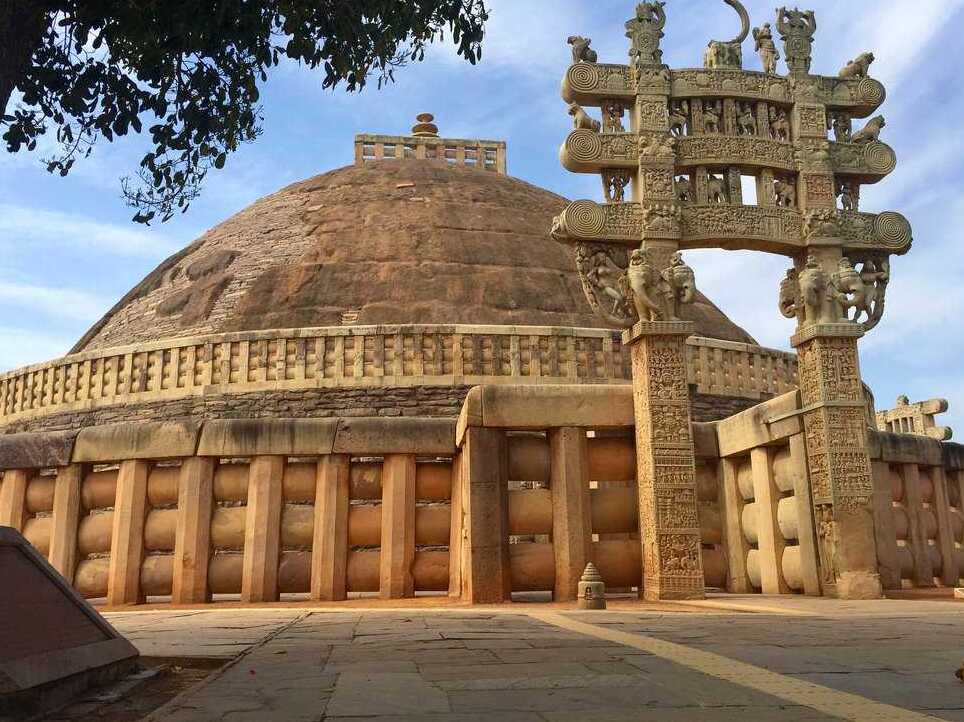

Nestled amidst the serene hills of Madhya Pradesh, the Sanchi Stupa stands as a testament to India's rich spiritual and architectural heritage. This iconic monument, with its awe-inspiring grandeur, is not only the oldest stone structure in India but also a symbol of peace, enlightenment, and the enduring legacy of Buddhism.
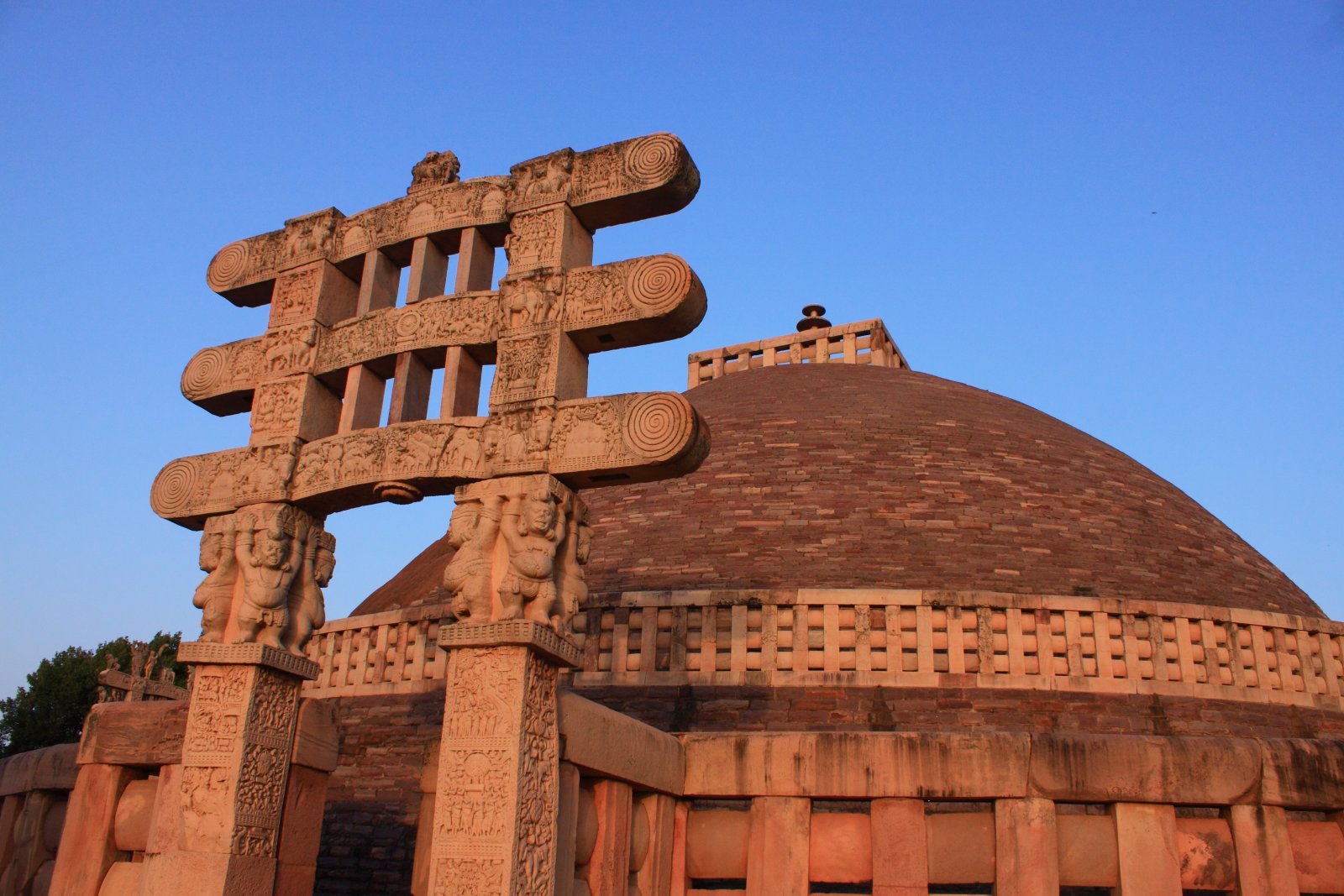
The history of the Sanchi Stupa is deeply intertwined with the life of Ashoka the Great, the Mauryan emperor renowned for his transformative embrace of Buddhism following the bloody Kalinga War. Built in the 3rd century B.C., the Great Stupa at Sanchi was commissioned by Ashoka as a means to enshrine the relics of Lord Buddha. Originally a modest brick structure, it was later expanded and embellished during the Sunga and Satavahana periods, evolving into the grand stone edifice we see today. Over centuries, Sanchi became a major hub of Buddhist activity, attracting monks and scholars from distant lands.
The architectural brilliance of the Sanchi Stupa is a fusion of simplicity and symbolism. The central dome, known as the ‘Anda’, represents the universe, while the central pillar, or ‘Yasti’, symbolizes the axis mundi connecting the earth with the heavens. Surrounding the stupa are intricately carved toranas, or gateways, each facing one of the cardinal directions. These gateways narrate the life of Buddha and his previous incarnations through exquisite bas-reliefs. The carvings depict scenes from the Jataka tales, the miraculous birth of Buddha, and the Wheel of Law, each panel a masterpiece of ancient Indian artistry.
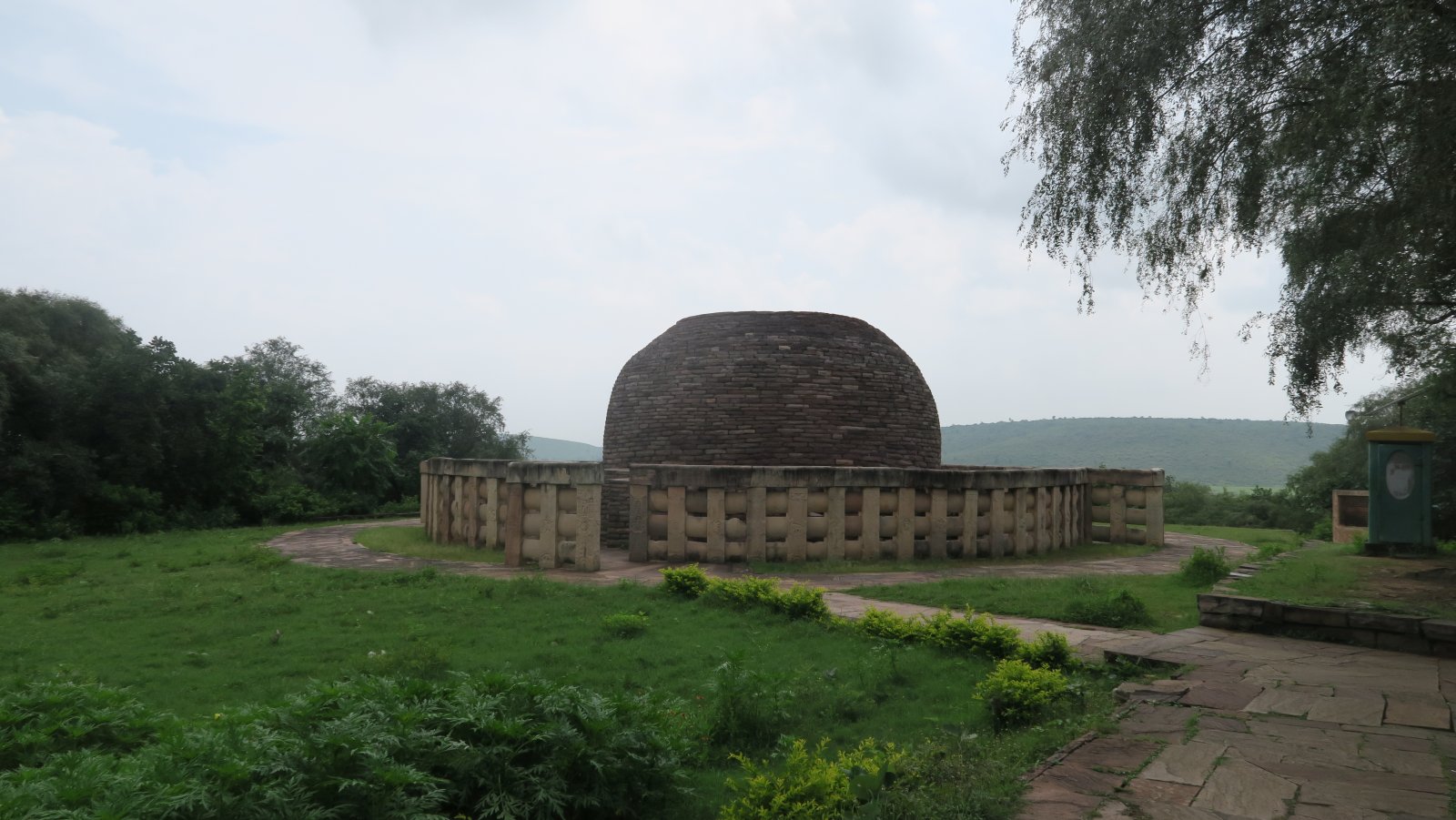
Beyond its historical and architectural significance, Sanchi is a living testament to the cultural tapestry of the region. The local community, though predominantly Hindu, reveres the stupa as a symbol of religious harmony. Festivals such as Buddha Purnima are celebrated with fervor, drawing pilgrims and tourists alike to witness the stupa bathed in the golden glow of lamps and accompanied by the chants of monks.
A visit to Sanchi is incomplete without indulging in the culinary delights of Madhya Pradesh. The region offers a rustic yet flavorful palate that reflects its agricultural bounty. Visitors can savor dishes like dal bafla, a wheat-based delicacy reminiscent of Rajasthan's dal baati, or try the local favorite bhutte ka kees, a spicy corn preparation. For those with a sweet tooth, the rich and creamy malpua offers a taste of traditional Indian desserts.
While the grandeur of the Great Stupa captivates many, several intriguing aspects of Sanchi often go unnoticed. Among these is the Ashoka Pillar, with its polished sandstone and four-lion capital that inspired India's national emblem. Another hidden gem is the Gupta Temple (Temple 17), a simple yet elegant structure that showcases early Hindu temple architecture. Nearby, the Sanchi Museum houses an impressive collection of artifacts that provide deeper insights into the region's archaeological significance.
For those planning a visit, the best time to explore Sanchi is between October and March, when the weather is pleasant and conducive for outdoor exploration. Visitors are encouraged to arrive early in the morning to enjoy the tranquility and capture the stupa in the soft morning light. Comfortable shoes are a must, as the terrain involves some walking. Don’t miss the opportunity to participate in a guided tour, which offers rich narratives that breathe life into the stone carvings.
In the quietude of Sanchi, where time seems to stand still, one can reflect on the enduring message of peace and enlightenment that the stupa embodies. It is this blend of history, art, and spirituality that makes Sanchi not just a monument, but a journey into the heart of ancient India.


