
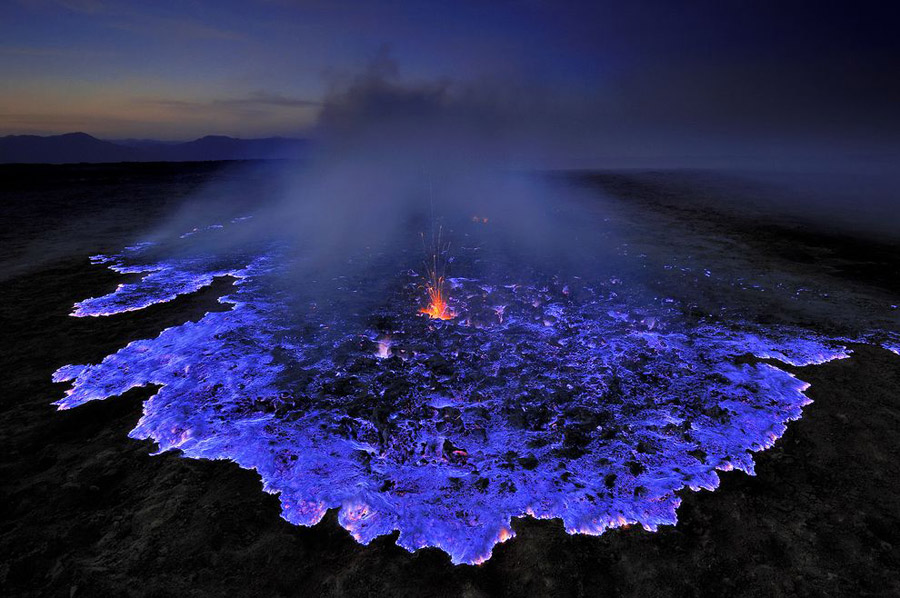

Beneath the stars of East Java lies a spectacle that draws adventurers and science enthusiasts alike: Kawah Ijen, a volcano whose otherworldly glow transcends the ordinary. By day, its crater is a vision of deep red lava, but at night, the landscape transforms into a scene from a sci-fi epic, with phosphorescent blue flames dancing across its surface. This natural phenomenon is not only mesmerizing but also steeped in rich history and cultural significance.

The story of Kawah Ijen begins millions of years ago with its formation as part of the Ijen Caldera Complex. This geological marvel was shaped by powerful volcanic activity that has defined the region’s landscape over eons. The caldera itself, a massive depression formed by a series of eruptions, provides a dramatic backdrop for the volcano's fiery displays. Throughout history, this area has been both feared and revered, its eruptions leaving indelible marks on local communities.
Architecturally, Kawah Ijen is a testament to nature's artistry. The crater is surrounded by stunning vistas, with sulfuric clouds swirling in the air, creating an eerie yet beautiful atmosphere. The turquoise acid lake within the crater, one of the largest of its kind in the world, adds to the surreal scene. Though no man-made structures dominate this landscape, the natural architecture of the volcano itself is a masterpiece, drawing photographers and nature lovers who seek to capture its raw beauty.

Culturally, the region around Kawah Ijen is rich with traditions that have been preserved over generations. Local folklore is imbued with tales of the volcano, considered both a giver and a taker by those who live nearby. The sulfur miners, known locally as penambang belerang, play a vital role in the cultural tapestry of the area. These miners embark on grueling journeys into the crater to extract sulfur, a practice that has persisted for decades. Their resilience and dedication are celebrated in local lore and add a human element to the grandeur of the volcano.
Gastronomy in the Ijen region is a delightful exploration of East Javanese flavors. Local markets offer a taste of traditional dishes such as nasi pecel, a rice dish adorned with a medley of vegetables and peanut sauce, and rawon, a rich beef soup seasoned with keluak nuts. These culinary offerings are often accompanied by kopi luwak, also known as civet coffee, which hails from the lush coffee plantations of Java. This unique brew is renowned for its smooth taste and intricate production process, making it a must-try for coffee aficionados visiting the area.
Kawah Ijen is not just about its famous blue flames; it harbors lesser-known curiosities that intrigue the few who seek them out. The volcano's acidic lake, with a pH level close to zero, is a natural laboratory for scientists studying extremophile organisms. Moreover, the surrounding forest is home to diverse flora and fauna, including the elusive Javanese leopard, offering a glimpse into the island's rich biodiversity. These hidden gems provide a deeper understanding of the ecosystem that supports this volcanic wonder.
For travelers planning to witness Kawah Ijen’s magic, timing is crucial. The best period to visit is during the dry season, from April to October, when the weather is most favorable. Ascending the volcano is a challenging hike, typically commencing at midnight to ensure arrival before dawn. This nocturnal trek allows visitors to witness the blue flames at their brightest, a spectacle made possible by the combustion of escaping sulfuric gases. Comfortable hiking boots, warm clothing, and a gas mask are essential gear for this journey, as the sulfur fumes can be intense.
As you stand at the edge of the crater, with the stars above and the flames below, Kawah Ijen whispers secrets of the earth's ancient power and beauty. This extraordinary destination is not just a place to visit but an experience that touches the soul, leaving a lasting impression long after the blue flames have faded into the morning light.


