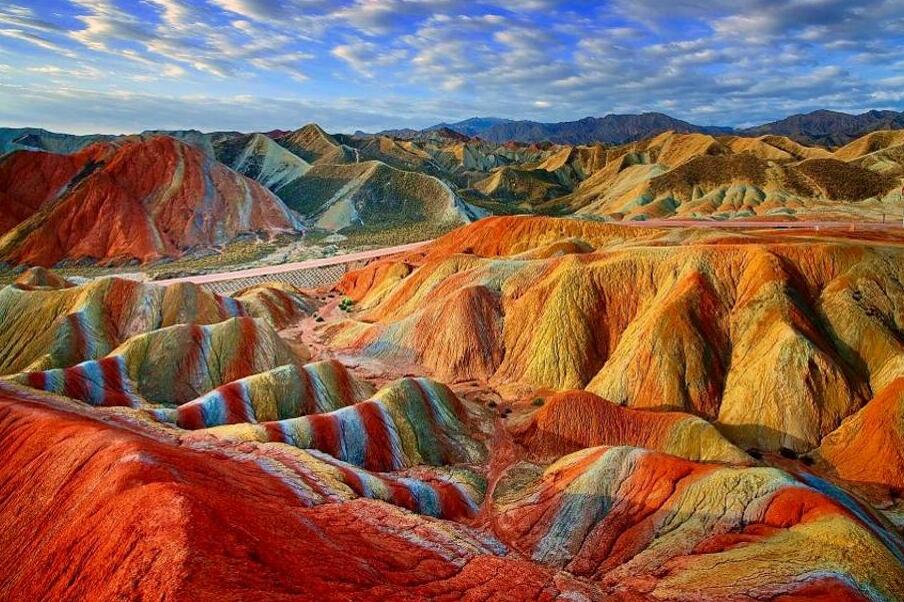

The Aladaglar Mountains near Tabriz are a breathtaking spectacle of nature, where vibrant colors dance across the rugged landscape. Often overshadowed by more famous natural wonders, these mountains offer an extraordinary glimpse into the geological history of Iran and the artistry of nature itself.
### History and Origins
The Aladaglar Mountains, whose name translates to "Colorful Mountains" in Azeri Turkish, have a history that stretches back millions of years. Formed during the Alpine Orogeny, a period of mountain-building that shaped many of the world's great ranges, these mountains are primarily composed of layers of sandstone and shale. Over time, the interplay of geological forces, including tectonic activity and erosion, has resulted in the stunning, multicolored stripes that characterize this region today.
The cultural significance of the mountains is deeply intertwined with the history of Tabriz, a city that has thrived since the Bronze Age. As a pivotal stop on the Silk Road, Tabriz has been a melting pot of cultures and ideas, with the Aladaglar forming a majestic backdrop for its rich history. The mountains are not only a natural wonder but also a symbol of resilience and beauty in the face of time.
### Art and Architecture
The artistic significance of the Aladaglar Mountains extends beyond their natural beauty. The colorful strata have inspired local artists for centuries, influencing everything from traditional Persian carpets to contemporary paintings. Local artisans often draw upon the vibrant hues of the mountains, incorporating them into their work, thus creating a dialogue between nature and art.
In terms of architecture, while the mountains themselves are a natural masterpiece, the nearby city of Tabriz boasts remarkable examples of Islamic architecture, including the Blue Mosque and the Arg of Tabriz. These structures, with their intricate tile work and stunning arches, reflect the rich artistic heritage of the region and stand as a testament to the ingenuity of Persian builders.
### Local Culture and Traditions
Visiting the Aladaglar Mountains offers more than just stunning views; it provides a window into the vibrant local culture. The Azeri Turkish people, who predominantly inhabit this region, celebrate a variety of festivals that reflect their rich traditions. One such festival is Nowruz, the Persian New Year, celebrated on the spring equinox. It symbolizes renewal and rebirth, and the mountains serve as a picturesque backdrop for family gatherings and celebrations.
Local customs, such as the art of dastan (storytelling) and traditional music, are also prominent. Visitors may have the chance to experience these cultural expressions firsthand, particularly during community gatherings or in local homes, where storytelling and music often weave tales of the mountains and their historical significance.
### Gastronomy
The culinary delights of Tabriz are as colorful and diverse as the Aladaglar Mountains themselves. Known for its rich flavors and unique dishes, the local cuisine features specialties such as Tabrizi Kebab, marinated meat grilled to perfection, and Dizi, a hearty lamb stew served with bread. The region is also famed for its kufteh, large meatballs stuffed with rice and herbs, and ash-e reshteh, a thick noodle soup packed with greens and legumes.
A visit to Tabriz wouldn’t be complete without indulging in the local sweets, especially the renowned Baklava and Saffron Ice Cream. These treats not only satisfy the palate but also embody the sweet hospitality of the locals.
### Lesser-Known Curiosities
While the Aladaglar Mountains are an extraordinary sight, there are hidden gems that many tourists often overlook. For instance, the area is home to several ancient caves that are believed to have been used for shelter by early humans. Additionally, the mountains are a haven for birdwatchers, with numerous migratory species passing through the region.
A fascinating aspect of the local folklore involves the legend of Zal, a mythical hero from Persian literature who is said to have roamed these mountains. His tale is intricately woven into the cultural fabric of the region, illustrating the deep connection between the land and its stories.
### Practical Visitor Information
The best time to visit the Aladaglar Mountains is during the spring and early autumn, when the weather is mild and the landscape is alive with color. Summer can be quite hot, while winters are cold and snowy, offering a different kind of beauty but requiring proper preparation.
Travelers should consider taking guided tours to fully appreciate the geological wonders and local culture. Hiking enthusiasts will find numerous trails, each offering unique perspectives of the mountains, while photographers can capture the breathtaking scenery at sunrise or sunset when the colors are most vibrant.
For a truly immersive experience, consider staying in a local guesthouse, where you can engage with the community and savor home-cooked meals.
To navigate this enchanting region and discover personalized experiences, consider using the Secret World app for planning your itinerary.
