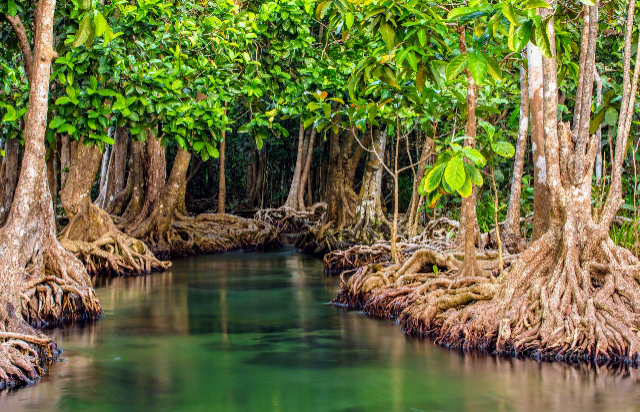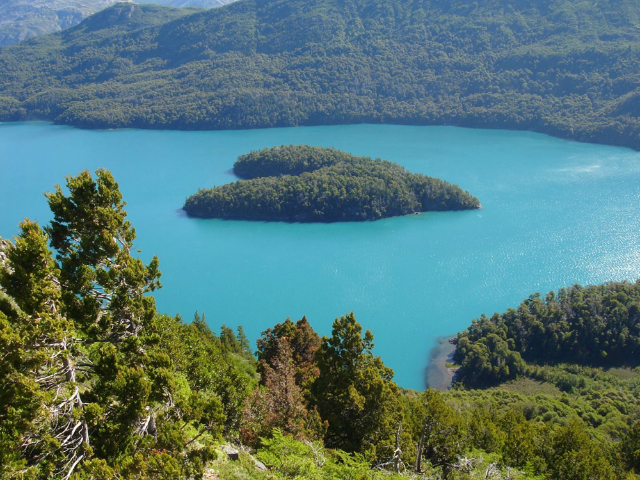

Isla Corazón Mangrove Reserve is a nature reserve located in Caráquez Bay in the province of Manabí, Ecuador. The reserve is located on a mud island called Isla Corazón, which covers an area of about 200 hectares.The nature reserve is famous for its mangroves, which are one of the most important ecosystems in Ecuador's coastal area. The reserve was created to protect the mangroves and the wildlife that inhabits them, including numerous species of migratory birds, such as American storks, egrets, and kingfishers.Visitors can explore the reserve via a series of trails that lead through the mangroves and onto the island's coastline. While hiking, a wide range of wildlife can be spotted, including sea turtles, iguanas, crocodiles, and numerous bird species.Isla Corazón Mangrove Reserve is also an important scientific research center, where scientists study the ecology of the mangroves and the wildlife that live there.The community of Puerto Portobelo has been working for many years to protect the mangroves, as they are a great source of biodiversity. Four types of mangroves can be found in Isla Corazón, as described below:The Red Mangrove (Rhizophora mangle), also known as "the walking tree" because its roots give the impression of a walking tree. It is the most dominant species, growing up to 24 meters in height. It stands at the edge of the wetland, forming a type of protective shield. Its roots were used by ancient people to create bases for their houses above the mangrove. Its long, pointed seeds can float to a suitable environment to germinate.Black mangrove (Avicennia germinans) usually follows red mangrove and has a pleasant aroma, its life cycle is about 40-50 years. It is not in direct contact with seawater, although it grows in areas that are inundated by tidal action. Its leaves are narrow and pointed and their surface is covered with salt crystals, which gives its leaves a salty taste. This mangrove can tolerate higher levels of salt than red mangrove. It does not have large bearing roots, but develops vertical roots that stick out of the substrate (pneumatophores) that will serve as respiration.White mangrove (Laguncularia racemosa) is the species that follows in sequence to black mangrove from the coast to the mainland. Found on higher or rarely flooded land, reaching a height of 20 meters, it is less salt tolerant than the red mangrove. Its leaves are oval and smooth and its stems can be pink.Mangrove jeli (Cornacarpus erectus) is a small tree from 3-8 meters tall. Also known as "button mangrove" because of the shape of its round purple or brown cone fruits. It sequentially follows the white mangrove and is found in dry areas away from water. It grows best where soils and salinity are stable.In summary, the Isla Corazón Nature Reserve is an important mangrove ecosystem that provides a refuge for a wide range of wildlife species. The reserve offers visitors the opportunity to explore these natural habitats and learn more about the different mangrove species that grow there.If you are a nature lover and want to discover the wonders of Ecuador, I recommend visiting the Isla Corazón Nature Reserve on your next visit to Manta or other cities in the Manabí region.