



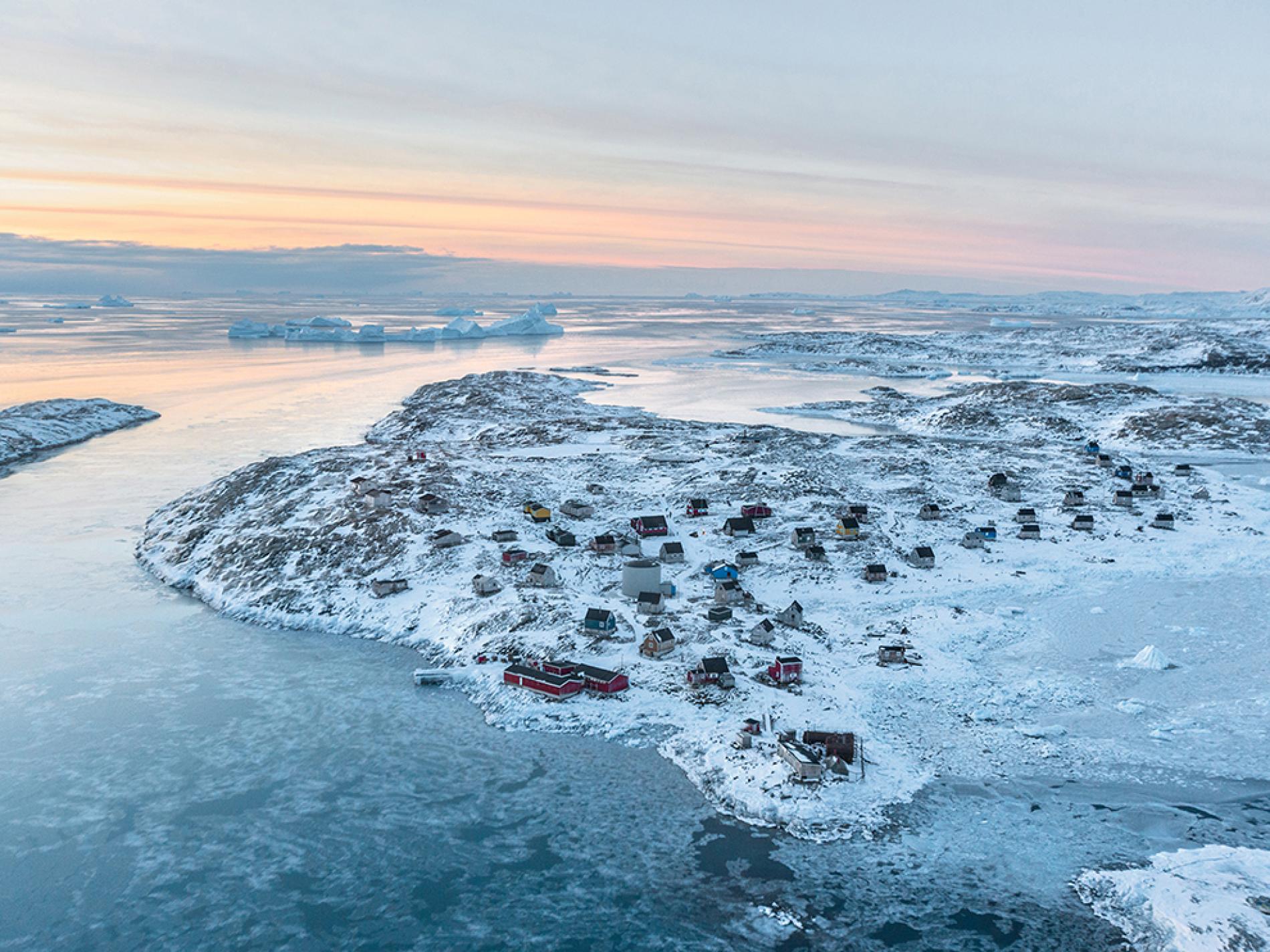
Nestled amid the vast expanse of Greenland's icy wilderness, Isortoq is a small village that offers a window into a world where tradition and survival are deeply intertwined. With a population of just 64, this remote settlement is a testament to the enduring spirit of the Inuit people, who have thrived in one of the planet's most challenging environments for centuries.

Isortoq's history is as frozen in time as its icy surroundings. Although detailed records are scarce, the roots of Inuit habitation in Greenland stretch back over 4,500 years. The Thule culture, ancestors of modern Greenlandic Inuit, settled along the coasts, utilizing their skills in hunting and navigation to survive. The village of Isortoq, like many Greenlandic settlements, likely developed from these early communities, its existence shaped by the rhythms of the Arctic climate and the resources it provides. The influence of Danish colonization in the 18th century brought changes, yet the core of Inuit life remains resiliently intact.
The architecture in Isortoq offers a unique blend of practicality and tradition. The colorful wooden houses that dot the landscape are built to withstand harsh winters and are often elevated on stilts to prevent snow buildup. These homes, painted in vibrant hues of red, blue, and yellow, stand out starkly against the white backdrop, a signature style seen throughout Greenland. Art in Isortoq is predominantly expressed through traditional crafts, with local artisans creating intricate beadwork and carvings from bone and ivory, reflecting the community's deep connection to the land and sea.

Cultural life in Isortoq is rich with traditions that have been passed down through generations. The Inuit community here celebrates a number of festivals and rituals that honor the natural world and their ancestors. One such event is the return of the sun, celebrated in January, when the sun rises above the horizon after weeks of polar night. This event is marked with joy and feasting, a time to reflect on the renewal of life. The kayaks, or 'qajaq' in Greenlandic, are still a vital part of life, with skills being taught from a young age, ensuring the craft of hunting at sea is preserved.
In gastronomy, the diet in Isortoq is a reflection of its environment. The villagers primarily consume meat, as the icy terrain makes agriculture nearly impossible. Seal, whale, and fish are staples, often prepared in traditional ways such as air drying or fermenting. 'Mattak,' the raw skin and blubber of whale, and 'kiviak,' a dish made from fermented seabirds, are local delicacies that offer a glimpse into the community's resourcefulness and adaptability. Each meal is a connection to the land and the animals that sustain the people.
Visitors to Isortoq might be surprised by some lesser-known curiosities. For instance, the northern lights, or 'Aurora Borealis,' are a frequent and breathtaking spectacle in the winter months, painting the night sky with ribbons of green and purple. The village also has a unique postal service, where letters and packages are often delivered by dog sled, a nod to the traditional modes of transportation that are still in use today.
For those looking to experience Isortoq, practical visitor information is crucial. The best time to visit is during the summer months from June to August when the weather is milder, and the days are long. Travelers should prepare for the remote conditions; layers of warm clothing are essential, as is a sense of adventure. Given its isolation, reaching Isortoq typically involves a flight to the nearest airport in Tasiilaq, followed by a boat or helicopter transfer. While in Isortoq, visitors are encouraged to engage with the local community, perhaps by participating in a traditional hunting expedition or learning about Inuit crafts from local artisans.
Isortoq, with its stark beauty and resilient culture, offers an unparalleled glimpse into a world where nature and tradition are inextricably linked. Its people, history, and landscape create a compelling tapestry that speaks to the enduring human spirit in the face of nature's extremes.
