



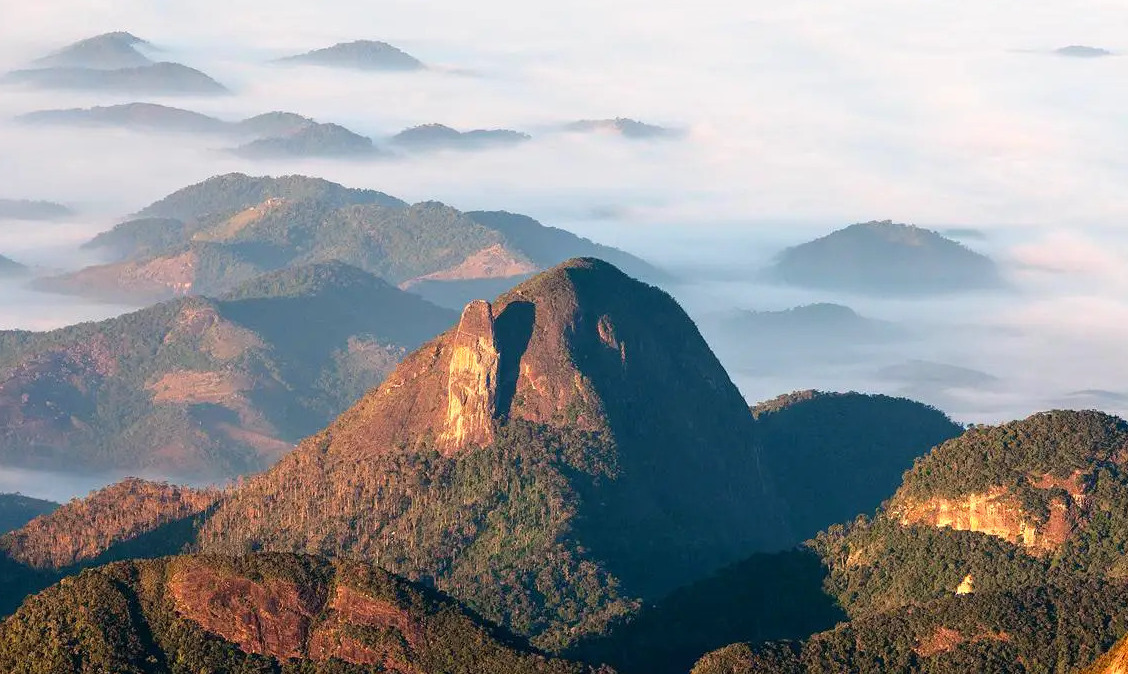
Ever seen a piece of rock bend? Itacolumite is a unique kind of sandstone that does just that when cut into thin strips. If a foot-long piece, a few centimeters thick, is supported at its ends, it will gradually bend under its own weight. When turned over, it straightens and bends in the opposite direction, creating a mesmerizing spectacle. This geological wonder was first discovered in Mt. Itacolumi, located in Minas Gerais, Brazil, in 1822. It has since been found in a handful of locations around the world, including India, France, and the USA, yet the best samples still emerge from the rich geological strata of Minas Gerais.
History and Origins The story of Itacolumite is as fascinating as its physical properties. The name derives from the Tupi-Guarani language, meaning “rock that bends.” This unique sandstone was first documented by Georges Buffon, a French naturalist, who acknowledged its peculiar ability to flex. In the early 19th century, it became a subject of scientific inquiry, with notable geologists exploring its properties. The rock's bending feature has intrigued many scholars, leading to ongoing studies to understand its formation and potential applications.
Art and Architecture While Itacolumite itself may not be an artistic medium, its discovery has influenced the local architecture and artistry in Minas Gerais. The region is renowned for its colonial architecture, with towns like Ouro Preto showcasing gold-laden churches and intricate baroque facades. The local artisans often incorporate materials from the surrounding environment into their creations, celebrating the geological uniqueness of the area. You can find Itacolumite being used in some artistic installations, where its bending properties are exploited to create dynamic sculptures that challenge perceptions of rigidity and form.
Local Culture and Traditions The culture around Mt. Itacolumi is vibrant and deeply rooted in traditions. The nearby towns celebrate various festivals throughout the year, including the Festa de Nossa Senhora do Rosário in Ouro Preto, which showcases the rich heritage of the region through music, dance, and traditional foods. The local customs are deeply influenced by the blending of Indigenous, African, and European cultures, creating a unique tapestry of traditions. This cultural richness is mirrored in the arts, music, and daily life of the residents, who take pride in their heritage.
Gastronomy No visit to Minas Gerais is complete without indulging in its exquisite gastronomy. Traditional dishes such as pão de queijo (cheese bread), feijão tropeiro (a bean dish with sausage and eggs), and tutu de feijão (mashed beans with spices) are local staples that reflect the region's agrarian roots. Pair your meal with a glass of cachaça, a spirit made from sugarcane, often enjoyed in a refreshing cocktail called caipirinha. The gastronomy here is not just about food; it embodies the warmth and hospitality of the local people, making every meal a celebration.
Lesser-Known Curiosities One of the most intriguing facts about Itacolumite is its acoustic properties. When thin flakes are bent, they emit a creaking sound, leading locals to affectionately refer to it as “the singing rock.” Interestingly, this rock has inspired various legends and folklore among the local communities, who attribute mystical properties to its bending nature. Additionally, while it has been found in other countries, the samples from Minas Gerais remain the most sought after by collectors and scientists alike, making this location a treasure trove for geology enthusiasts.
Practical Visitor Information The ideal time to visit Minas Gerais is during the dry season, from May to September, when the weather is pleasant and perfect for outdoor activities. Be sure to take a guided tour to Mt. Itacolumi to fully appreciate its geological significance and the surrounding natural beauty. Bring comfortable shoes for hiking and a camera to capture the stunning vistas. Look out for local artisans who may sell unique pieces inspired by Itacolumite, allowing you to take a piece of this fascinating heritage home with you.
Whether you’re a geology buff, a culture enthusiast, or a lover of good food, Itacolumite and the surrounding region offer a rich experience that lingers long after you leave. Don’t miss the chance to uncover the wonders of this bending rock and the warm traditions of Minas Gerais.
For a truly personalized experience, consider planning your visit with the Secret World app to explore the hidden gems of this remarkable destination.
