
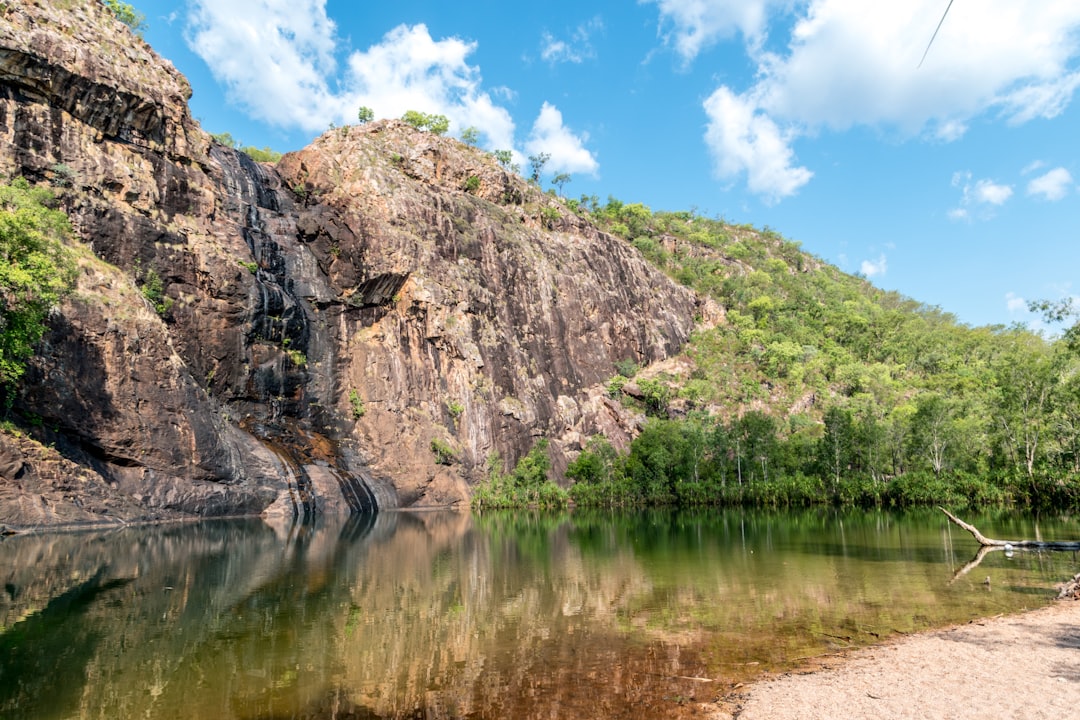

The sound arrives before the image. A dull roar, then increasingly powerful, rising from the depths of the rocky throat as one approaches along the path of boulders and red sand. Jim Jim Falls, in the heart of the Kakadu National Park in the Northern Territory of Australia, plunges about 200 meters from a vertical sandstone edge into a deep pool surrounded by ochre-colored walls. During the rainy season, from November to April, the waterfall becomes a wall of water that shakes the air and fills the lungs with steam. In the dry season, however, the flow drastically reduces or completely stops, transforming the place into something entirely different: silence, bare rock, and that pool of emerald-green water still under the tropical sun.

Kakadu is a national park recognized by UNESCO as a World Heritage Site both natural and cultural, a dual classification that belongs to very few places in the world. The presence of the Bininj and Mungguy peoples in this region dates back over 50,000 years, and the traces of this continuity are physically visible: sites of Aboriginal rock art are within walking distance from Jim Jim canyon, with figures of animals, handprints, and representations of the Dreamtime painted on the sandstone walls. These are not museum artifacts but places that are still sacred and alive for the local communities.
The roar of water: what can be seen and heard

Reaching the base of the waterfall requires a journey of about one kilometer over uneven terrain, through slippery granite boulders and fine sand. It is not a trail equipped in the classic European sense: one must jump, climb, and maintain balance. However, the effort is rewarded when the waterfall appears in all its width. The water strikes the bottom of the pool with a force that generates a constant mist, visible from dozens of meters away. The mist dampens clothes, cools the skin, and creates intermittent rainbows when sunlight filters down from the top of the canyon.
The walls of the gorge are almost vertical, of an intense red-orange streaked with darker veins where the water has carved the rock over millennia. In some places, tropical vegetation clings to the crevices: palms, pandanus, and paper trees grow where they find a few centimeters of soil. The pool at the base is deep and clear, and many visitors immerse themselves in it during the dry season, when the water level is stable and the current is absent.
Rock Art: The Walls That Speak
Not far from the main canyon are sites of rock art that document thousands of years of human presence in this region. The paintings include figures in X-ray style, a typical painting technique of Kakadu where artists represented not only the outside of animals but also their internal structure — spines, organs, bones. Fish, kangaroos, barramundi, and human figures are among the most recurring subjects. Some of these images were created with natural pigments such as red ochre and white clay, and they have withstood weather exposure for centuries.
The park carefully manages access to these sites: some areas are open to the public with interpretive panels, while others remain closed because they are considered sacred. It is important to respect the signage and never touch the painted surfaces. The local guide, when available, adds details that no panel can fully convey.
When to go and how to reach Jim Jim Falls
Access to Jim Jim Falls is seasonal and depends on road conditions. The dirt track leading to the waterfall — passable only with a four-wheel drive vehicle, preferably a 4WD with good ground clearance — is closed during the rainy season due to flooding. The access window generally opens between May and October, but the exact dates vary each year based on rainfall. Before departing, it is essential to check the road conditions on the official park website or at the visitor centers in Jabiru or Bowali.
The most common departure point is Darwin, about 250 kilometers away. The journey to the waterfall parking area takes several hours, and the complete visit — including the walk to the base — takes a full day. It is advisable to bring plenty of water, at least two liters per person, food, sun protection, and closed shoes with non-slip soles. The heat in the canyon can be intense during the central hours of the day, so leaving early in the morning is the most sensible choice. Entrance to the park requires a paid permit, which can be purchased online or at access points.
A place that is not forgotten for the right reasons
Jim Jim Falls is not easy to reach, and this is part of its nature. The long road, the challenging walk, the heat: everything contributes to making the arrival at the waterfall something that is earned. The roar of the water against the rock, the cold mist on the face, the sudden silence when moving away a few meters — these are physical experiences, not decorative. And knowing that those same sandstone walls have been inhabited, observed, and painted for tens of thousands of years adds a layer of meaning that lingers even after returning home.


