



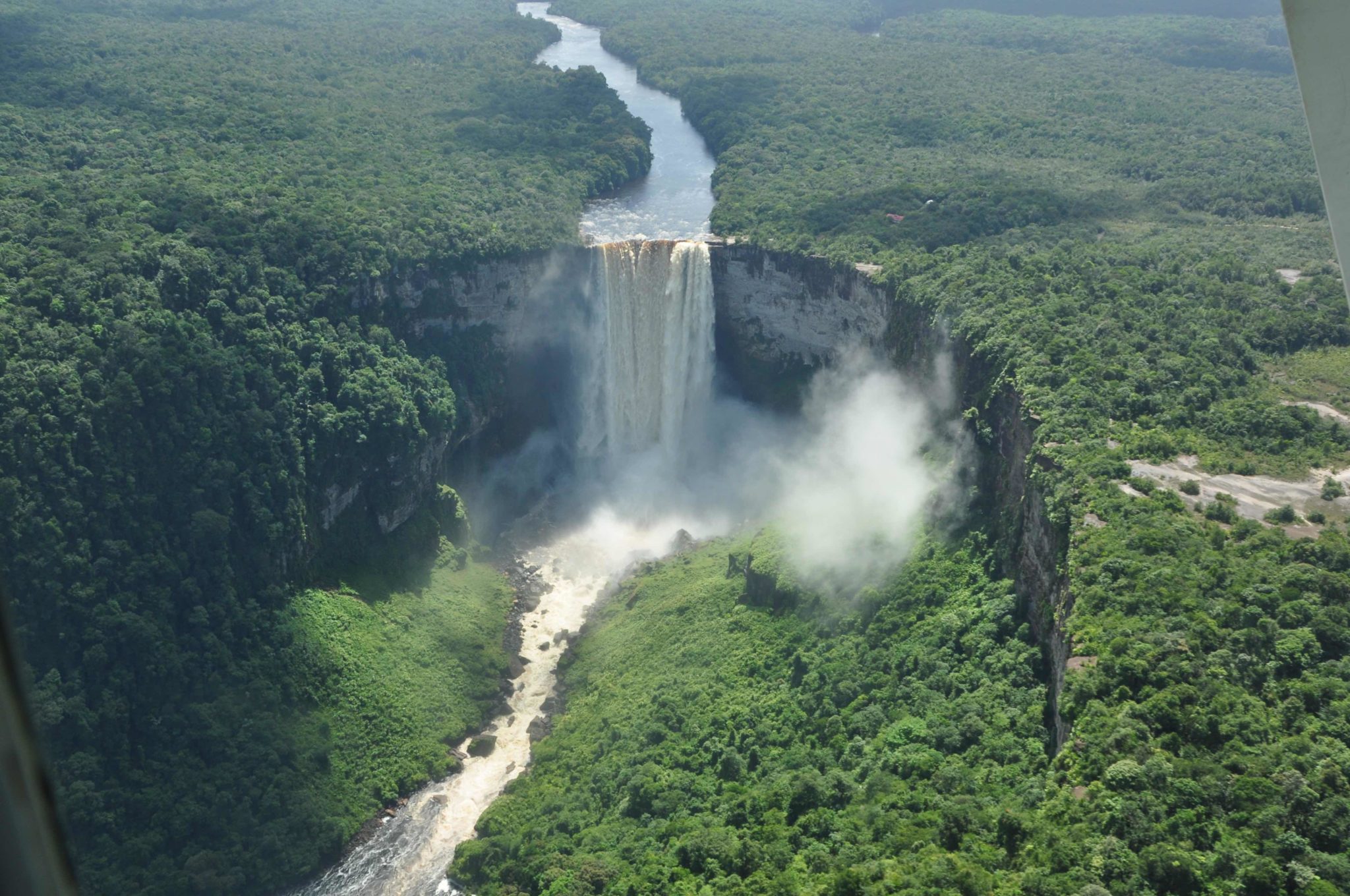
Hidden deep within the lush, unyielding embrace of the Amazon rainforest, Kaieteur Falls stands as a testament to nature’s raw and unbridled power. This behemoth of a waterfall is not just a marvel of the natural world but a vibrant tapestry woven with the threads of history, culture, and mystery.
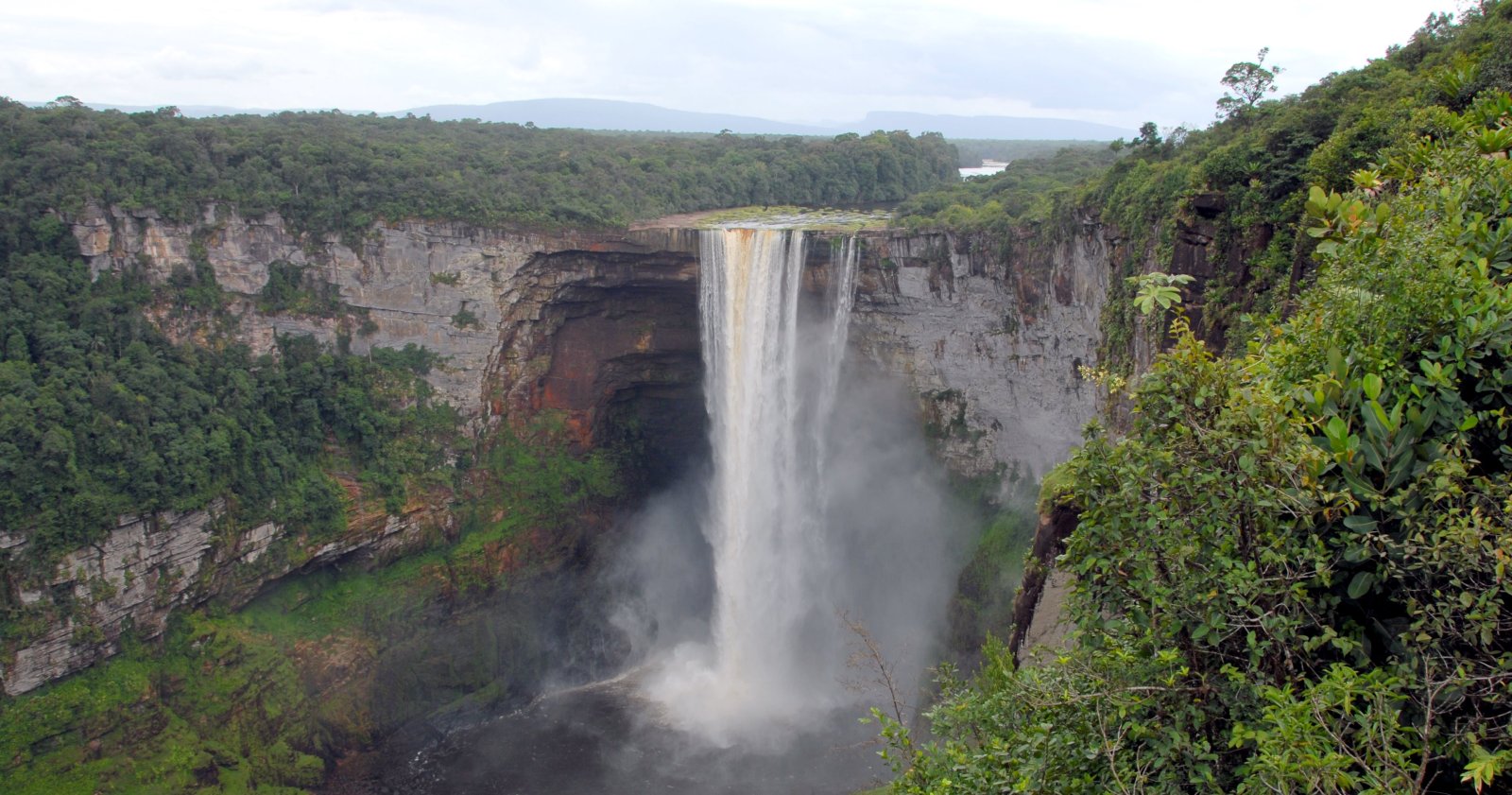
The story of Kaieteur Falls begins long before it was ever documented by Western explorers. The falls are named after Kai, a revered chief of the Patamona tribe, who, according to legend, sacrificed himself by paddling over the edge to appease the great spirit Makonaima, ensuring the survival of his people. This ancient tale imbues the falls with a sense of timeless reverence, blending the spiritual with the natural in a way that is quintessentially Guyanese.
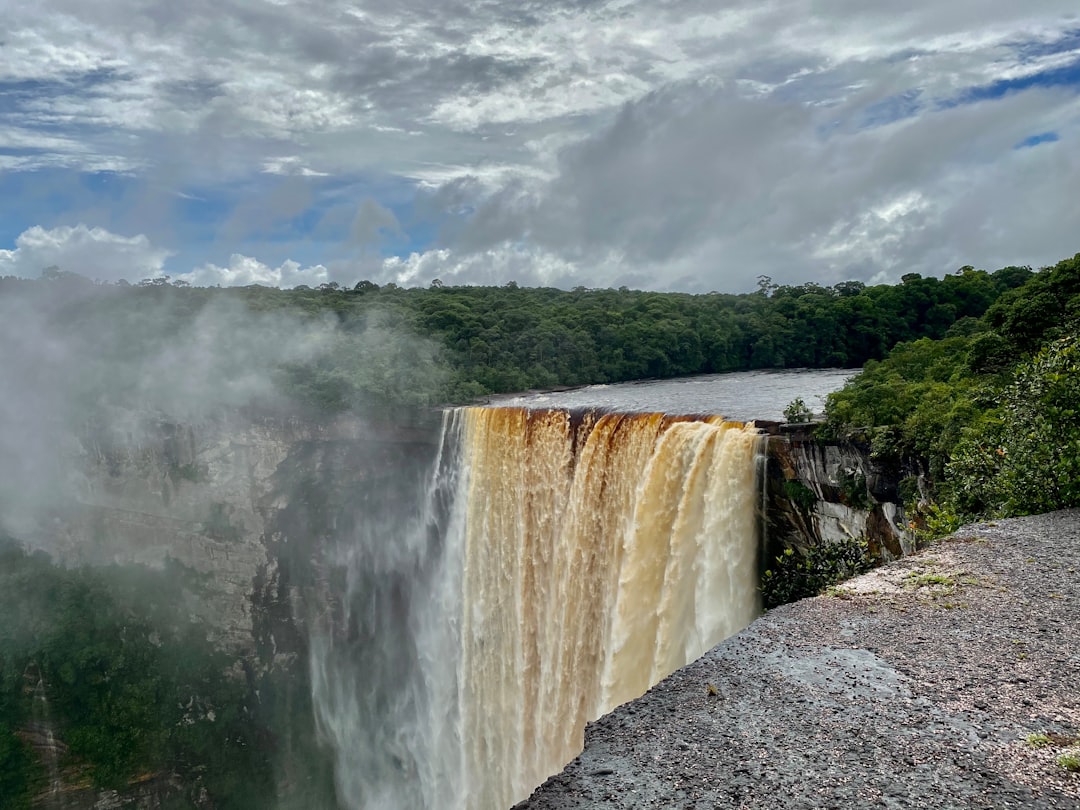
While Kaieteur Falls is a natural formation, it holds an architectural presence in its sheer, rectangular drop. Unlike many waterfalls that cascade in a series of steps, Kaieteur plunges in a single, dramatic drop of 741 feet, making it one of the tallest of its kind globally. The surrounding Guyana Shield is an ancient geological formation, one of Earth’s oldest rock structures, adding a geological significance that intrigues scientists worldwide. The falls and their environs are a canvas for local artists who capture its majesty in paintings and photographs, often found in galleries and markets in Georgetown.
The cultural landscape surrounding Kaieteur is as rich as the biodiversity of the rainforest. The indigenous Patamona and other Amerindian communities maintain traditions that have endured for centuries. Festivals such as Mashramani—a vibrant celebration of Guyana's Republic Day—reflect the country's diverse heritage, a melting pot of African, Indian, Amerindian, and European influences. These cultural tapestries are experienced through traditional crafts, music, and dance, all echoing the rhythm of the land.
Gastronomy in the region offers a unique taste of the local environment. Cassava is a staple, used to make various dishes such as cassava bread and pepperpot, a spicy meat stew often cooked with cassareep, a sauce derived from cassava juice. The local beverage, piwari, a fermented drink made from cassava, is a traditional Amerindian brew that offers a taste of the ancient cultures that have thrived here amidst the roaring falls.
For those with a thirst for the unknown, Kaieteur offers more than its breathtaking beauty. The falls are home to unique species such as the golden rocket frog, a tiny amphibian that lives in the giant tank bromeliads found near the falls. Bird enthusiasts might spot the Guianan cock-of-the-rock, a flamboyant bird with striking orange plumage. These natural inhabitants add layers of intrigue, making each visit a new discovery.
Practical tips for visiting Kaieteur Falls ensure an enriching experience. The best time to visit is during the rainy season, from May to early July and November to January, when the falls are at their most impressive. However, the dry season offers clearer skies and easier jungle treks. Visitors typically reach the falls via a short flight from Ogle Airport in Georgetown, offering breathtaking aerial views of the rainforest canopy.
Once on the ground, guided tours are highly recommended. They provide not only safe passage through the dense jungle but also insights into the rich tapestry of flora and fauna. Be sure to wear sturdy, waterproof footwear and bring insect repellent to fend off the rainforest's smaller inhabitants. The hike to the falls, though not overly strenuous, is best enjoyed with these preparations in mind.
Whether you are drawn by the sheer spectacle of the falls, the rich cultural narratives, or the vibrant biodiversity, Kaieteur Falls offers an experience that transcends the usual tourist trail. It is a place where nature and legend intertwine, leaving an indelible impression on all who venture into its misty realm.
