
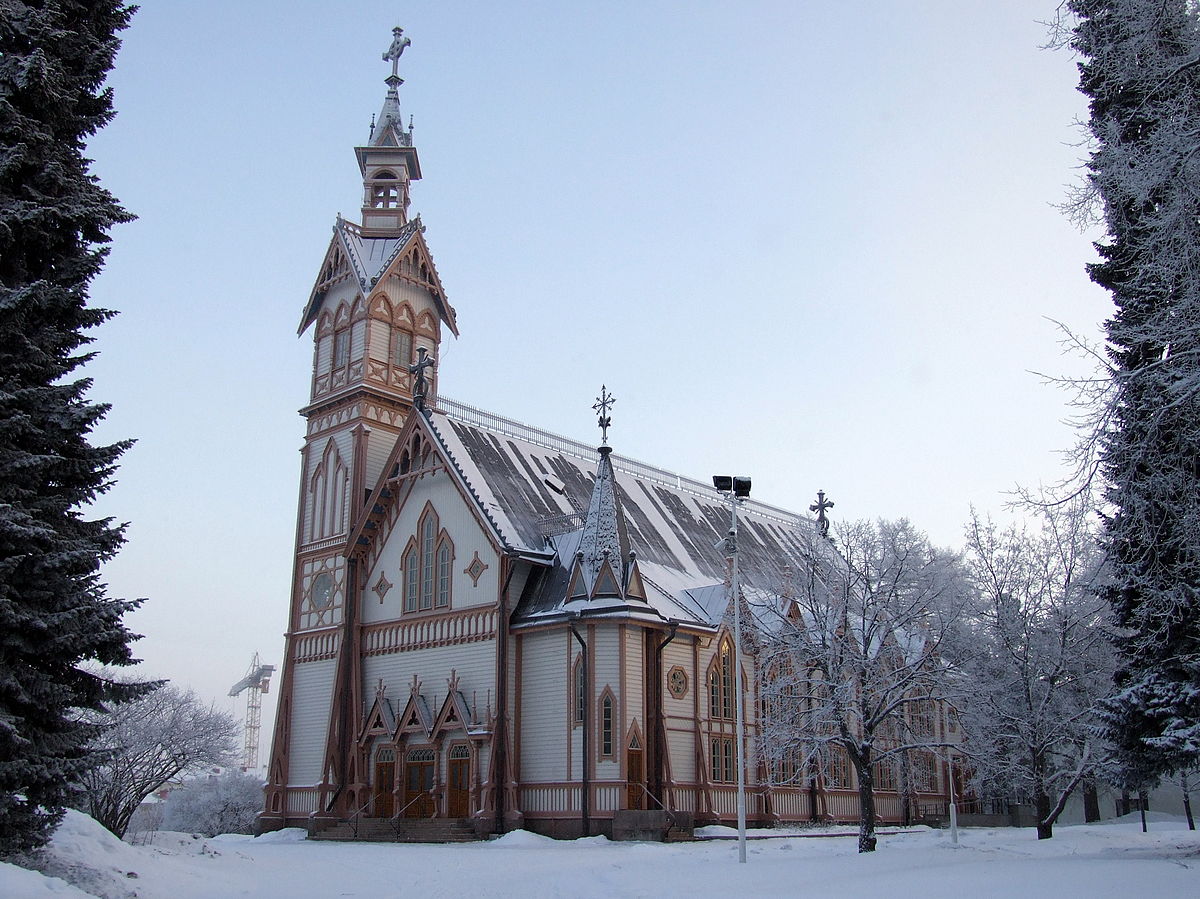

Nestled in the heart of Kajaani, Finland, the Kajaani Church stands as a stunning testament to Neo-Gothic architecture, steeped in history and cultural significance. Built in 1897, this wooden church is the brainchild of architect Jacob Ahrenberg, who infused it with rich decorations that reflect the artistic trends of the late 19th century. The church's design draws upon various influences, including English carpenter-style architecture and German stylistic elements, making it a unique blend that captures the imagination of both locals and visitors alike.
The foundation of Kajaani Church is rooted in the area’s historical tapestry. Kajaani itself has long been a focal point in Finnish history, established in the late 17th century as a military outpost and later evolving into a significant administrative center. The church's construction followed a period of growth and development in Kajaani, reflecting the community's need for a spiritual and cultural hub. Following its completion in 1897, the church quickly became a center for local gatherings and religious services, witnessing both joyous celebrations and solemn farewells throughout its storied past.
Architecturally, Kajaani Church is a striking example of the Neo-Gothic style that flourished in Europe during the late 19th century. Its wooden structure is adorned with intricate carvings and decorations that tell stories of faith and craftsmanship. The interior showcases a stunning array of carpenter-style elements; the roof trusses were inspired by those found in Westminster Hall in London, emphasizing Ahrenberg's attention to detail and reverence for historical influences. Moreover, the church's slender tower, which deviates from the central axis of the building, reflects German influences, while its elegant lines evoke a hint of the Italian Renaissance and Baroque styles, creating a harmonious blend that is visually captivating.
Inside the church, visitors can admire not only the architectural details but also the stunning artworks that adorn its walls. The altarpiece, representing the Ascension of Christ, captures the essence of the church’s spiritual mission, while other paintings and sculptures throughout the building highlight local artists and themes relevant to the community's history and culture. These artistic treasures contribute to the church's significance as a cultural landmark, embodying local traditions and the Finnish spirit.
Culturally, Kajaani is vibrant with local customs and traditions that are often celebrated within the church's walls. The annual Juhannus (Midsummer) festival, held in June, is a time when the community gathers to celebrate the summer solstice, often incorporating traditional music, dance, and local food. The church also plays a crucial role during the Christmas season, hosting beautiful services filled with hymns and candlelight, drawing in both the faithful and those seeking to experience the warmth of Finnish holiday traditions.
Speaking of local flavors, Kajaani offers a delectable array of gastronomic delights that reflect the region’s heritage. Traditional Finnish dishes such as kalakukko (a fish pie made with rye bread), poronkäristys (sautéed reindeer), and lihapullat (meatballs) are staples in local eateries. Pair these with a refreshing glass of Finnish berry juice, often made from bilberries or lingonberries, for an authentic taste of the region. Local cafés often serve pulla, a sweet cardamom bun that is a favorite among residents and visitors alike.
For the curious traveler, Kajaani Church holds a few lesser-known curiosities. One interesting fact is that the church has survived multiple significant events, including the destruction caused by World War II, which altered the landscape of many Finnish towns. Additionally, the church grounds are home to a small cemetery that contains the graves of notable local figures, offering insight into the town’s history and the individuals who shaped its narrative.
The best time to visit Kajaani Church is during the summer months, from June to August, when the daylight lingers long into the evening, allowing for leisurely exploration of the church and the surrounding area. Visitors should not miss the church's tower, which offers panoramic views of the Kajaani landscape. Inside, take a moment to appreciate the craftsmanship of the wooden altar and the serene atmosphere that invites reflection and peace.
As you plan your visit to this architectural wonder, consider using the Secret World app to create a personalized AI itinerary, ensuring that you uncover the hidden gems of Kajaani.
In conclusion, Kajaani Church stands not only as a place of worship but also as a beacon of local culture, history, and artistry, inviting all who enter to connect with the rich heritage of this enchanting Finnish town.


