
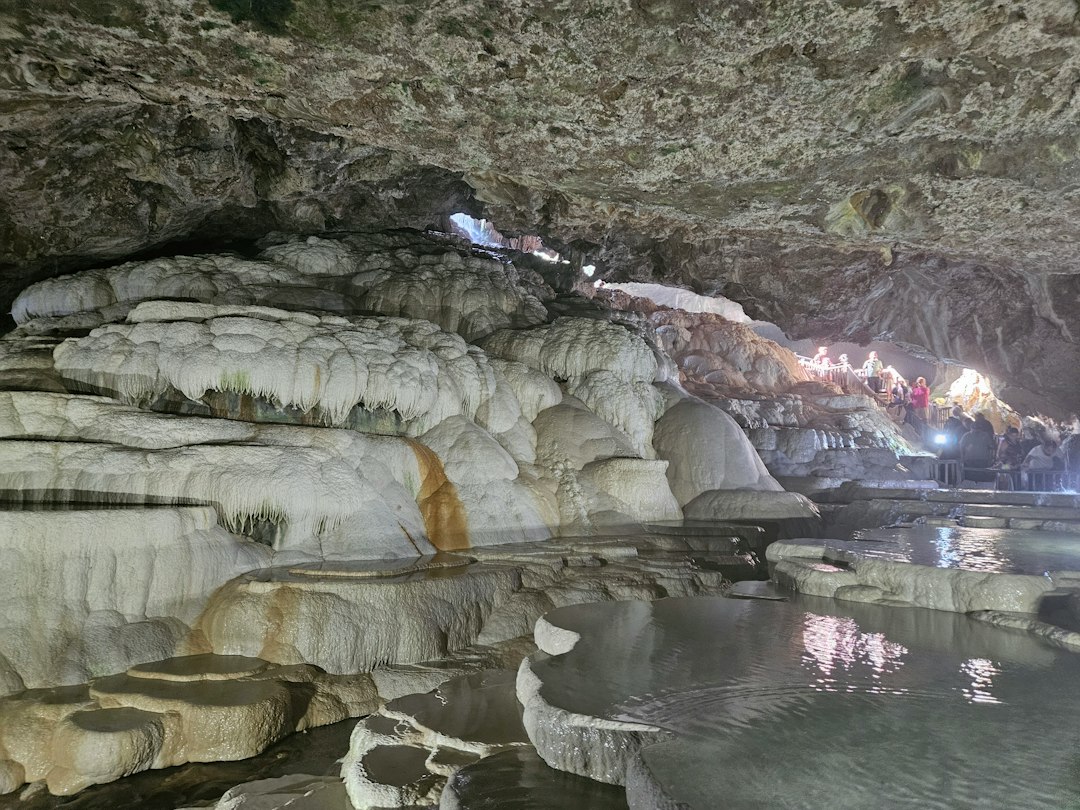

A stream of lukewarm water flows on the floor of the cave, leaving behind a trail as white as freshly fallen snow. You are not in Pamukkale, the famous thermal site a few kilometers away, but in the Kaklik Cave, a karst system near Denizli, in southwestern Turkey, where underground hot springs deposit calcite and calcium carbonate on the rocks with the same silent patience that has built the country's most famous white terraces. Here, however, there is no crowd. There are no selfie sticks or lines at the gates. Just the dripping of water and the acrid smell of sulfur in the air.
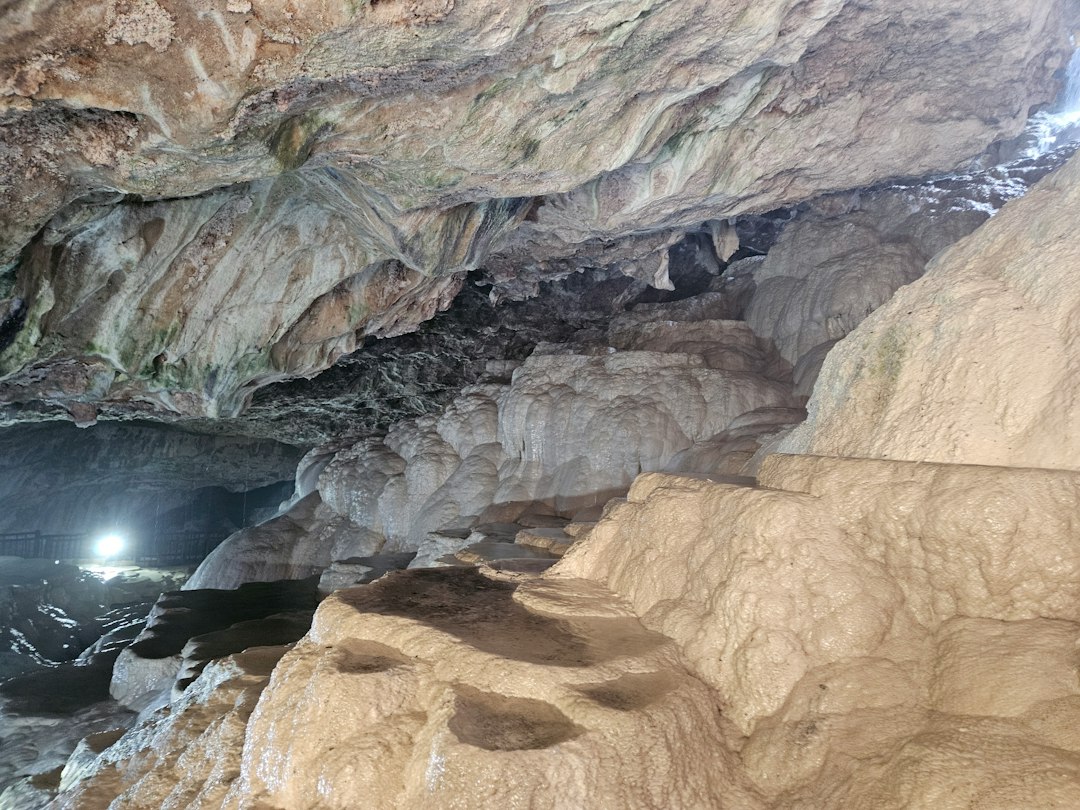
The cave is located about 20 kilometers from Denizli, towards Çivril, in the rural area that few foreign tourists pass through. The site is accessible and equipped with a prepared path, but it remains almost completely ignored by international circuits. Those who visit do so mostly out of local curiosity or for a deliberate detour from the Pamukkale-Ephesus route. This isolation is, paradoxically, its greatest gift.
How the underground white landscape is formed
The geological mechanism that operates within Kaklik is the same that has made Pamukkale a UNESCO heritage site: water rich in dissolved calcium carbonate rises from the ground, cools upon contact with the air, and slowly deposits its minerals on every available surface. The result, over millennia, is white formations that cover the floor and walls of the cave, creating a landscape that oscillates between the surreal and the lunar.
Unlike the open-air terraces of Pamukkale, here the formations grow in the dark, artificially illuminated during the visit. This gives the stalactites and calcite crusts an almost theatrical quality: every corner seems lit by stage lighting. The water that rises is warm, and in some places, small pools can be observed where bubbles slowly rise to the surface, a testament to the ongoing geothermal activity.
What can be seen during the visit
The internal path of the cave is relatively short — a visit is estimated to take 30-45 minutes for those who want to observe carefully — but rich in details. The most spectacular formations are found in the deeper sections, where the humidity is higher and the concretions reach more elaborate shapes. Some resemble petrified flowers, while others look like white wax drippings solidified in an instant.
The entrance to the cave occurs through a natural opening in the ground, and the descent is accompanied by a gradual drop in temperature and an increase in humidity. The walls are covered with a thin layer of moisture that captures artificial light and reflects it with a pearlescent glow. Those who suffer from claustrophobia should evaluate carefully, as some corridors are narrow, although the main path is accessible to most visitors.
How to get there and practical advice
The cave is most conveniently reached by car or by taxi from Denizli. There is no direct connection with regular public transport, which contributes to its isolation. Those traveling with their own vehicle can follow the road towards Çivril and look for signs to Kaklik Mağarası — the signs exist, but they are not always visible from afar, so it is advisable to download the GPS coordinates before departing.
The best time to visit is in the morning, when the natural light at the entrance is more intense and the cave has not yet accumulated the heat of the day. The spring and autumn months are preferable to summer, when the outside temperatures make the contrast with the inside of the cave more pronounced and the drive less tiring. The entrance ticket is generally modest — on the order of a few euros — and the site is managed locally. Bring shoes with non-slip soles: the wet floor can be treacherous.
Why the Detour is Worth It
In an era where almost every spectacular corner of the planet has already been photographed thousands of times, Kaklik offers something increasingly rare: the chance to stand in front of an extraordinary natural phenomenon with no one else around. It is not a matter of snobbery towards mass tourism, but of the quality of the experience. Feeling the silence of a cave, listening only to the sound of flowing water, observing geological formations without having to tiptoe over a crowd — all of this has a value that no plane ticket can guarantee.
Anyone visiting Pamukkale and has an extra day — or even just a few hours — should consider Kaklik not as an alternative, but as a complement. The two experiences illuminate each other: seeing the white terraces outdoors and then descending underground to find the same geological process at work in the dark is a way to understand geothermal Turkey with a depth that guidebooks rarely suggest.


