
← Back

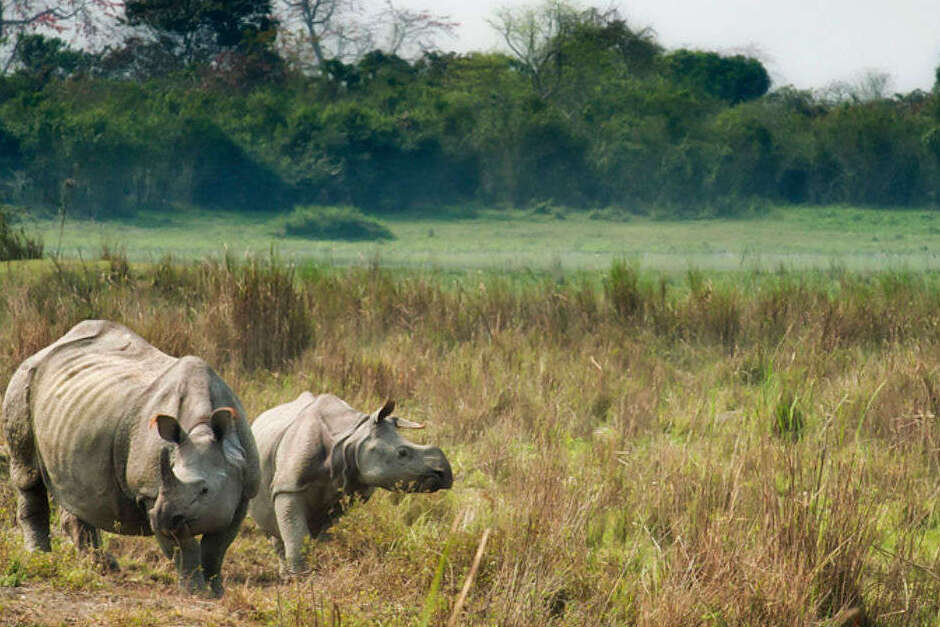
Kaziranga National Park and the horned rhinoceros

Kanchanjuri, Assam 784177, India ★★★★☆ 750 views
Fabiana Moro
Kanchanjuri
🏆 AI Trip Planner 2026

Get the free app

Discover the best of Kanchanjuri with Secret World — the AI trip planner with 1M+ destinations. Get personalized itineraries, hidden gems and local tips. Free on iOS & Android.

🧠 AI Itineraries 🎒 Trip Toolkit 🎮 KnowWhere Game 🎧 Audio Guides 📹 Videos
Download on the App Store Get it on Google Play
Scan to download Scan to download
Kaziranga National Park and the horned rhinoceros - Kanchanjuri | Secret World Trip Planner

One of the most sought after wildlife holiday destinations in India, Kaziranga National park’s 430 square kilometer area sprinkled with elephant-grass meadows, swampy lagoons, and dense forests is home to more than 2200 Indian one-horned rhinoceros, approximately 2/3rd of their total world population. Formed in 1908 on the recommendation of Mary Curzon, the park is located in the edge of the Eastern Himalayan biodiversity hotspots – Golaghat and Nagaon district. In the year 1985, the park was declared as a World Heritage Site by UNESCO. It is said when Mary Curzon, the wife of the Viceroy of India – Lord Curzon of Kedleston, visited the park to see Indian one-horned rhinoceros; she wasn’t able to found even one. Then she persuaded her husband to take urgent measures to protect the dwindling species which he did by initiating planning for their protection. After a series of meetings and documentations, the Kaziranga Proposed Reserve Forest was created with an area of 232 km2 (90 sq mi) in 1905. Along with the iconic Greater one-horned rhinoceros, the park is the breeding ground of elephants, wild water buffalo, and swamp deer. Over the time, the tiger population has also increased in Kaziranga, and that’s the reason why Kaziranga was declared as Tiger Reserve in 2006. Also, the park is recognized as an Important Bird Area by BirdLife International for the conservation of avifaunal species. Birds like lesser white-fronted goose, ferruginous duck, Baer’s pochard duck and lesser adjutant, greater adjutant, black-necked stork, and Asian Openbill stork specially migrate from the Central Asia during the winter season.

🗺 AI Trip Planner

Plan your visit to Kanchanjuri

Suggested itinerary near Kaziranga National Park and the horned rhinoceros

MAJ+
500.000+ travelers worldwide
  1. 🌅
    Morning
    Kaziranga National Park and the horned rhinoceros
    📍 Kanchanjuri
  2. ☀️
    Afternoon
    Il Parco Nazionale Kaziranga e il rinoceronte cornuto
    📍 0 km da Kanchanjuri
  3. 🌆
    Evening
    Kaziranga National Park und das gehörnte Nashorn
    📍 0 km da Kanchanjuri

Buy Unique Travel Experiences

Powered by Viator

See more on Viator.com

Explore nearby · Kanchanjuri

Frequently Asked Questions

Kaziranga National Park is home to more than 2,200 Indian one-horned rhinoceros, which represents approximately two-thirds of their total world population. This makes it one of the most critical sanctuaries for the species' survival and a primary reason for visiting this UNESCO World Heritage Site.
Kaziranga National Park was formally created in 1908 on the recommendation of Mary Curzon, wife of the Viceroy of India, after she was unable to spot even a single rhinoceros during her visit. Her husband, Lord Curzon of Kedleston, initiated urgent protective measures, leading to the creation of the Kaziranga Proposed Reserve Forest in 1905 with an area of 232 square kilometers.
Beyond the iconic one-horned rhinoceros, Kaziranga is home to elephants, wild water buffalo, swamp deer, and an increasing tiger population—so much so that it was declared a Tiger Reserve in 2006. The park is also recognized as an Important Bird Area, featuring migratory species like lesser white-fronted geese, ferruginous ducks, and various stork species that arrive from Central Asia during winter.
The winter season is the ideal time for bird watching at Kaziranga, as migratory birds such as lesser white-fronted geese, ferruginous ducks, Baer's pochard ducks, and various stork species travel from Central Asia during this period. This makes winter the perfect time to experience the park's diverse avifauna and its recognition as an Important Bird Area by BirdLife International.
Kaziranga National Park was declared a UNESCO World Heritage Site in 1985, recognizing its outstanding universal value for wildlife conservation. The park spans 430 square kilometers across the Golaghat and Nagaon districts on the edge of the Eastern Himalayan biodiversity hotspots and serves as a critical refuge for multiple endangered species.