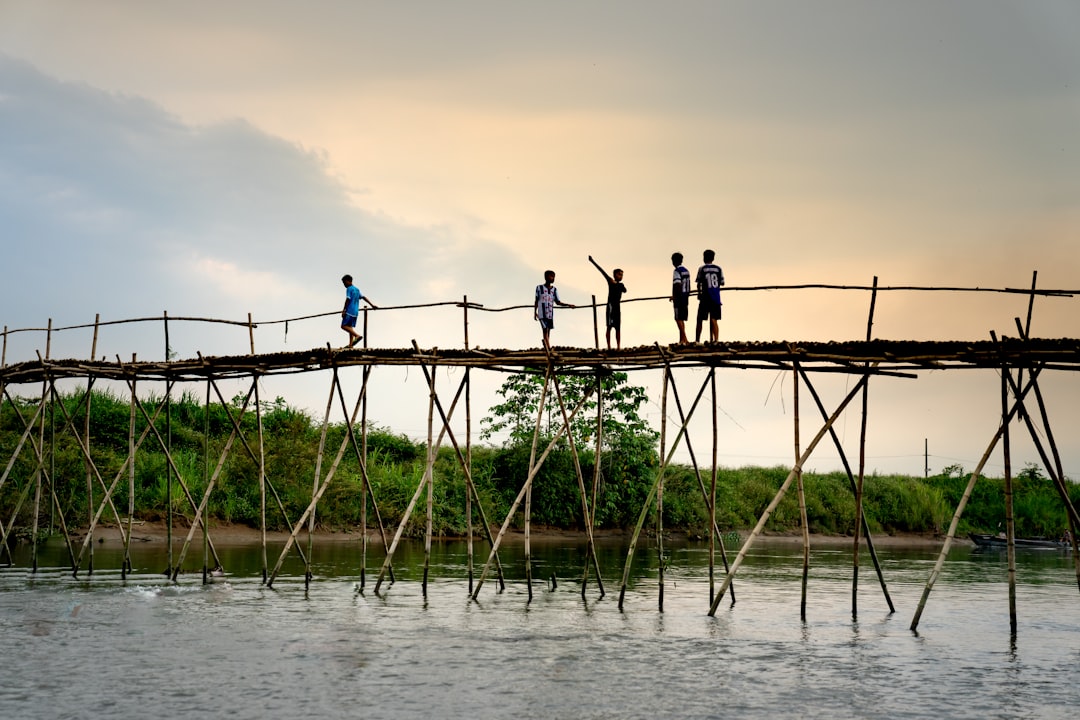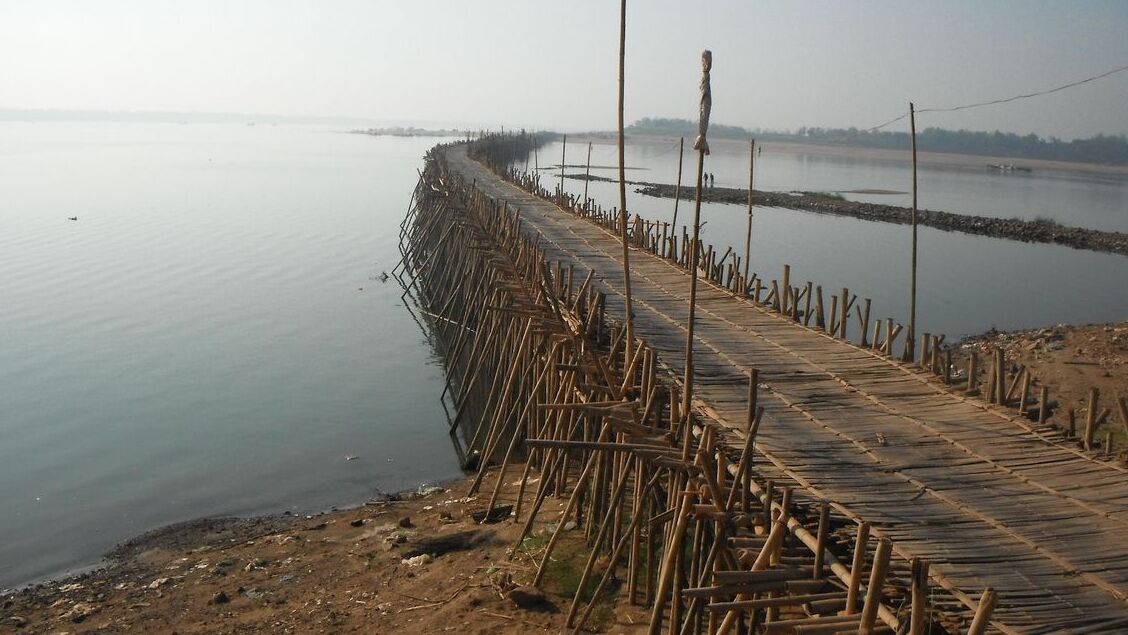

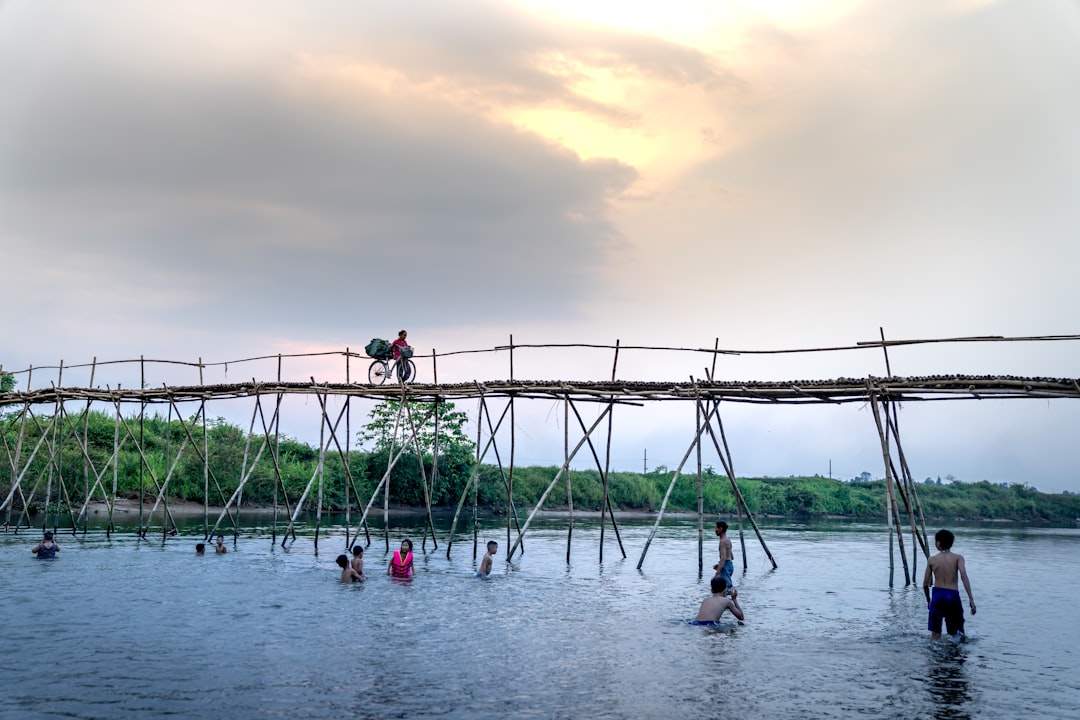
Every step onto the Koh Pen Bridge is a journey into the heart of traditional Cambodian culture. Spanning the Mekong River, this remarkable bamboo structure connects the bustling banks of Kampong Cham to the serene island of Koh Pen. Its delicate yet resilient design is not just a testament to local craftsmanship but also a symbol of the community's deep-rooted connection to the river.
### History and Origins
The origins of the Koh Pen Bridge can be traced back to the early 2000s when local villagers sought a practical solution to cross the Mekong, especially during the rainy season. Traditionally, the bridge reflects the ancient Cambodian practice of utilizing readily available materials. Bamboo, a versatile and sustainable resource, has been used in construction for centuries in Cambodia, showcasing a cultural heritage that honors nature's offerings.
Historically, the Mekong River has been central to the livelihoods and spiritual lives of the Cambodian people. It served not only as a transportation route but also as a source of sustenance and cultural identity. The bridge is typically dismantled at the onset of the rainy season in May, as rising waters render it unsafe, and is painstakingly rebuilt in October when the waters recede. This cyclical act of construction and deconstruction epitomizes resilience and adaptability, traits that have defined Cambodian communities for generations.
### Art and Architecture
Architecturally, the Koh Pen Bridge is a striking example of traditional bamboo construction. Its elegant design showcases the ingenuity of local builders, who weave together bamboo poles to create a sturdy yet flexible structure. The bridge spans approximately 1,200 meters, making it the longest bamboo bridge in Cambodia.
As one walks across, the rhythmic sway of the bridge adds an element of adventure, while the intricate patterns of the bamboo lend an artistic touch. Each year, the craftsmanship is celebrated and often attracts artisans from nearby villages who contribute to the rebuilding process, ensuring that the skills and techniques are passed down through generations.
### Local Culture and Traditions
The island of Koh Pen is not just a destination; it is a living canvas of local culture and traditions. The villagers here observe various customs that reflect their agricultural lifestyle. Rice farming is a central aspect of life, and the annual harvest festival, known as Bon Om Touk, is a vibrant celebration that marks the end of the rainy season. During this festival, locals prepare traditional dishes and participate in boat races on the Mekong, celebrating the bounty of nature.
Moreover, the bridge serves as a social hub, where villagers gather to exchange stories and news. This communal aspect highlights the importance of social ties in Cambodian culture, especially in rural areas where community life is intertwined with the rhythms of nature.
### Gastronomy
A visit to Koh Pen is incomplete without indulging in local gastronomy. The villagers take pride in their culinary traditions, offering a variety of dishes that reflect the region's agricultural bounty. One must try Kuy Teav, a flavorful noodle soup often garnished with fresh herbs and lime, commonly enjoyed as breakfast.
Another local favorite is Bai Sach Chrouk, marinated pork served over rice, often accompanied by pickled vegetables. For a sweet treat, don’t miss Nom Banh Chok, a rice noodle dish with a rich fish gravy, usually served for breakfast and enjoyed by many. To wash it all down, sample Tuk Meric, a refreshing drink made from young coconuts, perfect for the warm Cambodian climate.
### Lesser-known Curiosities
While the Koh Pen Bridge is a well-known attraction, some intriguing details often go unnoticed by tourists. For instance, the bridge's construction involves not just bamboo but also ropes made from natural fibers, showcasing the ingenuity of local artisans. Additionally, the bridge operates on a unique system of community cooperation, where every villager contributes their time and skills to its annual rebuilding.
Another hidden gem is the annual Koh Pen Festival, where locals celebrate the bridge's significance through art, music, and dance, transforming the island into a vibrant cultural showcase. This festival is not widely advertised, making it a rare opportunity for visitors to engage deeply with local customs.
### Practical Visitor Information
The best time to visit the Koh Pen Bridge is during the dry season, from November to March, when the weather is cooler and more pleasant. The bridge is accessible by foot from Kampong Cham, providing a scenic walk along the Mekong River.
When planning your visit, consider wearing comfortable shoes, as the bridge's swaying motion can be disconcerting for some. Take the time to observe the craftsmanship up close and interact with locals who are often eager to share their stories.
For those looking to delve deeper into the cultural landscape of Kampong Cham, the Secret World app can be a valuable resource for planning a personalized itinerary that captures the essence of this enchanting region.