



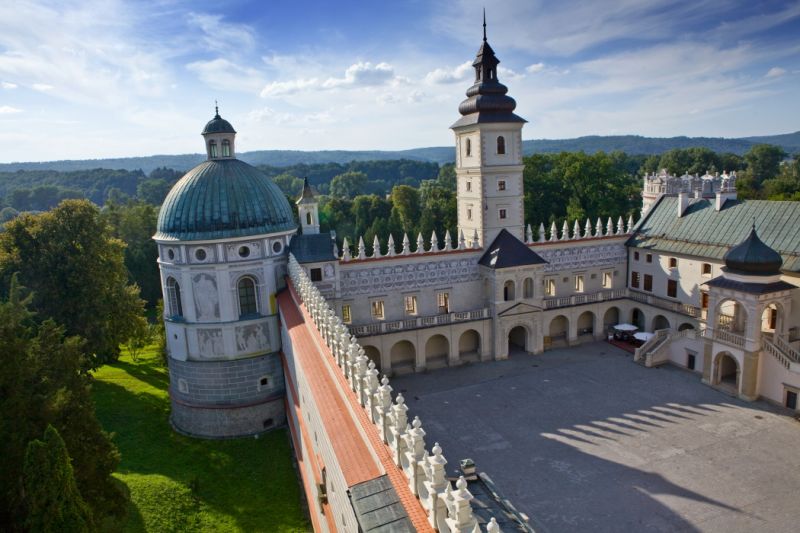
Nestled on the right bank of the San River, Krasiczyn Castle stands as a testament to the rich tapestry of Polish history and culture. Its striking Renaissance architecture and lush surroundings make it a hidden gem for those eager to explore the depths of Poland's past.

The origins of Krasiczyn Castle trace back to a 14th-century wooden fortification, which served as a strategic stronghold in the region. In 1580, construction began under Stanislaw Siecienski of Siecin, a local nobleman eager to create a permanent residence that reflected his status and ambition. However, it was his son, Marcin Krasicki, who would see the project through to its completion in 1633. The castle's design was the brainchild of the Italian architect Galleazzo Appiani, whose vision infused the structure with elements of the Renaissance style, characterized by symmetry, proportion, and grandeur.
As visitors approach Krasiczyn Castle, they are greeted by its impressive façade, adorned with intricate stonework and dramatic towers. The castle is a prime example of the Mannerist architectural style, where the influences of the Italian Renaissance meld seamlessly with local traditions. The lush gardens and surrounding landscape enhance its beauty, providing a picturesque backdrop that has inspired countless artists and photographers. Inside, the castle boasts exquisite frescoes and mural paintings that tell stories of its noble inhabitants, showcasing the artistic significance that this site holds in Polish heritage.

Beyond its architectural splendor, Krasiczyn is deeply rooted in local culture and traditions. The nearby village hosts various festivals throughout the year, celebrating both historical events and the vibrant customs of the region. One such event is the annual Krasiczyn Castle Festival, which typically features medieval reenactments, traditional music, and local crafts. This festival not only highlights the castle's historical significance but also fosters a sense of community pride and connection to their ancestors.
When it comes to gastronomy, Krasiczyn offers a culinary experience that reflects the flavors of Poland. The local cuisine features hearty dishes, such as pierogi (dumplings filled with potatoes, cheese, or meat) and bigos (hunter's stew made with sauerkraut and various meats). Visitors can also savor regional specialties like kielbasa (Polish sausage) and żurek, a sour rye soup often served with sausage and an egg. Pair these dishes with a glass of locally produced mead or a robust Polish vodka for a truly authentic dining experience.
Intriguingly, Krasiczyn Castle holds several lesser-known curiosities that often escape the notice of most tourists. One such detail lies in the castle's unique coats of arms, which showcase the lineage of its noble families. Additionally, the castle's extensive cellar system, used for both storage and as a means of defense, is a fascinating exploration point for those intrigued by its historical military significance. There are whispers of hidden passages and secret rooms, adding an air of mystery that captivates the imagination.
For those planning a visit, the best time to explore Krasiczyn Castle is during the late spring to early autumn months, when the weather is mild, and the gardens are in full bloom. It is advisable to check local schedules for any special events or guided tours that might enhance the experience. Be sure to take time to wander the grounds, enjoying the panoramic views of the surrounding landscape and the serene ambiance that envelops this majestic castle.
In conclusion, Krasiczyn Castle is not just a monument of architectural beauty but a vibrant portal into the cultural and historical heart of Poland. Its rich narratives, artistic significance, and delectable local cuisine make it a compelling destination for any traveler. To make the most of your visit, consider using the Secret World app to craft a personalized itinerary that highlights the best of this enchanting locale.
