



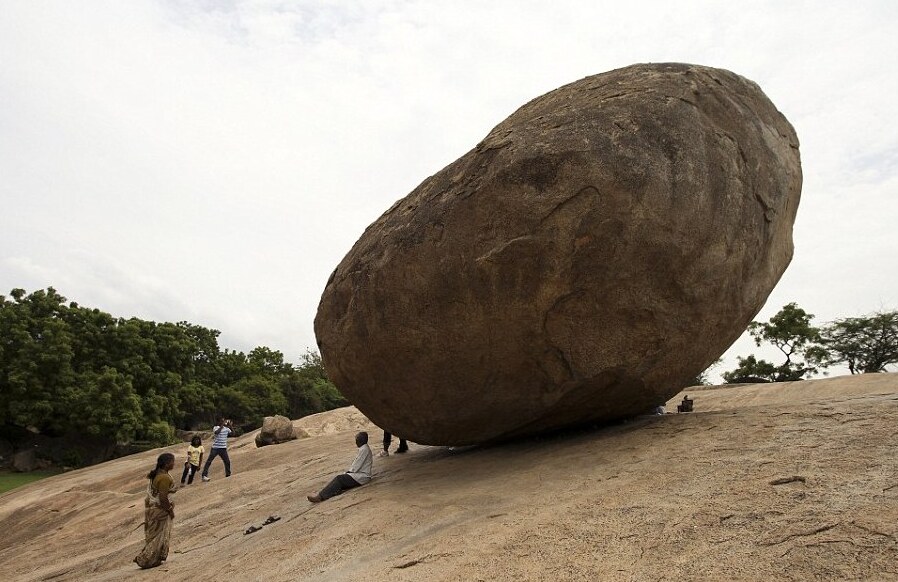
Nestled in the coastal town of Mahabalipuram, Krishna's Butter Ball is as enchanting as it is perplexing. This 250-ton boulder, measuring around 20 feet in diameter, has captured the curiosity of visitors for over 1,300 years. The rock seems poised to roll downhill at any moment, yet it has remained steadfast through the ages—an enduring mystery that has baffled both locals and scientists alike. Legend has it that this massive stone is linked to the playful antics of Lord Krishna, a beloved deity in Hindu mythology known for stealing butter from his mother, Yashoda. It is believed that the butter ball symbolizes the divine mischief of Krishna, who is often depicted as a butter-thief in various artistic renditions.
The origins of this geological marvel can be traced back to the 7th century, during the reign of the Pallava dynasty, which was known for its remarkable contributions to architecture and art in South India. The Pallavas, particularly under the rule of Narasimhavarman I, were instrumental in establishing Mahabalipuram as a significant cultural and religious center. The boulder itself, however, defies easy categorization; its presence in this UNESCO World Heritage site adds an intriguing layer to the rich tapestry of Hindu architecture and mythology.
Aside from its gravitational enigma, Krishna's Butter Ball is surrounded by exquisite rock-cut temples and shore temples, showcasing the intricate craftsmanship of the era. Notable nearby artworks include the Arjuna's Penance, a colossal bas-relief that narrates the story of Arjuna from the Mahabharata. The architectural style of the Pallavas is characterized by their mastery of stone carving, evident in the detailed sculptures and grand structures that dot the landscape. These artistic creations are not only aesthetically pleasing but also serve as crucial historical documents that reflect the socio-religious fabric of ancient South India.
The local culture of Mahabalipuram is vibrant and deeply rooted in tradition. Festivals such as Pongal—a harvest festival celebrated in January—bring the community together, filled with music, dance, and a plethora of traditional dishes. The town’s rich heritage is also evident in its local customs, such as the practice of Kolam, where intricate rice flour designs are drawn at the entrance of homes as a form of welcome and devotion. Visitors will find that these customs and celebrations provide insight into the daily lives of the residents, showcasing their resilience and connection to their heritage.
No visit to Mahabalipuram would be complete without indulging in its unique gastronomy. The coastal town is known for its fresh seafood—think grilled fish, prawns, and crabs, often marinated in spicy local masalas. Don’t forget to try Dosa, a thin rice pancake served with a variety of chutneys, or Idli, soft steamed rice cakes, which are staple breakfast items here. For a sweet treat, enjoy Mysore Pak, a rich dessert made from ghee, sugar, and chickpea flour, which has its origins in the nearby city of Mysore.
Among the lesser-known curiosities surrounding Krishna's Butter Ball is the story of Governor Arthur Lawley, who in 1908 attempted to move the boulder using seven elephants—a feat that proved impossible and became part of local folklore. Additionally, the site has inspired numerous artists and poets, making it a muse for creativity across generations. Birdwatchers may also be delighted to spot various species in the surrounding area, as the region is home to diverse flora and fauna, enhancing its ecological significance.
For those planning to visit, the best time to explore Mahabalipuram is between November and February, when the weather is pleasantly cool. It’s advisable to wear comfortable shoes as you wander through the various temples and historical sites. Don't forget to bring your camera, as the interplay of light on the boulder during sunrise and sunset creates an enchanting setting.
As you stand before this magnificent boulder, take a moment to reflect on its historical significance and the stories it holds. The Krishna's Butter Ball is not just a geological wonder; it is a testament to the ingenuity of ancient civilizations and their ability to blend mythology with architecture.
To truly appreciate the richness of Mahabalipuram and its surroundings, consider using the Secret World app to plan a personalized itinerary that caters to your interests.
