



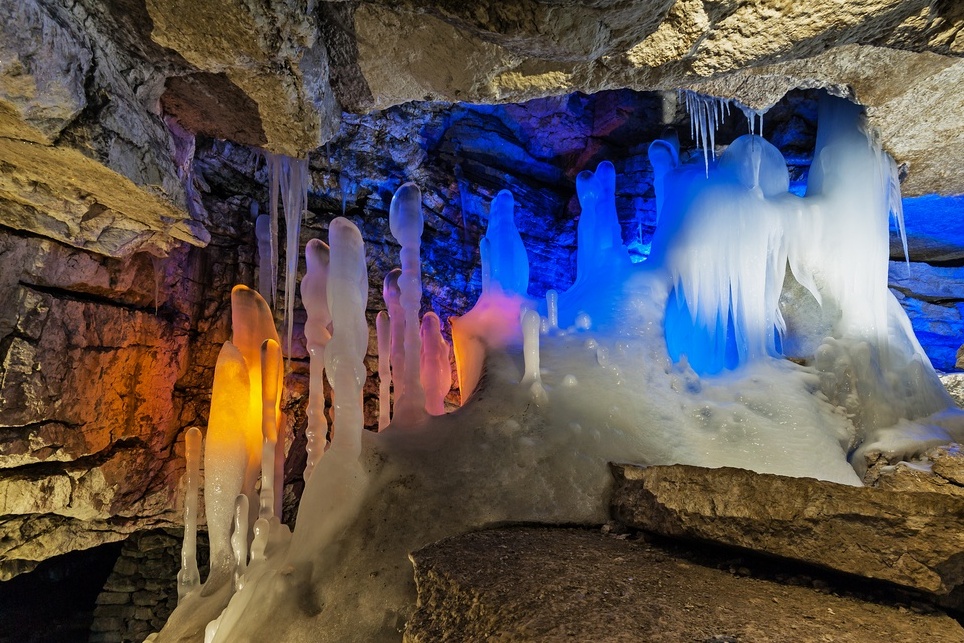
Nestled in the heart of the Ural Mountains, near the quaint town of Kungur in Perm Krai, lies the enchanting Kungur Ice Cave. This magnificent karst cave, stretching over 5 kilometers of explored passages, is not only one of the largest in Russia but also the only cave in the country specifically equipped for tourists. Formed over thousands of years, the cave showcases a breathtaking display of nature's artistry, where ice stalactites and unique rock formations create a mesmerizing underground landscape.
### History and Origins The Kungur Ice Cave has a rich history, with its origins dating back to approximately 10,000 years ago. Created through the dissolution of limestone by rainwater, the cave has been a subject of local legend and fascination for centuries. It was first discovered by Mikhail Semyonov, a local peasant, in c. 1700, and its existence was documented in 1760 by the Russian geographer Gottlieb Fuchs. The cave became a tourist attraction in the early 20th century, and since then, it has drawn visitors eager to experience its icy wonders.
### Art and Architecture While the Kungur Ice Cave is a natural wonder, its architectural significance lies in its extensive network of chambers and ice formations. The cave features 11 large halls, each with its unique characteristics and stunning visuals. Notable formations include the Ice Mountain, a towering display of ice, and the Hall of the Ice Pillars, where massive ice columns rise majestically from the ground. The interplay of light and ice creates a surreal atmosphere, drawing comparisons to an otherworldly cathedral of ice.
### Local Culture and Traditions The surrounding region of Kungur is rich in cultural traditions. Local festivals often celebrate the natural beauty of the area, with events like the Ice and Snow Festival drawing crowds every winter. The cave itself is steeped in folklore, with tales of ancient spirits and mystical creatures said to inhabit its depths. Traditional crafts, such as wood carving and pottery, thrive in the region, reflecting the local connection to nature and artistry.
### Gastronomy When visiting Kungur, one must not miss the chance to savor local delicacies. The region is known for its hearty Ural cuisine, featuring dishes such as pelmeni (dumplings filled with meat) and kasha (buckwheat porridge). Delicious fish soup made from the local catch of the Sylva River is a must-try. For a sweet treat, indulge in honey cakes, which are popular in Russian culture and often paired with traditional tea.
### Lesser-known Curiosities Beyond its stunning ice formations, the Kungur Ice Cave harbors fascinating secrets. One of the lesser-known aspects is the presence of the Underground Lake, which remains unfrozen year-round, providing a stark contrast to the surrounding ice. Additionally, the cave's unique ecosystem hosts several species of bats, making it a site of interest for biologists. Some visitors might also be intrigued by the sound phenomena inside the cave, where whispers can echo dramatically due to the cave's acoustics.
### Practical Visitor Information The best time to visit the Kungur Ice Cave is during the winter months from November to March, when the ice formations are at their most spectacular. Guided tours are available, providing insights into the cave's history and geology. Dress warmly, as the inside temperature can drop to below zero degrees Celsius. Look out for the Ice Museum near the cave entrance, which showcases ice sculptures and further enriches the experience.
To explore the magic of Kungur Ice Cave and the town of Filippovka, consider utilizing the Secret World app to create a personalized itinerary that caters to your interests.
