


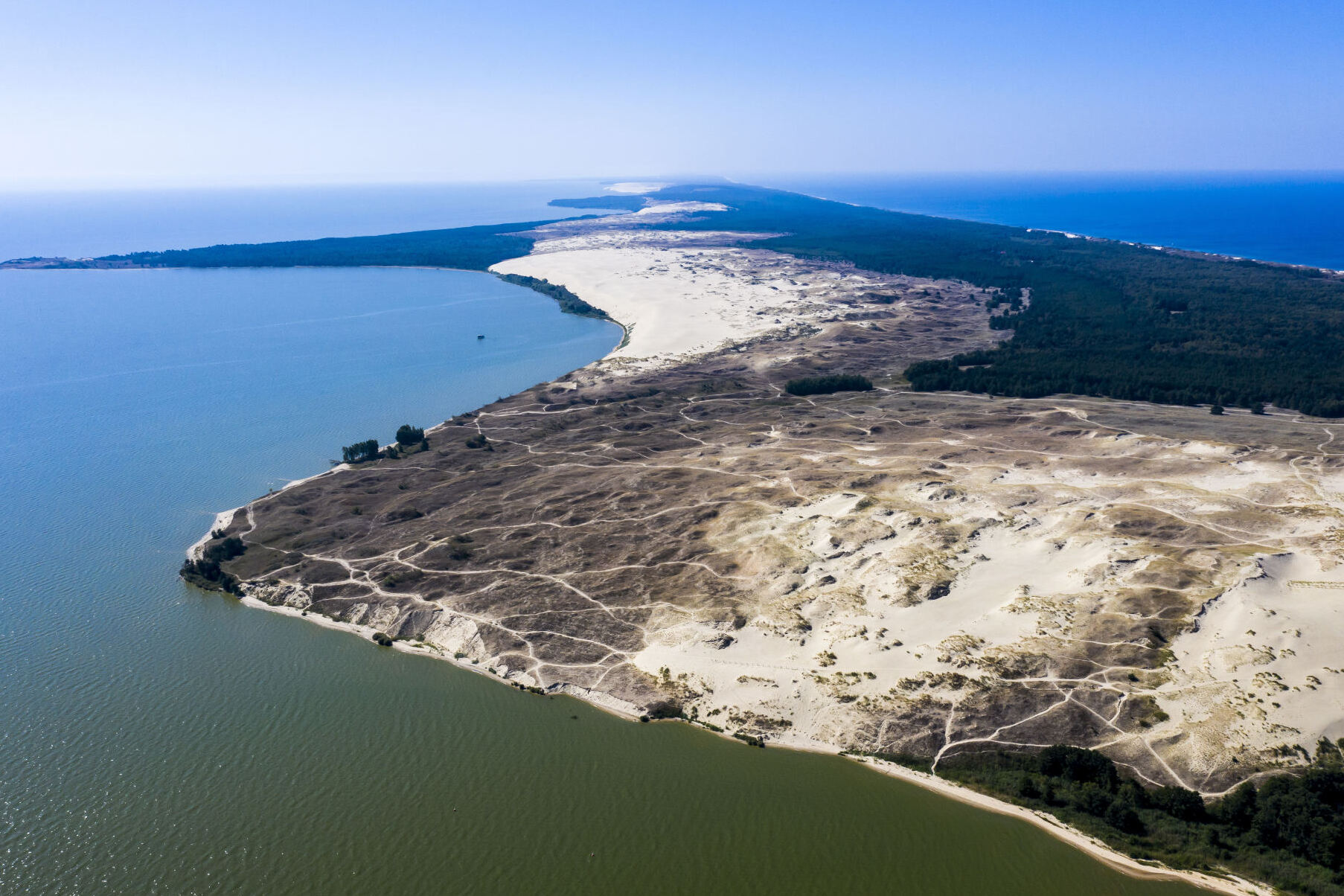
Nestled between the Baltic Sea and the Curonian Lagoon, Kursiu Nerija National Park is a treasure trove of natural beauty, history, and culture. Established in 1991, this national park spans the stunning Neringa Peninsula, renowned for its unique ecosystems, including wind-sculpted sand dunes, lush pine forests, and tranquil beaches. Its origins date back to ancient times when the region was inhabited by the Curonians, a Baltic tribe known for their seafaring skills and rich folklore.
The park's history is intertwined with the struggles of the Teutonic Knights and later the Prussians, who established settlements along the coast. The area's cultural significance grew during the 19th century as artists and intellectuals flocked to its serene landscapes, inspired by its unspoiled beauty. Today, the park serves as a sanctuary for various wildlife species, including the endangered curlew and majestic white-tailed eagle.
Visitors to Kursiu Nerija will find a wealth of art and architecture that reflects the region's unique heritage. The town of Nida is particularly noteworthy for its traditional wooden architecture, characterized by intricately carved eaves and vibrant colors. The Thomas Mann Cultural Centre, named after the famous German writer who spent summers in Nida, showcases exhibitions that celebrate the local artistic scene, emphasizing the symbiotic relationship between nature and creativity.
Local culture thrives in Kursiu Nerija, with traditions deeply rooted in the area's fishing and maritime history. The annual Nida Sea Festival celebrates the region's maritime heritage, featuring vibrant parades, traditional music, and local crafts. This festival draws visitors from across Lithuania and beyond, offering a glimpse into the rich tapestry of Curonian customs and folklore.
Culinary delights in Kursiu Nerija are a reflection of its coastal heritage. Visitors can indulge in regional specialties such as smoked fish, particularly herring and eel, which are often served with locally baked rye bread. The region is also known for its Curonian fish soup, a hearty dish that warms the soul after a day of exploring the park's natural wonders. Pairing these dishes with a glass of Kvass, a traditional fermented beverage made from rye bread, will provide an authentic taste of local gastronomy.
One of the park's lesser-known curiosities is its singing sand dunes. As visitors walk along the Pyramid Dune, they may hear a soft, melodic sound produced by the grains of sand as they shift beneath their feet. This phenomenon has enchanted locals and visitors alike for centuries, adding an air of mystery to the landscape. Additionally, the Dancing Forest, located near Žeimelis, features trees that have grown in peculiar, twisting shapes, making it a fascinating site for nature enthusiasts and photographers.
For those planning a visit, the best time to explore Kursiu Nerija National Park is during the late spring to early autumn months (May to September). During this period, the weather is mild, and the flora and fauna are in full bloom. It’s advisable to wear comfortable shoes for hiking and to bring a camera to capture the breathtaking vistas. Don’t miss the opportunity to climb the Ephraim Dune for panoramic views of the lagoon and the sea.
As you traverse the park’s trails, be sure to look out for the historic fishing villages that dot the landscape, where you can learn more about traditional fishing methods and local artisan crafts. The welcoming atmosphere and rich natural beauty of Kursiu Nerija National Park make it a perfect destination for nature lovers and those seeking a deeper connection to Lithuania's cultural heritage.
To enhance your experience, consider using the Secret World app to create a personalized itinerary, ensuring you don’t miss any hidden gems in this breathtaking landscape.
