



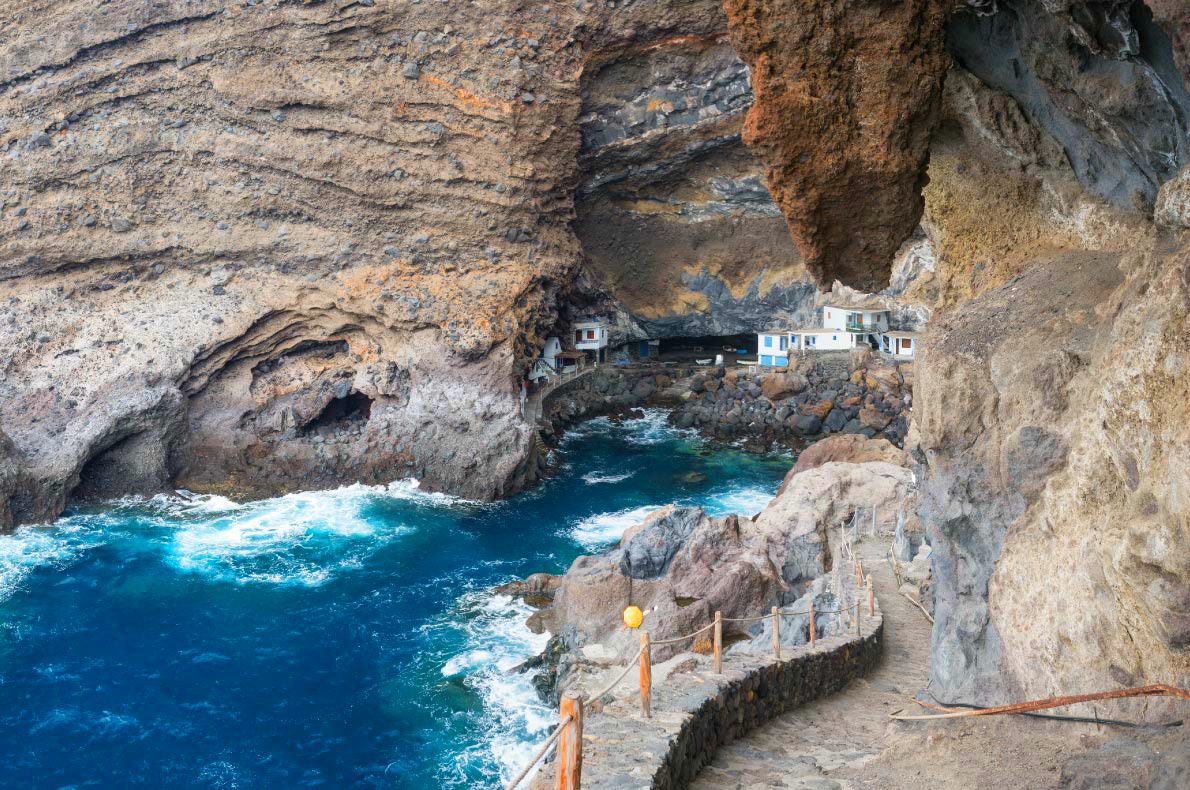
The Pirate Cave Poris of Candalaria near the town of Tijarafe on La Palma Island is a mesmerizing hidden cove that beckons the adventurous traveler. Tucked away from the bustling paths of mainstream tourism, this remarkable site weaves together the island's rich tapestry of history, natural beauty, and cultural intrigue.
Nestled within the rugged cliffs of La Palma's northwest coast, the cave's origins are as mysterious as they are fascinating. The Poris of Candalaria has long been shrouded in tales of pirates and buccaneers. During the 16th and 17th centuries, the Canary Islands were a hotspot for pirate activity due to their strategic location on the trade routes between the Americas and Europe. Tijarafe played a role in these maritime escapades, with local legend suggesting that the cave served as a clandestine hideout for pirates and smugglers. While definitive historical records are scarce, the allure of these stories enhances the cave’s enigmatic charm.
The architecture of the cave is a testament to the raw power of natural forces. Carved by relentless ocean waves, the cave's entrance is a dramatic archway that frames the azure waters of the Atlantic Ocean. Inside, the cavern opens up into a vast space where sunlight dances across the walls, creating an ethereal atmosphere. Unlike man-made structures, the cave’s aesthetic is a masterpiece of nature itself, with its rugged formations and the interplay of light and shadow offering a unique canvas that changes with the time of day and season.
In terms of local culture, Tijarafe and its surroundings are steeped in traditions that celebrate the island's vibrant history. The annual Fiestas de Nuestra Señora de Candelaria, held in early February, is a significant cultural event. This festival honors the Virgin of Candelaria, the patron saint of the Canary Islands, with a series of religious, cultural, and musical events. The festival's highlight is the Romería, a traditional pilgrimage complete with colorful costumes, lively music, and local delicacies, reflecting the community's enduring connection to its cultural roots.
No exploration of La Palma would be complete without indulging in its gastronomic offerings. The island's cuisine is a delightful fusion of Spanish and indigenous influences. Visitors to Tijarafe should not miss trying mojo sauces, a staple accompaniment to many dishes. These vibrant sauces come in red (mojo rojo) and green variants (mojo verde) and pair perfectly with papas arrugadas—small, locally grown potatoes boiled in salted water. The region also prides itself on its goat cheese, which is often smoked and carries a distinctive flavor that speaks of the island's pastoral traditions. Pair these with a glass of Malvasía wine, a sweet legacy from the island’s viniculture.
For those inclined towards the hidden stories of a place, the Pirate Cave Poris of Candalaria harbors lesser-known curiosities that intrigue the discerning visitor. Not many are aware that the cave is also a site of geological interest, with its unique formations providing a glimpse into the island’s volcanic past. Furthermore, local legends speak of hidden treasures and ghostly sightings, adding a layer of mystique that captivates the imagination.
When planning a visit to this secluded treasure, timing and preparation are key. The best time to explore the cave is during the late spring or early autumn, when the weather is mild, and the island is less crowded. The hike to the cave is a rewarding journey in itself, spanning approximately 12 kilometers. The trail winds through stunning landscapes, offering panoramic views of the ocean and the lush greenery of the island. Sturdy footwear is recommended, as some sections can be steep and uneven.
Upon arrival, keep an eye out for the local wildlife. The area is home to a variety of bird species, providing an added treat for nature enthusiasts. As you explore, respect the site’s natural beauty and cultural significance by adhering to local guidelines and leaving no trace.
The Pirate Cave Poris of Candalaria is more than just a hidden gem; it is a portal to the past, a natural wonder, and a cultural touchstone. As you stand within its ancient walls, you are not just witnessing the island's history—you are becoming a part of it.
