
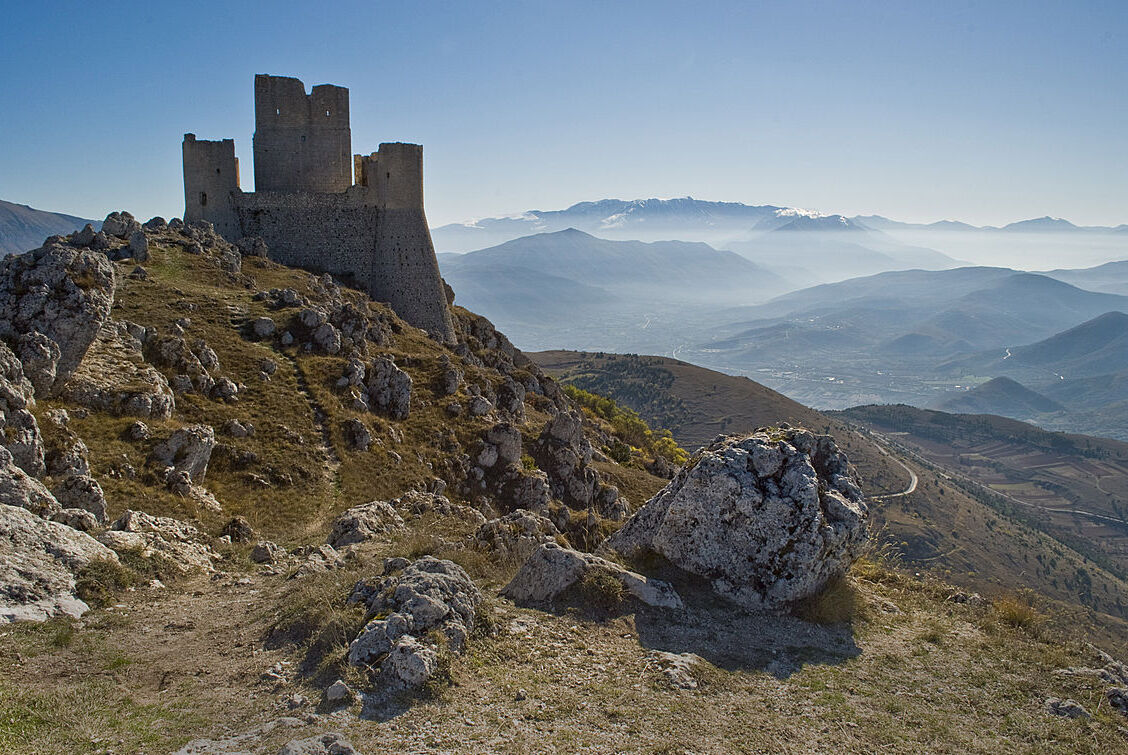

Perched dramatically at nearly 1,500 meters above sea level, La Rocca Calascio offers not just panoramic views but a journey through time. This formidable fortress, the highest and one of the most preserved castles in Italy, stands sentinel over the rugged landscape of the Abruzzo region, inviting travelers to explore its storied past and vibrant present.
The origins of La Rocca Calascio stretch back to the 10th century, a period marked by feudal fragmentation and the need for robust defense mechanisms. Initially constructed as a simple watchtower, the fortress was expanded in the 13th century under the rule of the Norman barons. It served as a strategic military outpost, safeguarding the important sheep trade routes of the Tratturo Magno—a network vital to the region's economic prosperity. In 1461, Ferdinand I of Naples bolstered the castle's defenses, transforming it into an impregnable stronghold during the Aragonese domination of Italy.
Architecturally, La Rocca Calascio is a marvel of medieval ingenuity. The castle features a quadrangular layout with cylindrical corner towers that exemplify the defensive architecture of the time. Its stone walls, crafted from local limestone, blend seamlessly with the surrounding environment. While the interior has been largely stripped of furnishings, the stark, minimalist design continues to evoke the austere life of its inhabitants. The adjacent village of Calascio, with its charming stone houses and narrow alleys, complements the castle's rugged beauty. Together, they create a picturesque tableau that has inspired filmmakers, most notably serving as a backdrop in the 1985 fantasy film Ladyhawke.
The cultural tapestry of Calascio is woven with traditions that echo through the ages. The feast of San Nicola di Bari, celebrated on December 6th, is a highlight, featuring processions and communal gatherings that bring the community together. In summer, the Festa della Transumanza commemorates the ancient practice of transhumance, where shepherds lead their flocks to greener pastures, an event that underscores the region's pastoral heritage. These gatherings are not only an opportunity to witness local customs but also to engage with the warm hospitality of the Abruzzese people.
No visit to Calascio is complete without indulging in its rich gastronomy. The region is renowned for its arrosticini—succulent skewers of lamb grilled to perfection, often enjoyed with a glass of Montepulciano d'Abruzzo wine. Local cheeses, such as the aromatic pecorino, reflect the area's pastoral traditions and are a testament to its enduring agricultural practices. For a sweet finish, try parrozzo, a traditional cake made from semolina and almonds, offering a taste of the region's culinary ingenuity.
Beyond its historical and cultural significance, La Rocca Calascio holds secrets that intrigue the curious traveler. Among these is the legend of the “Anello del Diavolo”—the Devil's Ring—a circular stone formation nearby, believed to be a remnant of ancient rituals. The castle's remote location has also sparked tales of ghostly apparitions, enhancing its mystique. Many visitors miss the subtle interplay of light and shadow on the castle walls at sunset, a sight that transforms the stronghold into a golden beacon against the twilight sky.
For those planning a visit, spring and autumn offer the most favorable conditions. The mild weather provides a comfortable climate for hiking the trails that wind through the Gran Sasso National Park. The ascent to the castle, though steep, rewards with sweeping vistas of the Apennines. Pack sturdy footwear, as the terrain can be challenging. Look for signs of wildlife—golden eagles and Apennine wolves are among the park's elusive inhabitants.
In essence, La Rocca Calascio is not merely a relic of the past but a living monument that continues to captivate and inspire. Its blend of history, architecture, and culture embodies the spirit of Abruzzo—a region where time seems to stand still, offering a timeless invitation to explore and discover.


