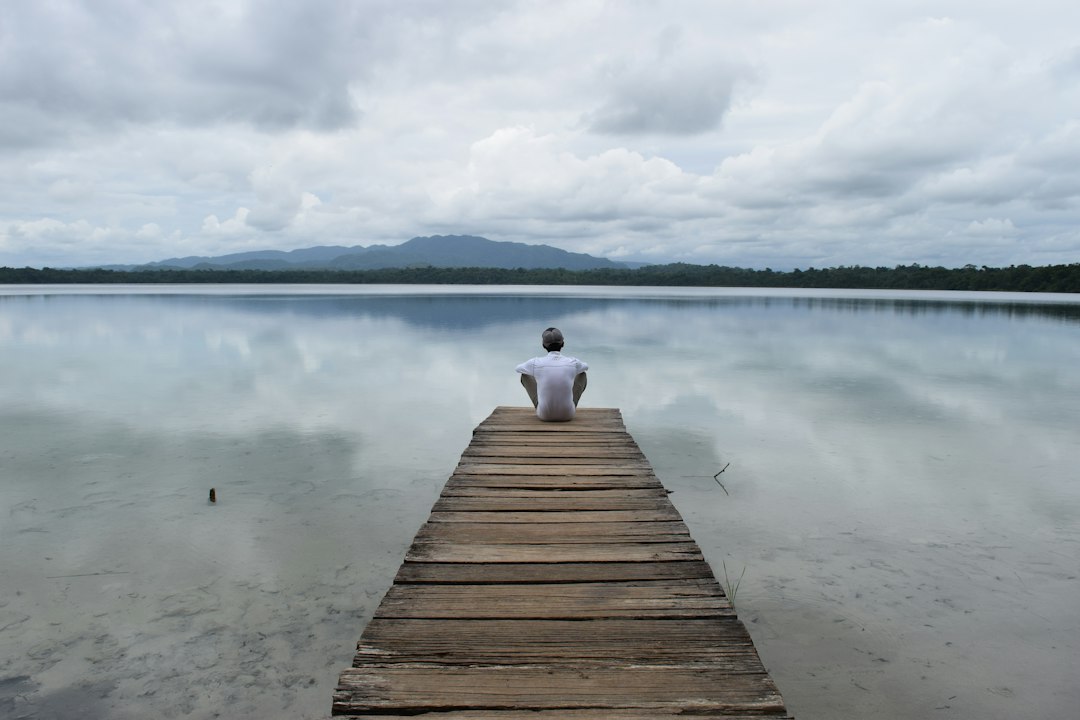

A perfect circle of emerald water, hidden among the canopies of a lowland rainforest: Lake Lachuá does not announce itself with flashy signs or elaborate tourist infrastructure. It is reached on foot, along a path in the jungle where the silence is broken only by the calls of toucans and the crunching of branches under the feet of wild animals. Even before seeing the water, one can feel that something extraordinary is approaching.
Lake Lachuá is located in the department of Alta Verapaz, not far from the city of Cobán, in northern Guatemala. It is the heart of the Lachuá Lagoon National Park, a protected area that spans about 14,000 hectares of lowland tropical rainforest — a rare and fragile ecosystem, completely different from the mountain forests that characterize much of the country. The lake itself has a diameter of about 2 kilometers and a depth that exceeds 200 meters in some places, features that give it that intense green hue and almost unreal transparency that impress every visitor.
A path in the jungle as a prelude to the water
To reach the shore of the lake, visitors must walk a path of about 4 kilometers through the forest, starting from the park entrance. The walk takes between 45 minutes and an hour, and this is where the true experience begins. Baird's tapirs — the largest land mammal in Central America — frequent this area with surprising regularity, and their tracks in the mud are often visible along the way. Toucans move among the treetops, and those who walk quietly have a good chance of spotting rarer birds such as the king of the forest, the scarlet macaw.
The path is well marked and can be traversed without a guide, although relying on a local guide allows for precise identification of flora and fauna. The roots of the trees emerge from the clayey soil, and the forest canopy filters the light in such a way as to create an almost twilight atmosphere even during the central hours of the day. When the trees open up and the green surface of the lake suddenly appears, the effect is genuinely surprising.
Swimming in a 200-Meter Deep Lake
One of the most unique experiences that Lake Lachuá offers is the opportunity to swim directly in its waters. The lake is free of dangerous currents along the shore, and the water quality is generally good, maintained by the isolation of the park and low human pressure. There are some wooden platforms from which one can dive, positioned along the shore accessible to visitors. Swimming in such a deep basin, surrounded by primary forest and with the water changing color from light green on the surface to dark blue towards the center, is an experience hard to compare to anything else.
It is important to know that crocodiles live in the lake, but the swimming area is considered safe because the animals tend to frequent more sheltered areas away from human access points. Park staff are present and provide updated information on daily conditions. No motorized vessels are allowed on the lake, which helps maintain absolute silence on the surface of the water.
How to organize the visit
The park is managed by the National Council of Protected Areas (CONAP) and requires the payment of an entrance fee of about 50 quetzals for foreign visitors, an amount equivalent to less than 7 euros. Inside the park, there are very simple accommodation facilities — hammocks and basic dormitories — that allow you to stay overnight and experience the lake at dawn, when the morning mist settles on the surface and the wildlife is more active. It is advisable to bring food, drinking water, and insect repellent, as the services within the park are minimal.
The most common way to reach the park from Cobán is to take a local bus directly to Playa Grande (also called Ixcán), getting off at the turnoff for Lachuá. The journey takes about three hours. The best time to visit is between November and April, during the dry season, when the trails are more passable and the chances of heavy rain are lower. During the rainy season, the trail can become very muddy and some sections are difficult to traverse without proper boots.
An ecosystem to protect
Lachuá Lake is one of the few lowland lakes in Guatemala still surrounded by intact primary forest. Agricultural pressure in the areas surrounding the park is real, and the conservation of this ecosystem also depends on the awareness of visitors. Walking only on marked trails, not collecting plants or disturbing animals, and supporting local facilities are concrete gestures that make a difference in an area where responsible tourism is still a practice under development. Lachuá is not a place for those seeking comfort: it is a place for those who want to understand what it means to be within a living forest.