
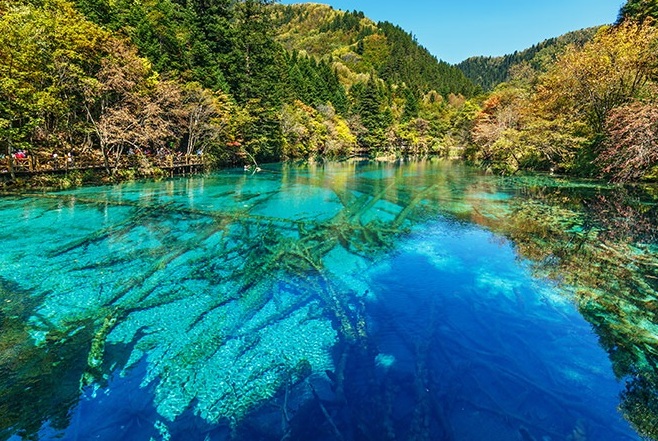

Nestled in the heart of Jiuzhaigou National Park, the stunning blue lake captivates visitors with its ethereal beauty. At an elevation of 1,375 meters, this pristine body of water is surrounded by the dramatic Min Mountains, providing a breathtaking backdrop that feels worlds away from the bustling streets of Beijing. Recognized as a UNESCO World Heritage site in 1992, Jiuzhaigou is not only a natural wonder but also a cultural tapestry woven with history and tradition.
History and Origins The history of Jiuzhaigou is interlaced with the stories of the Qiang minority, who have inhabited this area for centuries. The region gained prominence in the 1970s when it was discovered by the broader Chinese population, leading to its declaration as a national park in 1984. Its name, translating to “Valley of Nine Villages,” reflects the ancient settlements that once thrived here. The park’s establishment aimed to preserve its unique ecosystem, which includes over 140 species of birds and 30 species of mammals, along with the spectacular lakes and waterfalls that characterize the landscape.
Art and Architecture While Jiuzhaigou is primarily celebrated for its natural beauty, the cultural influence of the Qiang people is evident in the region. Traditional Qiang architecture, with its wooden structures and intricate carvings, can be observed in the few remaining villages within the park. These buildings, designed to withstand the harsh mountain weather, feature sloping roofs and vibrant patterns that echo the natural surroundings. Visitors might not only admire the scenic vistas but also appreciate the blend of human artistry and nature’s splendor.
Local Culture and Traditions The Qiang people celebrate various festivals throughout the year, showcasing their rich heritage. One of the most notable is the Qiang New Year, where locals don traditional attire, perform folk dances, and engage in rituals honoring ancestors. This vibrant celebration typically occurs in October and draws visitors eager to experience the unique cultural practices. Moreover, the region's Buddhist influences are palpable, with several temples and spiritual sites dotting the landscape, further enriching the cultural tapestry of Jiuzhaigou.
Gastronomy A visit to Jiuzhaigou would be incomplete without sampling the local cuisine. The Qiang people’s traditional foods include barbecued meats seasoned with local herbs, alongside dishes made from corn and potatoes, staples in their diet. Additionally, the region is known for Tibetan butter tea and yak milk, both of which offer a unique taste of the high-altitude culture. Street vendors often sell sweet rice cakes and vegetable dumplings, perfect for travelers seeking to indulge in local flavors.
Lesser-Known Curiosities While many tourists flock to the iconic lakes, few are aware of the hidden waterfalls that await exploration. The Nuorilang Waterfall, cascading from a height of 24.5 meters, is often overshadowed by its more famous neighbors but offers a serene escape for those willing to venture off the beaten path. Additionally, the park is home to ancient tree fossils, over 100 million years old, hidden within its rich forest, providing a glimpse into the Earth’s distant past.
Practical Visitor Information The best time to visit Jiuzhaigou is during the autumn months (September to November), when the foliage transforms into a kaleidoscope of colors, reflecting beautifully on the lakes. To make the most of your visit, consider arriving early to avoid crowds and take advantage of the park's extensive hiking trails. Always carry a camera, as every corner of Jiuzhaigou offers stunning photographic opportunities, from the turquoise waters to the vibrant wildlife.
To enhance your journey, download the Secret World app, which can help you craft a personalized itinerary that captures the wonders of Jiuzhaigou National Park.


