
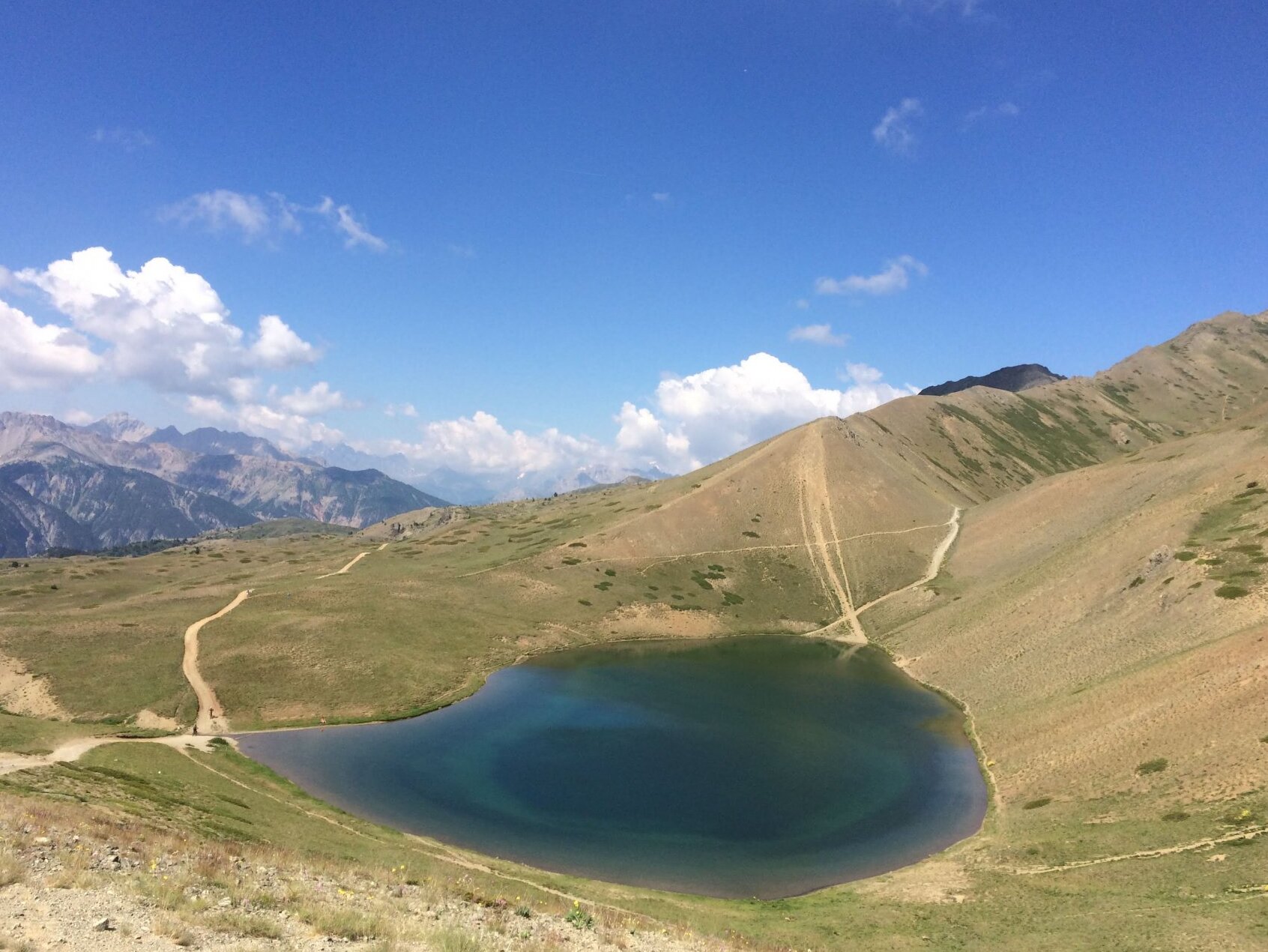

Nestled in the heart of the Cottian Alps, where the borders of France and Italy blur into breathtaking landscapes, lies Lake Gignoux, also known evocatively as the "Lake of Seven Colours." This natural spectacle, perched at an altitude of 2,300 meters, rewards those who embark on the hiking trails with a view that captivates and mystifies. Its waters, shimmering in a myriad of hues, stand as a testament to the region's geological wonders and cultural intersections.
The history of Lake Gignoux is woven into the fabric of the Alpine region, reflecting centuries of territorial shifts and cultural exchanges. Historically, the area surrounding the lake has been a crossroads for various civilizations, from the ancient Celts to the Romans, who valued these passages for trade and military expeditions. The lake itself, while not a focal point of written history, has been a silent witness to these transformations. It sits near the path of the Via Domitia, one of the first Roman roads built in 118 BC, connecting Italy with the Iberian Peninsula.
Architecturally, the region around Lake Gignoux is marked by a blend of rustic Alpine structures and remnants of military fortifications. The nearby Capanna Mautino Refuge, a popular stop for hikers, exemplifies mountain architecture with its sturdy stone walls and wooden accents—designed to withstand harsh winters while offering warmth and hospitality. Though the lake lacks human-made artistic landmarks, its natural artistry is unparalleled. The ever-changing colors of its waters—from deep azure to emerald green—create a living canvas that has inspired countless photographers and nature lovers.
Cultural traditions in the Cervières and Cesana Torinese areas are deeply connected to the rhythms of the mountains. Local festivals often celebrate the changing seasons, with events like the Fête des Alpages (Festival of the Alpine Pastures) paying homage to the pastoral lifestyle that has sustained communities here for generations. Traditional music, featuring instruments like the accordion and hurdy-gurdy, often accompanies these celebrations, providing a soundtrack to the vibrant local culture.
Gastronomy in this Alpine region is a delectable amalgamation of French and Italian influences, with local dishes reflecting the hearty and comforting nature of mountain cuisine. Visitors are encouraged to try bagna cauda, a warm dip made from garlic and anchovies, or polenta concia, a rich, cheesy cornmeal dish. Cheeses such as toma and fontina are staples, often served alongside cured meats and robust wines from nearby valleys. These flavors, deeply rooted in the terroir, offer a taste of tradition that is both comforting and invigorating.
For those seeking lesser-known curiosities, the lake is rumored to have mystical properties, attributed to its ever-shifting colors. Some local legends suggest the lake is enchanted, with ancient spirits residing in its depths, protecting the region and its natural balance. While such tales remain in the realm of folklore, they add a layer of intrigue to the lake's already mesmerizing allure.
The best time to visit Lake Gignoux is during the late spring through early autumn, when the trails are clear, and the weather is temperate. Hikers should start their journey from Cesana Torinese, ascending through verdant meadows and past the tranquil Lake Nero. It's advisable to pack layers, as mountain weather can be unpredictable, and to bring a camera to capture the kaleidoscope of colors that dance across the lake's surface. Also, remember to check in at Capanna Mautino Refuge for a hearty meal and a chance to chat with fellow adventurers.
In this enchanting corner of the Alps, Lake Gignoux stands as a natural jewel—its beauty timeless, its colors a narrative of nature's artistry. It is a place where history, culture, and nature converge, offering visitors not just a destination, but an experience that lingers long after the journey ends.


