
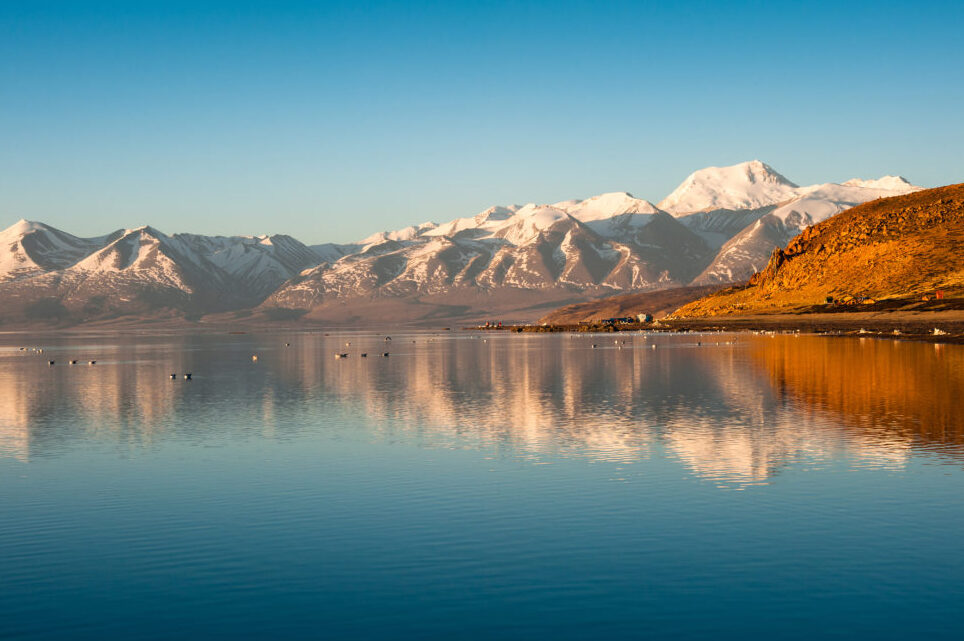

Nestled in the remote Prefettura di Ngari, Lake Manasarovar is not just the highest freshwater lake in the world; it is an emblem of spiritual significance steeped in ancient myths and traditions. At an altitude of 4,590 meters, this serene body of water has been a pilgrimage destination for Buddhists and Hindus alike for centuries, believed to be a creation of Lord Brahma himself. The shimmering lake, nearly circular with a circumference of 88 kilometers, enchants visitors with its clear blue waters that turn to a deep green at its center, reflecting the majestic silhouette of Mount Kailash, revered as the abode of Shiva. The sight is nothing short of breathtaking, particularly during the spring when the landscape bursts into vivid colors.
History and Origins The history of Lake Manasarovar is as deep and profound as the waters that fill it. According to ancient texts, this lake is believed to have been formed from the mind of Brahma, the creator god in Hindu mythology, symbolizing purity and sanctity. Its significance is well documented in the Kailash Mansarovar Yatra, an ancient pilgrimage that has attracted devotees for over a millennium. Historical accounts trace the lake's first mentions back to the 7th century, when it became a spiritual hub for travelers and monks seeking enlightenment. Buddhist texts describe it as a place where one can attain Nirvana, and this allure has remained unchanged through the ages.
Art and Architecture Though Lake Manasarovar itself is a natural wonder, its cultural and artistic significance is illuminated by the many monasteries and shrines that dot its shores. The Guge Kingdom, which thrived from the 9th to 17th centuries, left behind stunning wall paintings and sculptures in nearby temples, showcasing a blend of Tibetan and Indian art styles. The Tholing Monastery, dating back to the 10th century, features intricate murals depicting Buddhist teachings and local legends, drawing art enthusiasts and spiritual seekers alike. The architecture of these structures, characterized by ornate stupas and prayer wheels, complements the serene backdrop of the lake beautifully.
Local Culture and Traditions The culture surrounding Lake Manasarovar is rich and vibrant, steeped in ancient traditions and rituals. Local customs include the Kora, a pilgrimage ritual where devotees circumambulate the lake, a practice that is said to wash away sins. Festivals such as Saga Dawa, celebrated in May or June, mark the birth, enlightenment, and death of Buddha, drawing crowds from all over the region. The locals, predominantly Tibetan Buddhists, also engage in traditional dances and songs that reflect their deep-rooted connection to the land and its spiritual essence. The harmonious blend of nature and faith creates an atmosphere of reverence that captivates every visitor.
Gastronomy The cuisine around Lake Manasarovar is unique, often characterized by the high-altitude ingredients available in the region. Tsampa, roasted barley flour, is a staple food among the locals, often mixed with tea or used in traditional ceremonies. Momos, steamed dumplings filled with vegetables or meat, provide a delightful culinary experience, perfect for warming up after a day of exploration. Additionally, butter tea, or po cha, is a popular beverage, offering a rich and hearty taste that complements the cold climate. These local foods not only nourish the body but also connect visitors with the cultural fabric of the region.
Lesser-Known Curiosities While many visitors flock to Lake Manasarovar for its beauty and spiritual significance, few know that the lake is also home to a variety of unique wildlife. Migratory birds, including bar-headed geese, make this lake their temporary home during their long journeys, showcasing the ecological diversity of the area. Additionally, the lake is said to have healing properties, with local legends claiming that a dip in its waters can cure ailments. Hidden trails around the lake offer stunning views and opportunities for solitude, allowing travelers to experience the tranquil beauty far from the crowds.
Practical Visitor Information The best time to visit Lake Manasarovar is during the spring months of April to June, when the weather is milder and the landscape is in full bloom. Visitors should prepare for high altitude; acclimatization is key to enjoying the experience fully. Essential tips include carrying adequate layers for temperature fluctuations, ensuring sufficient hydration, and respecting local customs and traditions. Look for opportunities to engage with local communities, as their stories and hospitality enrich the journey.
A visit to Lake Manasarovar is not just a trip; it’s a spiritual journey through time and nature, where every ripple in the water tells a story. For those looking to delve deeper into the wonders of Prefettura di Ngari, using the Secret World app can help you craft a personalized itinerary that aligns with your interests.


