



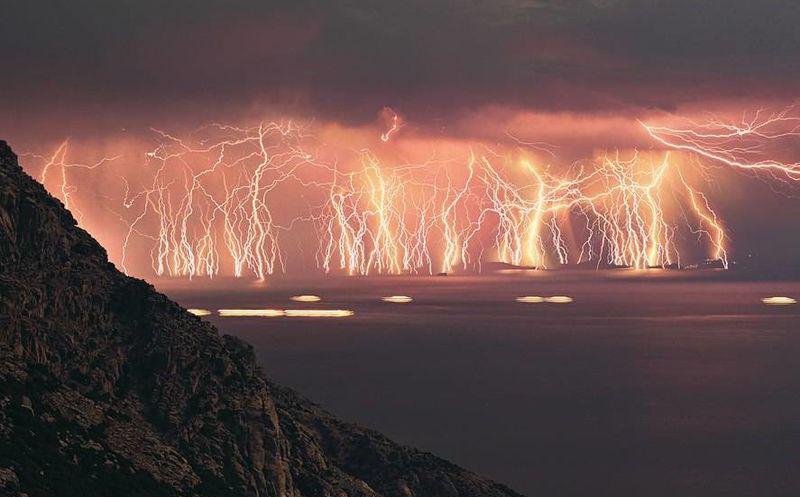
In the southwestern corner of Lake Maracaibo, Venezuela, a breathtaking natural phenomenon captivates visitors: the Catatumbo Lightning. This region, where the Catatumbo River meets the lake, experiences the world's highest frequency of lightning activity, with a staggering 250 flashes per square kilometer per year. The unique climatic conditions—stemming from the humidity, elevation, and the clash of winds from the mountains and the Caribbean Sea—create an electrifying spectacle that illuminates the night sky more than 200 nights a year, especially peaking in May and October. Each minute can see over 25 flashes, far surpassing the National Weather Service's classification of 12 strikes per minute as a severe thunderstorm.
### History and Origins The history of Catatumbo Lightning is deeply intertwined with the indigenous Wayuu and Brahma people who inhabited the region long before Spanish colonization. They viewed the lightning as a manifestation of divine forces, a belief that continues to resonate with local communities today. The phenomenon was first documented by Spanish explorers in the 16th century, who marveled at the celestial display that lit up the shores of Lake Maracaibo. Local folklore tells tales of spirits who dance across the sky, adding an air of mystery to the already enchanting spectacle.
### Art and Architecture While the Catatumbo Lightning itself is a natural artwork, the region boasts several striking architectural landmarks. The town of Maracaibo, just a short distance from the lightning's hotspot, features colonial architecture that dates back to the 18th century. The Basilica de Nuestra Señora de Chiquinquirá is a notable example, with its stunning altar and vibrant murals that celebrate the Virgin of Chiquinquirá. These artworks not only represent the religious significance of the area but also capture the cultural sentiments of the local population.
### Local Culture and Traditions The vibrant culture of the Zulia State, where Lake Maracaibo is located, is rich in traditions. The Feria de la Chinita, held in November, is one of the most significant festivals, celebrating the region's patron saint, the Virgin of Chiquinquirá. During this event, locals and visitors alike partake in traditional dances, music, and culinary delights. The festival’s highlight is the colorful procession featuring floats adorned with flowers and lights, reminiscent of the mesmerizing lightning display in the night sky.
### Gastronomy When it comes to local cuisine, the flavors of Zulia are as electrifying as the lightning itself. Patacón, made from fried green plantains, is a popular dish, often served with various toppings such as shredded beef or cheese. Additionally, arepas—cornmeal cakes filled with a variety of ingredients—are a staple. For a sweet treat, don’t miss torta de plátano, a banana cake that reflects the region’s agricultural bounty. Pair your meal with chicha, a traditional sweet rice drink, to fully immerse yourself in the local culinary scene.
### Lesser-Known Curiosities While many are familiar with the Catatumbo Lightning, few know that this phenomenon has been a source of inspiration for scientists and artists alike. The lightning’s high frequency has made it an ideal location for studying climate patterns and atmospheric electricity. Interestingly, the area is also home to unique wildlife, including the endemic Maracaibo bird, which has adapted to thrive in this electrifying environment. Furthermore, the Catatumbo Lightning is so powerful that it can be seen from over 400 kilometers away, illuminating the night sky for travelers venturing to the region.
### Practical Visitor Information For those looking to witness this natural spectacle, the best time to visit is between May and October, when the lightning activity peaks. The town of Los Ciénagas is an ideal base for exploring the surrounding area, with local tour operators offering boat trips on Lake Maracaibo to get closer to the action. Bring a camera to capture the mesmerizing flashes, and be prepared for an unforgettable evening under the electrifying sky. Make sure to dress comfortably and pack insect repellent, as the area can be humid and buggy.
In conclusion, the Catatumbo Lightning is not just a natural phenomenon; it's a symbol of the rich history, culture, and biodiversity that Venezuela has to offer. To fully appreciate this electrifying destination, consider using the Secret World app for a personalized itinerary that suits your travel style.
