← Back

Lake Turkana (also called Lake Rodolfo)

Lago Turkana ★★★★☆ 1,395 views
Maya Kim
🏆 AI Trip Planner 2026

Get the free app

Discover the best of {city} with Secret World — the AI trip planner with 1M+ destinations. Get personalized itineraries, hidden gems and local tips. Free on iOS & Android.

🧠 AI Itineraries 🎒 Trip Toolkit 🎮 KnowWhere Game 🎧 Audio Guides 📹 Videos
Scan to download iOS / Android
Scan for AppGallery Huawei users

About Lake Turkana (also called Lake Rodolfo)

Lake Turkana (also called Lake Rodolfo) | Secret World Trip Planner

Lake Turkana (also called Lake Rudolph) is a large lake in Central East Africa, located in the Rift Valley in northwest Kenya. It has an area of 6405 km², almost completely within the borders of Kenya; only the northern part, at the delta of the Omo River, is located in Ethiopia.

The lake was named " lake Rudolf " in honour of the Austro-Hungarian prince Rudolf of Habsburg-Lorraine by the explorers Sámuel Teleki and Ludwig von Höhnel, who were the first Europeans to reach its shores (1888). Since 1975 it has taken on its historical name, that of the Turkana ethnic group, who inhabit the region around the lake.

Near its shores, during the excavations of Nariokotome, fossil remains of hominids dating back two and a half million years ago and currently attributed to the species Homo ergaster have been found.

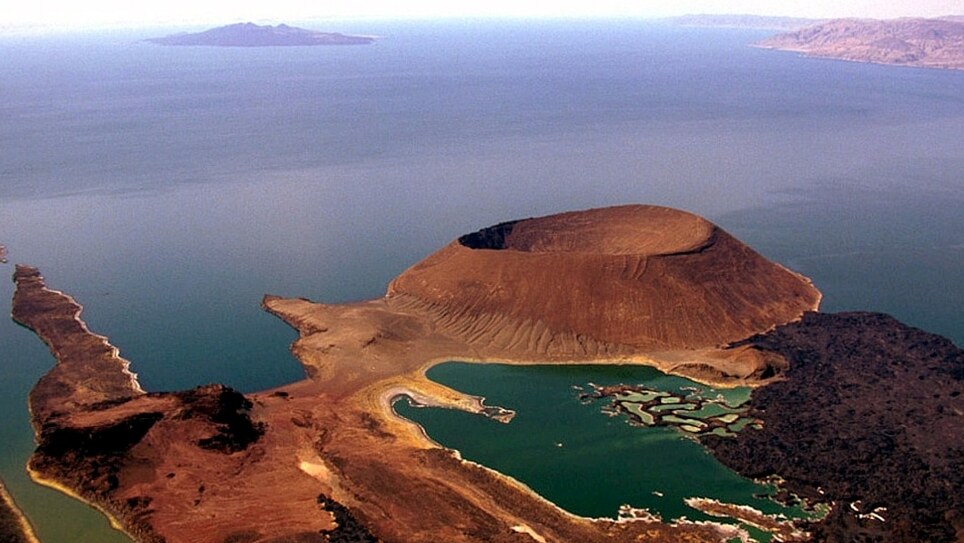
The lake is occupied by numerous volcanic islands along the North-South axis including North Island, Central Island and Southern Island. Lake Turkana is home to national parks listed as a UNESCO World Heritage Site: Sibiloi National Park is located on the eastern shore of the lake, while Central Island National Park and South Island National Park are located on their respective islands. Both are known for their Nile crocodiles (there are 30,000 of them living in the lake, so, no swimming! It's best to enjoy the landscape and the surrounding nature: pink flamingos, rainforests where beautiful orchids bloom, rock graffiti among the rocks, sulphurous water springs that spring up here and there feeding rivers that run through the bush). It is the largest permanent lake in a desert location and is also the largest alkaline lake in the world.

Buy Unique Travel Experiences

Powered by Viator

See more on Viator.com

Frequently Asked Questions

The lake was named 'Lake Rudolf' in 1888 by European explorers Sámuel Teleki and Ludwig von Höhnel in honour of Austro-Hungarian prince Rudolf of Habsburg-Lorraine. The lake was renamed Lake Turkana in 1975 to reflect the name of the Turkana ethnic group who have inhabited the region for centuries.
No, swimming is not recommended as Lake Turkana is home to approximately 30,000 Nile crocodiles. Instead, visitors should enjoy the stunning landscape, diverse wildlife including pink flamingos, and the natural hot springs that dot the shoreline.
Lake Turkana has three national parks listed as UNESCO World Heritage Sites: Sibiloi National Park on the eastern shore, and Central Island National Park and South Island National Park on their respective islands. These parks are renowned for their unique ecosystems, crocodile populations, and natural attractions including rainforests with blooming orchids.
The Nariokotome excavations near Lake Turkana's shores have uncovered fossil remains of hominids dating back 2.5 million years, attributed to the species Homo ergaster. These discoveries make the lake a significant site for understanding human evolution.
Lake Turkana is the largest permanent lake in a desert location and the largest alkaline lake in the world, covering 6,405 km² primarily within Kenya's Rift Valley. The lake features numerous volcanic islands along its North-South axis, including North Island, Central Island, and Southern Island.