
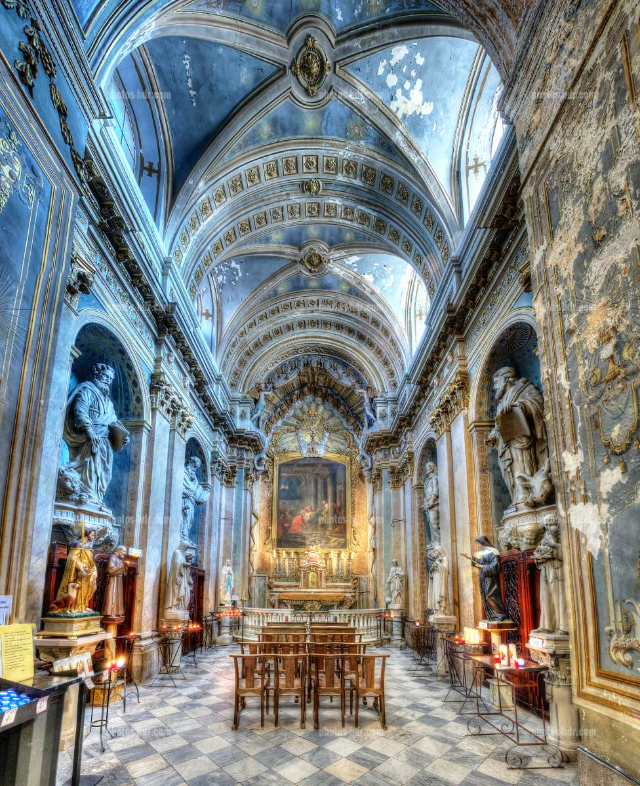

Perched majestically atop the volcanic hilltops of Le Puy-en-Velay, the Cathédrale Notre-Dame du Puy stands as a testament to centuries of faith, artistry, and cultural convergence. With its roots weaving through the fabric of a bygone era, this cathedral is not merely an architectural marvel but a living chronicle of history, echoing the footsteps of pilgrims and the whispers of ancient rites.

Dating back to the 5th century, the origins of the cathedral are steeped in legend and faith. It is said that a miraculous apparition of the Virgin Mary occurred on the volcanic mound where the cathedral now stands, leading to its initial foundation. The site gained prominence in the Middle Ages when Pope Urban II consecrated the altar in 1095, marking it as a pivotal stop on the Routes of Santiago de Compostela. Throughout its history, the cathedral has been a sanctuary of hope and refuge, enduring the ravages of time and conflict, including the tumultuous periods of the French Revolution when much of the ecclesiastical property was seized.
The architectural grandeur of Le Puy Cathedral is an eclectic blend of Romanesque and Gothic styles, each stone narrating tales of artistic evolution. Its façade, an intricate tapestry of polychrome stonework, greets visitors with a sense of awe. The cathedral’s interior is equally mesmerizing, with its soaring arches and the striking contrast of light and shadow. Of particular note is the Black Madonna, a revered 12th-century statue that draws pilgrims from around the world. This enigmatic figure, shrouded in mystery and devotion, is celebrated during the annual Feast of the Assumption in August, a vivid spectacle of faith and tradition.
Le Puy-en-Velay’s vibrant local culture is deeply intertwined with the cathedral's influence. The Feast of the Annunciation is another significant event, celebrated with grandeur and reverence, highlighting the region's deep religious roots. The town itself is a mosaic of medieval streets and lively markets, where the spirit of the past mingles seamlessly with the present.
Gastronomy in Le Puy is an experience in itself, with the region’s volcanic soils yielding unique flavors. Visitors should not miss the Lentilles Vertes du Puy, a local variety of lentils known for their distinct taste and high nutritional value. These lentils are often featured in traditional dishes, paired with local sausages or duck confit. To complement these hearty meals, the fruity Côtes du Velay wines offer a perfect balance, their vineyard origins tracing back to these rich volcanic terrains.
Among the lesser-known curiosities of the cathedral is its cloister, a serene enclave often overlooked by hurried tourists. Intricately carved capitals depict biblical scenes and mythical creatures, providing a contemplative space that invites reflection. Another hidden gem is the Byzantine-inspired mosaics that adorn the Chapel of St. Clair, their vibrant colors telling stories of faith and resilience.
For those planning to visit, the best time to experience the cathedral is during the spring or fall when the weather is mild, and the town is less crowded. Early mornings or late afternoons offer the most serene atmosphere, with the gentle play of light enhancing the cathedral’s architectural details. Be sure to climb the cathedral’s steps to enjoy panoramic views of Le Puy-en-Velay and its surrounding landscape, a vista that captures the soul of this historic region.
In essence, a visit to Cathédrale Notre-Dame du Puy is more than a journey through stone and mortar; it is an exploration of human spirit and legacy, a place where the past is palpably present, inviting each visitor to become a part of its enduring story.


