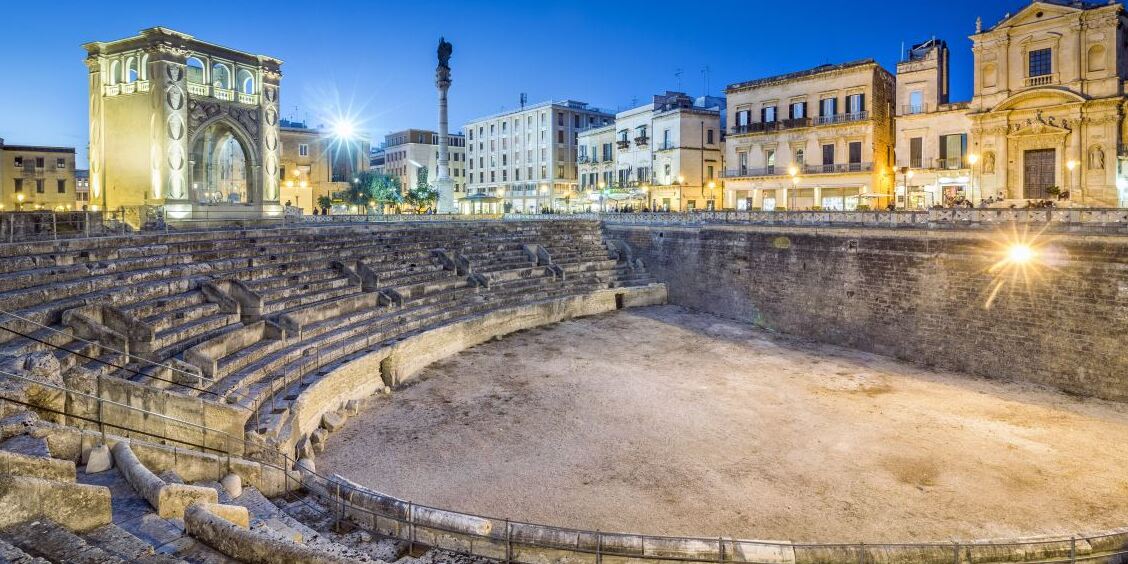

Located in the heart of Lecce, in piazza എസ്. Oronzo, and brought to light in the early ഇരുപതാം നൂറ്റാണ്ടിന്റെ താഴെ സമൂലമായ നഗര redefinition of the city, the original building is now visible കുറിച്ച് ഒരു മൂന്നാം, while the remaining portion is hidden താഴെ അപ്പോള് കെട്ടിടങ്ങൾ മേൽനോട്ടം. The പുരാവസ്തു ഖനനങ്ങൾ ചെയ്തു തുടങ്ങി. 1900 by the ആർക്കിയോളജിസ്റ്റ് Cosimo de Giorgi. പിന്നെ, നിരവധി തടസ്സങ്ങൾ, തുടര്ന്നുള്ള വരെ 1940. ഒരുപക്ഷേ ഡേറ്റിംഗ് to the Augustan age, ആംഫി had an elliptical പദ്ധതി അളന്നു ഏകദേശം മൊത്തം 102 x 82 എം and was able to accommodate തമ്മിലുള്ള 12,000 and 14,000 people. നിർമ്മാണം, made by making the most of the Lecce കല്ല് ബെഞ്ച് to support the bleachers, presents the arena, താഴത്തെ ambulacro and the റേഡിയൽ കണക്ഷൻ തുരങ്കങ്ങൾ കുഴിച്ചു നേരിട്ട് പാറ; പിന്തുണയ്ക്കുന്ന elements of the elevation were പകരം ഉണ്ടാക്കി ചതുരശ്ര work and connected by structures in സിമന്റ് മയം കൊണ്ട് vestments in lattice work.Planimetrically ആംഫി was divided into four sectors punctuated by as many entrances at പ്രധാന അക്ഷങ്ങള്. Access took place at the level of the middle cavea നിന്ന്, ഇവിടെ വഴി ഒരു സിസ്റ്റം ബന്ധിപ്പിക്കുന്ന കാശ്, you could exit the bleachers, മല മുകളിലെ perimeter പൂമുഖത്തിന്റെ and the summa cavea or descend to the lower ambulacro, connected with the ഇമ cavea. പിന്നെ, വഴി ആറു സേവനം വാക്യങ്ങള്, with the arena. പുറം മതിൽ യഥാർത്ഥത്തിൽ marked by തുടർച്ചയായി 68 archi, of which 24 ഈമാന് remain visible today. പരിധിക്കകത്ത് gallery on the second floor was probably surmounted by a portico, attributable to the phase of the ഹാഡ്രിയൻ ന്റെ പുനരുദ്ധാരണ, ഏത് നിരവധി അവ Architectural Decoration in Pentelic മാർബിൾ are ഭാഗമായിട്ടായിരുന്നു. പോലും ഔന്നത്യം had to be entirely covered with marble slabs, സമയത്ത് തുടർച്ചയായ relief with scenes of venationes ഓടി സഹിതം balteus, the parapet of the arena.Inside the lower ambulatory are സൂക്ഷിക്കും. നിരവധി ഘടകങ്ങൾ ബന്ധപ്പെട്ട മർക്കോസ്, ലൂക്കാ എന്നീ decoration of the building.