



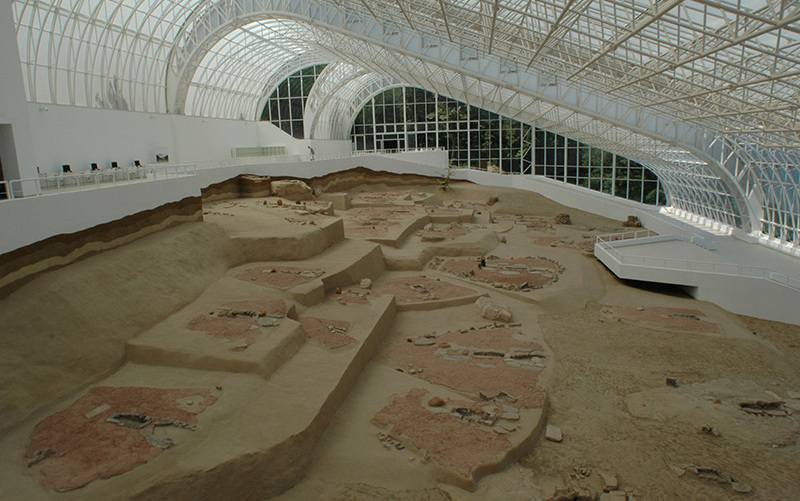
Nestled in the breathtaking Đerdap Gorge, Lepenski Vir is more than just an archaeological site; it is a window into Europe’s distant past, showcasing the remnants of one of the oldest prehistoric cultures known to humanity. Dating back to around 6000 BC, this site offers a captivating glimpse into the lives of the people who once thrived along the banks of the Danube River.
Archaeological excavations at Lepenski Vir have unearthed a wealth of artifacts, including intricate sculptures, remnants of unique trapezoidal buildings, and human skeletons that provide invaluable insights into the social structure and lifestyle of these ancient inhabitants. The settlement is characterized by its distinctive architecture, which includes communal structures that suggest a complex and organized society. Key historical events include the discovery of the site in the 1960s, which led to its protection and the establishment of the Lepenski Vir Museum.
The architectural style at Lepenski Vir is noteworthy, with its trapezoidal houses made from stone and clay, showcasing an adaptation to the landscape and climate. The sculptures, known as the Lepenski Vir Statues, are particularly striking, often depicting human figures with exaggerated facial features and abstract forms. These works of art are not merely decorative but hold deep spiritual significance, likely tied to the community's beliefs and rituals. The artistic heritage of Lepenski Vir reflects an early understanding of symbolism and community identity, making it a pivotal point in the study of prehistoric art in Europe.
Local culture in the Đerdap region is rich and vibrant, shaped by its history and the natural beauty surrounding it. Folklore plays a significant role in the lives of the residents, with various legends about the Danube River and the mythical creatures that are said to inhabit its depths. Traditional festivals, such as Đerdap Summer, celebrate local music, dance, and gastronomy, allowing visitors to immerse themselves in the region's cultural tapestry. The community’s connection to their ancestry is palpable, as many local customs are tied to ancient practices and seasonal changes.
When it comes to gastronomy, the region offers a delightful array of local dishes that reflect its agricultural roots. Staple foods include cornmeal, which is used to make mămăligă, a type of polenta, and sarma, cabbage rolls filled with minced meat and rice. The area is also known for its fish dishes, particularly those made with fresh fish from the Danube, such as catfish and carp. Don’t miss the chance to sip on some local rakija, a potent fruit brandy that is a quintessential part of Serbian hospitality.
For those looking to explore further, the nearby Viminacium archaeological site is a fascinating complement to Lepenski Vir. Once a thriving Roman city, Viminacium features an impressive array of ruins, including temples, streets, and an amphitheater. Its historical significance and the breadth of its excavated structures provide a contrasting yet enriching perspective on the ancient history of the region.
Among the lesser-known curiosities of Lepenski Vir, many visitors may be surprised to learn that the site was submerged for years due to the construction of the Đerdap Dam, which significantly altered the landscape. The discovery and subsequent excavation of the site were pivotal in reshaping our understanding of prehistoric Europe. Additionally, the Lepenski Vir Statues are considered among the earliest examples of human representations in Europe, raising questions about the evolution of art and spirituality in prehistoric societies.
The best time to visit Lepenski Vir is during the spring and early autumn months when the weather is mild, and the surrounding nature is in full bloom. Be sure to wear comfortable shoes, as exploring the site involves walking through both the museum and the archaeological grounds. Don’t forget to check out the museum’s exhibits, which offer deeper insights into the artifacts and the people who lived here thousands of years ago.
As you plan your visit to this remarkable archaeological site, consider delving into the local culture, tasting the region's culinary delights, and exploring the surrounding natural beauty. Lepenski Vir is not just a destination; it is a profound journey through time that connects us to our ancient past.
To enhance your experience, consider using the Secret World app to help craft a personalized itinerary for your visit to Доњи Милановац.
