



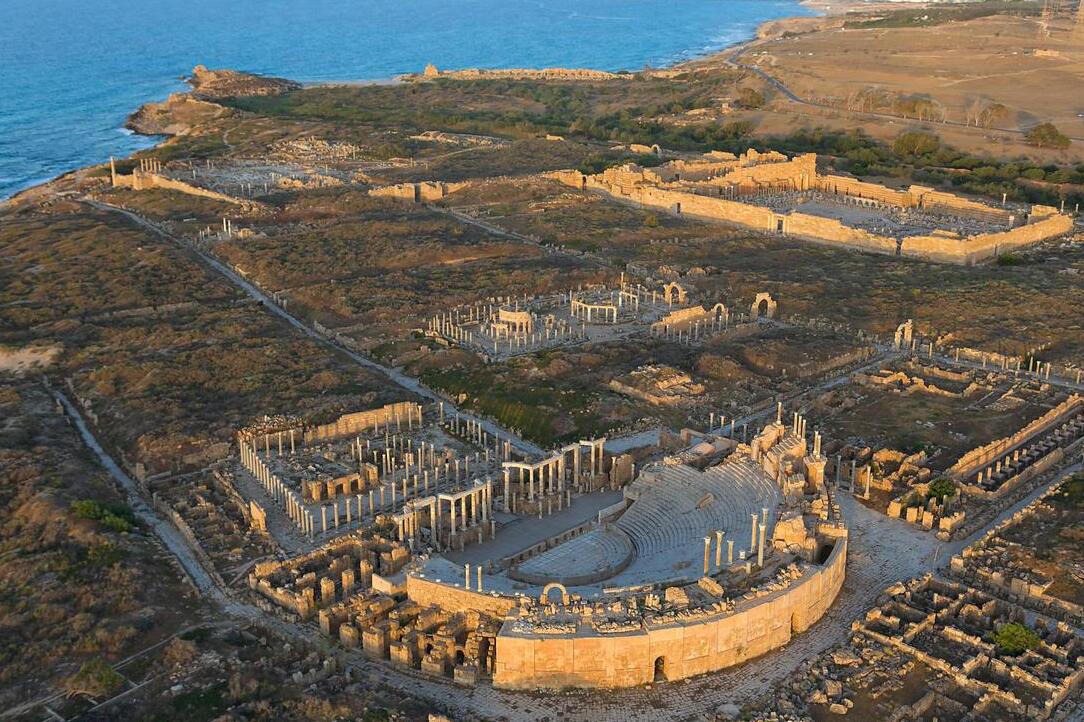
Nestled along the coast of Libya, Leptis Magna stands as a testament to the grandeur of the Roman Empire. Founded by the Phoenicians, this remarkable city flourished due to its strategic location and natural harbor, which enabled trade across the Mediterranean and into the Sahara. The city’s history is deeply intertwined with that of Septimius Severus, who was born here in 146 AD. As emperor from 193 to 211 AD, he transformed Leptis into one of the empire's most splendid cities through an ambitious building program, enriching it with stunning architecture that reflected the power and sophistication of Rome. Under his patronage, monumental structures like the Basilica, the Forum, and the Sebastian Arch were constructed, showcasing a blend of Roman and local architectural styles characterized by grand columns and intricate mosaics, many of which are still visible today. However, the city’s prosperity waned as the Roman Empire faced increasing challenges. By 642 AD, following the Arab conquest, Leptis Magna fell into decline and was gradually buried under shifting sands, lost to history until its rediscovery in the 20th century.
Visiting Leptis Magna today is akin to stepping back in time. The site is a hauntingly beautiful representation of a once-thriving metropolis, offering a glimpse into the intricate daily lives of its inhabitants. The ruins, now a UNESCO World Heritage site, are remarkably well-preserved, allowing visitors to wander through ancient streets lined with the remnants of shops, baths, and temples. The Triumphal Arch of Septimius Severus remains a highlight, standing majestically as a reminder of the city’s imperial past, while the Theatre and Market evoke the bustling atmosphere of ancient commerce and entertainment.
Local culture in the region still bears the imprint of its historical roots. Traditional Libyan customs blend Berber, Arab, and Mediterranean influences. Festivals celebrating the harvest or religious events often see vibrant displays of dance and music. The Ghadames Festival, held in nearby regions, celebrates the local culture with traditional crafts, music, and dance, echoing the communal spirit that has existed in this area for centuries.
When it comes to gastronomy, Leptis Magna’s coastal location means that seafood plays a prominent role in local cuisine. Traditional dishes such as couscous, often served with fish or lamb, reflect the region's agricultural heritage. Harissa, a spicy chili paste, is also a staple, adding bold flavors to many meals. Visitors can enjoy freshly caught fish grilled to perfection, paired with local olive oil and fresh herbs.
Among the lesser-known curiosities of Leptis Magna is the site’s remarkable conservation efforts, which began in the late 20th century. Archaeologists have uncovered not just monumental buildings but also everyday objects that paint a vivid picture of life in ancient Leptis. The Mosaic of the Four Seasons, depicting the cyclical nature of life, is an artistic highlight often overlooked by tourists. Additionally, the ruins of Leptis Magna are set against a stunning backdrop of the Mediterranean Sea, providing breathtaking views that enhance the historic experience.
The best time to visit Leptis Magna is during the spring (March to May) or autumn (September to November) when the weather is mild. It is advisable to wear comfortable shoes as the site is expansive and involves considerable walking. Don’t miss the chance to explore the Roman Baths, where intricate mosaics tell stories of leisure and luxury.
An exploration of Leptis Magna not only reveals the splendor of Roman architecture but also connects visitors to the enduring spirit of a civilization that once thrived in this now serene landscape. For a more enriching experience, consider using the Secret World app to craft a personalized itinerary that will guide you through the wonders of this ancient site.
