



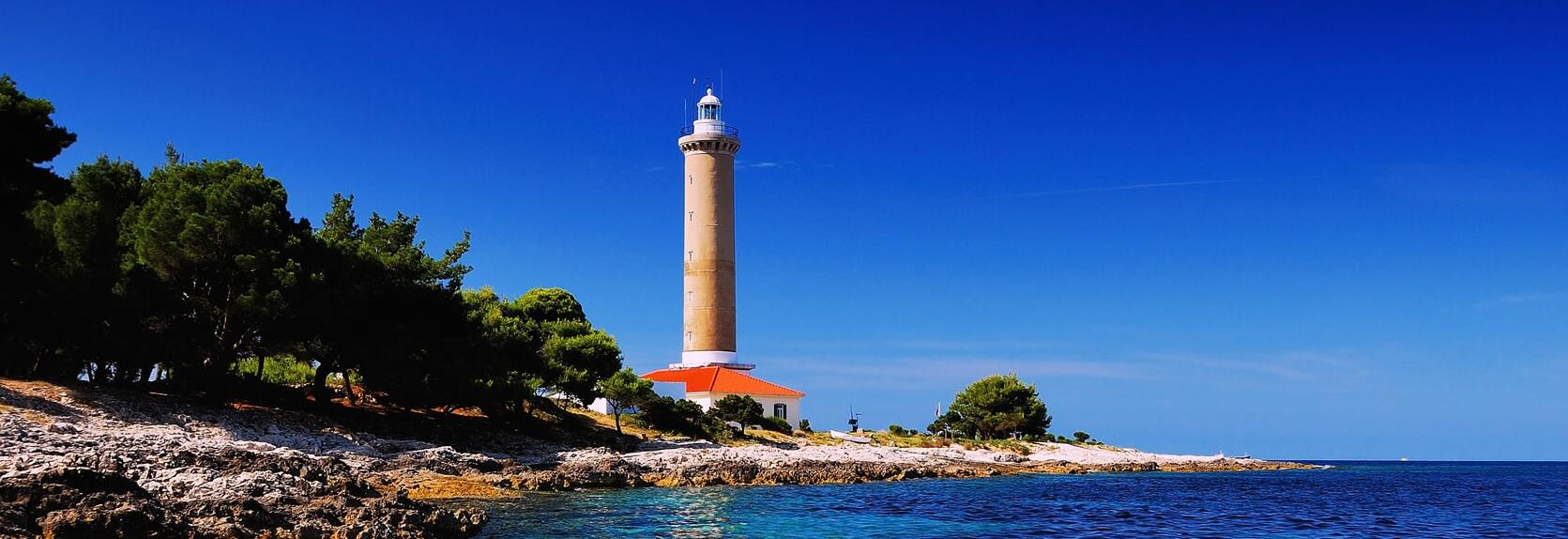
As the Adriatic sun dips below the horizon, casting a golden glow over the rugged coastline, the Veli Rat Lighthouse stands as a sentinel of history and maritime guidance. Perched on the north-western tip of Dugi Otok, this lighthouse is more than a navigational aid; it is a testament to the rich tapestry of culture and history that defines the Croatian coastline.

Built in 1849, the lighthouse was conceived during a time when the Adriatic Sea was a vital maritime corridor. Its construction was part of a broader Austro-Hungarian initiative to bolster coastal navigation, reflecting both the strategic importance of the region and the engineering prowess of the era. The lighthouse, towering at 42 meters, remains the tallest in the Adriatic, a feat of engineering that has withstood the test of time and the elements for over a century and a half.
Architecturally, the Veli Rat Lighthouse is a harmonious blend of functional design and aesthetic grace. Its cylindrical tower, constructed from local stone, is painted in a distinctive yellow hue, said to be tinted with thousands of egg yolks for durability—a curious practice of the time. The attached keeper's house, with its red-tiled roof and sturdy stone walls, adds a rustic charm, embodying the resilience and simplicity of 19th-century maritime architecture.
The cultural significance of the lighthouse is interwoven with the traditions of Veli Rat, the nearby village known for its seafaring heritage. Local customs are deeply rooted in the rhythms of the sea, with festivals like the annual Fishermen's Night celebrating the village's connection to the Adriatic. Music, food, and dance come together in a vibrant display of community spirit, offering visitors a glimpse into the soul of the island.
Gastronomy in this part of Dugi Otok is a delightful exploration of Mediterranean flavors. The island's cuisine highlights the bounty of the sea and the land. Freshly caught fish, grilled to perfection, is a staple, often accompanied by locally grown vegetables drizzled with golden Dalmatian olive oil. The island's gastronomy is further enriched by pag cheese, a hard sheep milk cheese from nearby Pag Island, offering a tangy complement to the region's culinary offerings. For a sweet finish, the traditional almond cake, known as Mandeljni, provides a taste of local hospitality.
A visit to Veli Rat Lighthouse reveals lesser-known curiosities that often escape the casual tourist's notice. The lighthouse's walls hold stories of storms weathered and ships guided safely to shore. A poignant tale recounts a shipwreck off the coast in the early 20th century, where the lighthouse keeper heroically saved several crew members, embedding the structure with a narrative of courage and duty. Another intriguing detail is the tiny chapel dedicated to St. Nicholas, the patron saint of sailors, nestled within the lighthouse complex, offering a place of solace and reflection.
For those planning to visit, the best time to experience Veli Rat is during the spring and early autumn months. The weather is pleasantly mild, and the island is less crowded, allowing for a more intimate exploration. Visitors can climb the lighthouse for a panoramic view of the Adriatic, where the interplay of sea and sky creates an ever-changing masterpiece. Nearby, the Sakarun Beach, famed for its turquoise waters and white sand, offers a relaxing contrast to the lighthouse's towering presence.
To enhance the visit, it's recommended to engage with the local community. A simple conversation with the residents can unlock stories and insights that guidebooks often overlook, enriching the experience with a personal touch.
In essence, Veli Rat Lighthouse is not merely a beacon for ships but a beacon of history and culture, inviting travelers to discover the layers of tradition, artistry, and community that define this enchanting corner of the Adriatic.
