



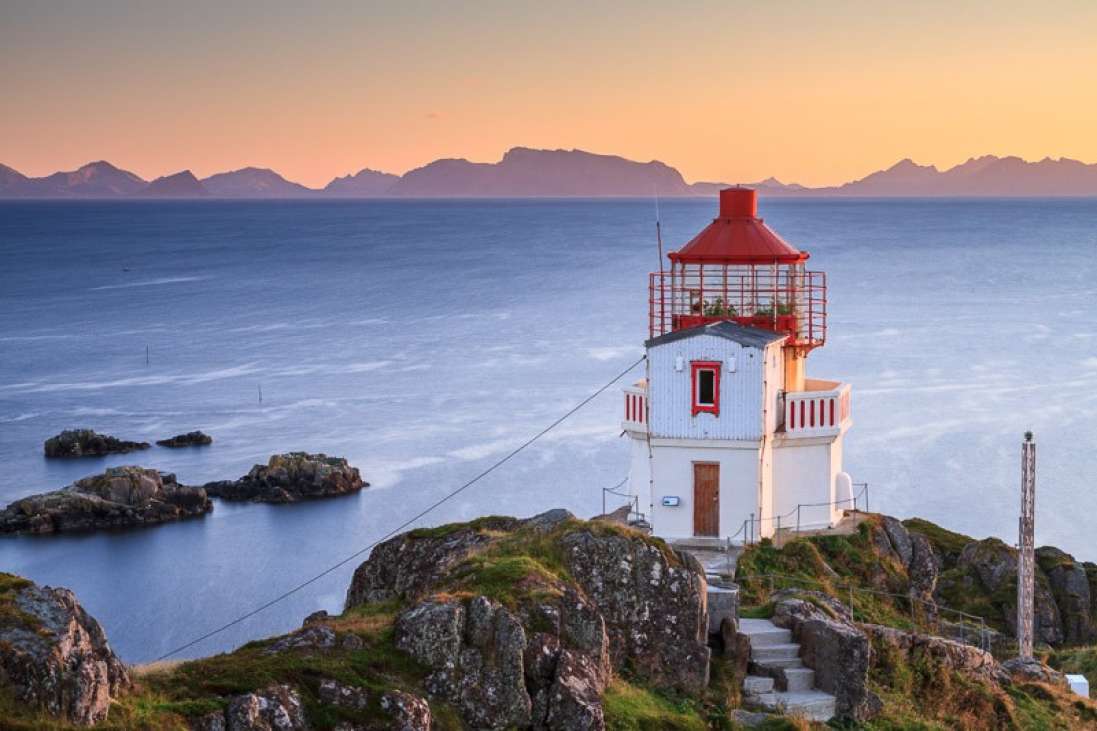
Nestled in the scenic Vesterålen archipelago, Litløy Lighthouse (Norwegian: Litløy fyr) stands as a testament to Norway's maritime heritage and the rugged beauty of the Norwegian coastline. Located on the remote island of Litløya in Bø municipality, Nordland county, this lighthouse has witnessed over a century of history since its light first shone in 1912. Its strategic position offers stunning views of the nearby Lofoten Islands, attracting visitors with a blend of history, culture, and natural splendor.

### History and Origins The origins of Litløy Lighthouse are deeply intertwined with Norway's fishing traditions and the rise of maritime navigation. The lighthouse was constructed in response to the increasing maritime traffic in the region, serving as a beacon for fishermen and commercial vessels alike. Before the lighthouse was built, Litløya was a thriving fishing village with up to 890 seasonal residents reported in 1890. This bustling community played a vital role in the local fishing economy until the disruptions of World War II, which led to a gradual decline. By the 1950s, the village was abandoned, leaving behind remnants of its vibrant past.
Visitors can embark on a cultural walk around the island, where the remains of old houses can still be seen, along with Iron Age graves and Stone Age cairns, inviting reflection on the lives once lived here. The lighthouse itself was manned until 2003, when automation took over, marking the end of an era for the dedicated keepers who once watched over these waters.

### Art and Architecture The architectural design of Litløy Lighthouse is both functional and picturesque. Built predominantly from red brick, the lighthouse features a striking white tower that rises 29 meters above sea level. Its simplistic yet elegant lines embody the essence of Scandinavian design, emphasizing functionality without sacrificing beauty. The light source, a classic fresnel lens, initially helped to guide ships safely along the treacherous Norwegian coast.
In addition to its architectural significance, Litløy Lighthouse is surrounded by breathtaking natural landscapes, including rugged cliffs and serene beaches. The contrast between the man-made structure and the untouched wilderness creates an artistic harmony that draws many photographers and nature enthusiasts.
### Local Culture and Traditions The culture of Litløya is steeped in the traditions of Norway's coastal communities. Fishing has always been central to life here, and while the village may be deserted, the echoes of its rich heritage remain. Visitors may encounter local customs such as traditional fishing techniques or storytelling sessions that reflect the island's history.
In the surrounding regions, various festivals celebrate the maritime culture—such as the Vesterålen Fish Festival—where locals and visitors gather to enjoy fresh seafood, music, and cultural performances. These events highlight the importance of fishing not only as a livelihood but as a cornerstone of local identity.
### Gastronomy When it comes to gastronomy, Litløya and the greater Vesterålen region offer a delectable array of local delicacies. Fresh cod, herring, and salmon are staples, often prepared using traditional methods such as drying or smoking. Klippfisk, or dried and salted cod, is a particular favorite, reflecting the historical fishing practices of the area.
For those looking to sample local flavors, visiting one of the nearby fishing villages can provide insight into the culinary traditions that have shaped this coastal community. Pair your meal with a glass of Akevitt, a traditional Norwegian spirit, to complete the experience.
### Lesser-known Curiosities Despite its charming allure, many tourists miss the hidden stories that Litløya has to offer. One fascinating fact is that the island was once home to a vibrant community of fishermen who would travel from neighboring islands to partake in the seasonal fishing bounty. The remnants of their homes tell tales of resilience and adaptation in a harsh but beautiful environment.
Additionally, Litløy Lighthouse is often overlooked in favor of more famous coastal landmarks, making it a perfect spot for those seeking solitude and a deeper connection to Norway's maritime history. The sound of waves crashing against the rocks and the distant calls of seabirds create an atmosphere of tranquility that is hard to find in more crowded tourist spots.
### Practical Visitor Information The best time to visit Litløy Lighthouse is during the summer months from June to August, when the weather is milder and the days are long. This period is ideal for hiking, photography, and exploring the remnants of the old village. Visitors should pack sturdy hiking boots and be prepared for changes in weather, as conditions can shift quickly in coastal regions.
To fully appreciate the lighthouse and its surroundings, consider spending a day or two on Litløya. Be sure to take in the panoramic views from the lighthouse and explore the nearby hiking trails that offer stunning vistas of the Vesterålen and Lofoten archipelagos.
In conclusion, Litløy Lighthouse is not just a navigational aid but a vibrant piece of Norway's history, culture, and natural beauty. For a personalized journey to explore this enchanting site, consider using the Secret World app to plan an itinerary tailored to your interests.
