


When the sun begins to descend towards the reddish horizon of the Australian outback, something extraordinary happens on the rocky crest overlooking Broken Hill: twelve monumental sandstone sculptures light up one after the other, illuminated in sequence by the slanting light of the sunset. It is not a random effect. The artists who created them in 1993, during an international sculpture symposium, positioned each work with precision, so that the dying sun transforms each totem figure into a burning silhouette against the purple and orange sky of New South Wales.
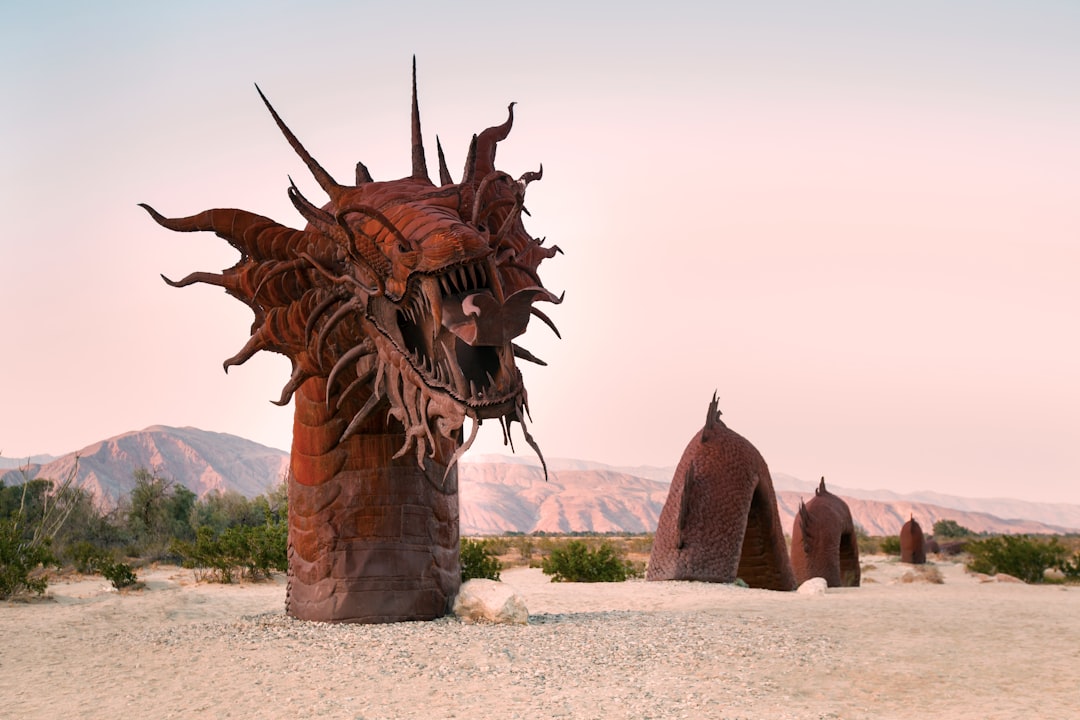
The Living Desert Sculptures is a permanent site a few kilometers from the center of Broken Hill, a mining town in the far west of New South Wales, about 1,160 kilometers from Sydney. It is not an art gallery in the conventional sense: it is a natural park where the local rock has become raw material for a dialogue between cultures, landscapes, and artistic languages from around the world.
The 1993 Symposium and International Artists
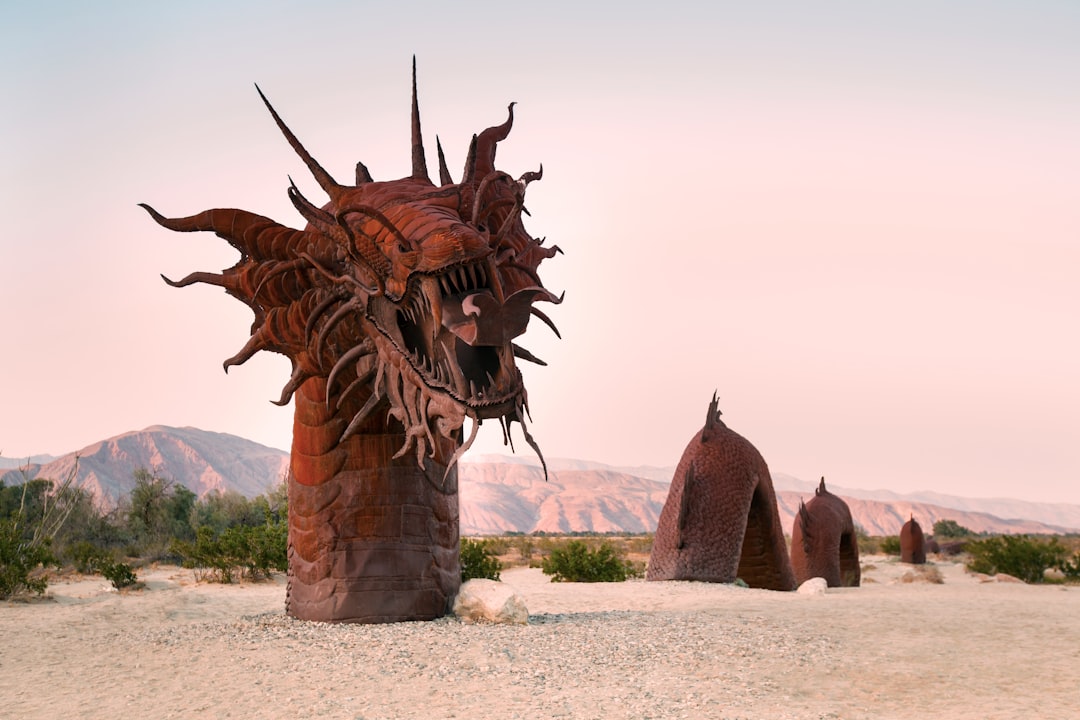
The project was born as a unique cultural event: in 1993, twelve sculptors from different countries — including Australia, Georgia, Syria, India, Mexico, and others — were invited to work directly on site, carving the local sandstone of Willyama extracted from the very hill where the works would later remain. The result is a collection of sculptures that vary in style and iconography, but share a common quality: they all engage in dialogue with the surrounding desert landscape.
Among the most recognizable works is that of Australian artist Badger Bates, a representative of the Paakantyi culture, who carved into the stone motifs inspired by the traditions of the region's elders. The presence of Aboriginal artists alongside international sculptors gives the site an authentic intercultural dimension, rooted in the territory. Each sculpture stands on average between one and two meters tall, but some rise more imposing, creating a distinctive profile on the crest of the hill.

What you see while walking among the sculptures
The path among the twelve works is short but intense: you walk on a dirt trail that follows the ridge of the hill, with the desert opening up in all directions. The 360-degree view of the outback is one of the most powerful elements of the experience. There are no tall trees, there are no buildings: only rock, sky, and those silent figures that seem to have emerged from the earth.

As you approach the sculptures, you notice the texture of the stone, worked with different tools depending on the artist: some surfaces are smooth and almost polished, while others retain the marks of the chisels, making the creative process visible. The ochre and rust-red sandstone changes shades throughout the day, but it is at sunset that it reaches its maximum chromatic intensity, blending with the landscape in an almost theatrical way.
Practical Information for the Visit

The site is located about 9 kilometers from the center of Broken Hill, accessible by car along Silverton Road. There is no direct public transport service, so it is necessary to have your own vehicle or book a local tour. The park is managed by the city of Broken Hill and has a paid entrance, with fees around 5-10 Australian dollars per adult, although it is advisable to check the updated prices at the local Visitor Centre before your visit.
The best time to visit is undoubtedly late afternoon, about an hour before sunset. Arriving at that time allows you to see the sculptures first in the full light of day, then witness the gradual transformation that occurs as the sun sets. In summer, temperatures in the outback can exceed 40°C: it is preferable to avoid the central hours of the day and always bring plenty of water, a hat, and sunscreen. In winter, the weather is much milder and more pleasant for walking.
Why the trip to Broken Hill is worth it
Broken Hill is already an unusual destination: founded as a mining town at the end of the nineteenth century, it has remained an outback outpost with a strong cultural identity, reinforced over time by a surprisingly vibrant artistic community. The Living Desert Sculptures fits into this context as one of the most successful projects of permanent public art in the Australian outback.
What makes the site truly memorable is not only the quality of the individual works but the idea behind it: bringing artists from around the world to work with the same stone, in the same place, allowing the landscape to become an integral part of the finished work. The result is a place where art is not displayed but belongs to the territory, and where the sunset is not a backdrop but a co-author.


