



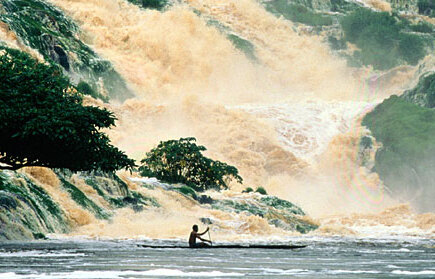
Nestled between the lush borders of the Republic of Congo and the Democratic Republic of Congo, the Livingstone Falls offer an awe-inspiring spectacle of nature's raw power and beauty. As the Congo River barrels its way towards the Atlantic Ocean, it carves through a series of rapids and cataracts, dropping an astonishing 270 meters over 350 kilometers. This breathtaking journey begins just beyond the Malebo Pool, showcasing the might of Africa's second-longest river.
The history of these falls is as turbulent as the waters themselves. Named after the famed British explorer David Livingstone, who, although never actually laid eyes on them, became synonymous with African exploration. The falls have been a crucial part of the region's history, serving as both a barrier and a bridge. They were first navigated by European explorers in the late 19th century, marking a key moment in colonial expansion.
Despite lacking grand structures, the area surrounding Livingstone Falls is rich in artistic heritage. Local communities, particularly the Bakongo people, express their cultural identity through intricate carvings and vibrant textiles. The region's art often reflects the powerful natural forces of the falls, with swirls and patterns that echo the river's relentless flow.
Cultural traditions are deeply rooted in the rhythms of the river. The annual Mikanda Festival, for instance, celebrates the river's bounty with music, dance, and traditional storytelling. This vibrant event is a testament to the enduring relationship between the river and the people who live along its banks.
Gastronomy in the region is flavored by the river's offerings. Moambe chicken, a dish made with palm nut sauce, and Liboke fish, wrapped in banana leaves and grilled, are local favorites. These dishes are often paired with cassava or rice, providing a hearty meal that mirrors the region's rich cultural tapestry.
For those seeking lesser-known curiosities, the falls conceal stories of ancient trade routes used by indigenous tribes long before European colonization. These trails, now largely forgotten, weave tales of commerce and culture that predate even the Roman Empire.
Practical information is key for visitors eager to experience the falls in all their glory. The best time to visit is during the dry season from June to September when the river levels are lower, revealing more of the falls' structure. Travelers should prepare for a rugged adventure, as access is often challenging, requiring local guides familiar with the terrain. Look out for the rare Congo peafowl and other unique wildlife that make this region their home.
To fully immerse yourself in the wonders of the Livingstone Falls, consider using the Secret World app to craft a personalized AI itinerary tailored to your adventurous spirit.
