
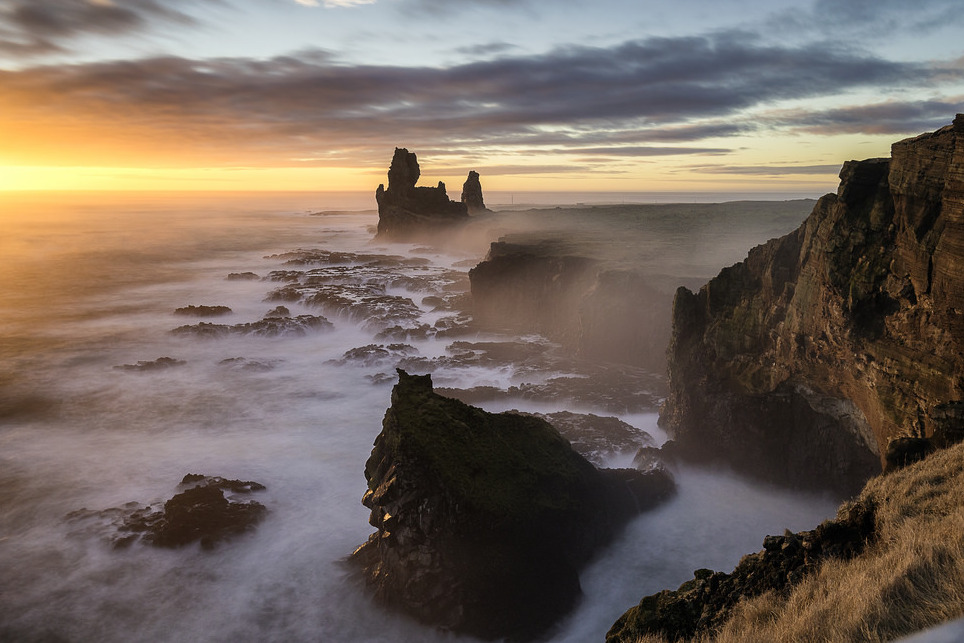

Perched on the rugged Snaefellsnes Peninsula in Iceland, Londrangar stands as a testament to the earth’s fiery past and nature’s unyielding force. These dramatic cliffs, formed from ancient volcanic activity, rise majestically from the sea, offering a glimpse into a world sculpted by time and tide. As you stand on the windswept edges of these basalt pillars, it becomes clear why they capture the imagination of travelers and locals alike.
The origins of Londrangar are rooted in the fiery bowels of the earth. These cliffs are remnants of a greater volcanic crater, enduring the ravages of time and erosion to remain as two prominent towers—one standing 75 meters and the other 61 meters tall. The formation of Londrangar dates back thousands of years, when the dynamic volcanic activity of the region pushed molten lava to the surface. Over millennia, relentless North Atlantic winds and waves sculpted the landscape into the formidable structures that exist today, making them one of the most striking geological features on the peninsula.
Art and architecture weave a unique tale at Londrangar, where the natural formations themselves are seen as a form of architectural wonder. While there are no man-made structures here, the cliffs have inspired countless artists and photographers who seek to capture their raw beauty. The area’s stark contrast of black basalt against the verdant moss and azure sea creates a living canvas that changes with the seasons and weather. This natural artistry has been a muse for Icelandic folklore and storytelling, with local legends often describing the cliffs as petrified trolls turned to stone by the sun's first light.
The cultural fabric of the Snaefellsnes Peninsula is rich and vibrant, with traditions that deeply respect and honor the natural world. The cliffs of Londrangar are considered a sacred site by Icelanders, who often refer to the area as a place where earthly and mystical realms meet. The mythology of the region is imbued with tales of elves and hidden people, believed to inhabit the landscape. During the summer solstice, locals celebrate with Þjóðhátíð, a festival that includes traditional music, dance, and storytelling, reflecting the deep connection between Iceland's people and their dramatic environment.
Gastronomy on the Snaefellsnes Peninsula is as rich as its landscapes. Visitors to the area should not miss sampling traditional Icelandic dishes that speak of the sea and land. Plokkfiskur, a comforting fish stew, is a local favorite, made from freshly caught cod or haddock, potatoes, and onions, often served with hearty rye bread. Another delicacy is harðfiskur, dried fish typically enjoyed as a snack, reflecting the region's reliance on the ocean's bounty. For a refreshing drink, try Brennivín, Iceland's signature distilled spirit, often referred to as "Black Death," which pairs surprisingly well with the hearty local fare.
Beyond the cliffs and cuisine, Londrangar holds lesser-known curiosities that invite deeper exploration. The cliffs are home to a diverse array of birdlife, including puffins, fulmars, and kittiwakes, making it a paradise for birdwatchers. Interestingly, it is said that the sea below the cliffs is home to a colony of seals, often seen lounging on the rocks or playfully diving into the surf. For those with a keen eye, the area also reveals remnants of ancient settlement and farming, hinted at by the scattered ruins of stone walls and turf houses, whispering stories of the past.
When planning a visit to Londrangar, timing is everything. The best period to explore these cliffs is between late spring and early autumn, when the weather is milder, and the days are long. During this time, the landscape bursts into life, with wildflowers adding splashes of color to the serene scenery. Early mornings or late afternoons are ideal for witnessing the cliffs bathed in the soft light of the Icelandic sun, offering the perfect opportunity for photography. Travelers should dress in layers to accommodate the changeable Icelandic weather and wear sturdy footwear to navigate the rugged terrain safely.
As you stand before Londrangar, it’s impossible not to be moved by the profound sense of history and nature’s artistry around you. This mystical corner of Iceland invites contemplation and awe, a reminder of the planet’s ever-changing tapestry and the stories etched into every stone and wave.


