
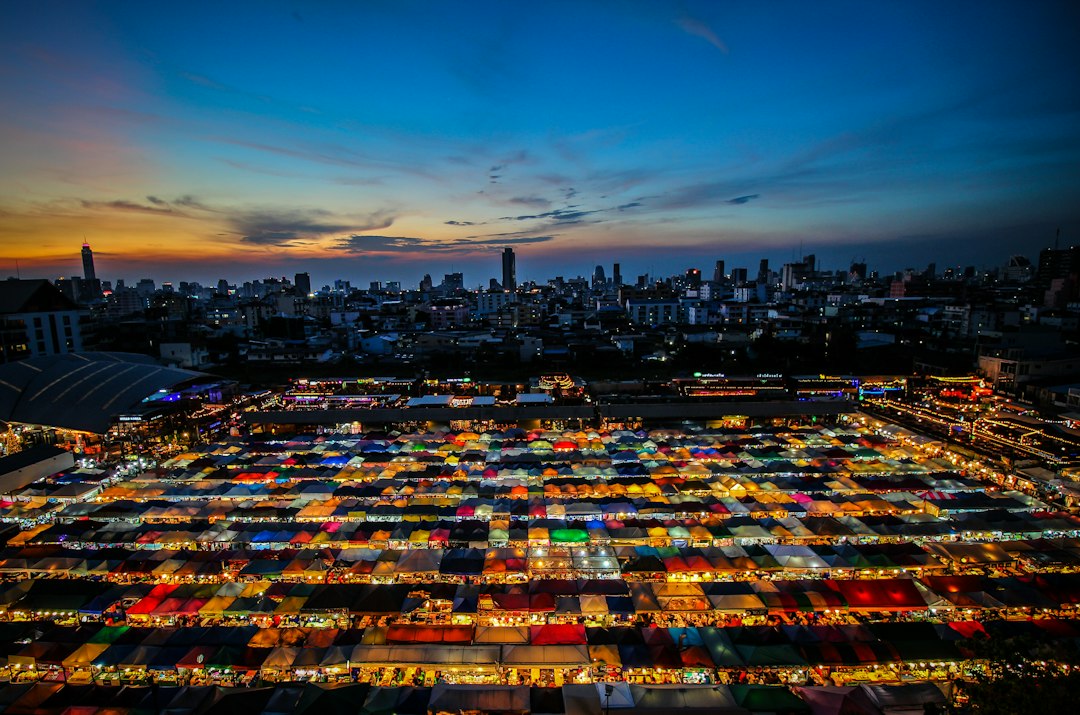

Every evening at six, when the sun slips behind the hills that embrace Luang Prabang, the vendors begin to unfold their cloths on the pavement of Thanon Sisavangvong, the main street of the city. In a few minutes, what is a quiet street by day transforms into a corridor of bright colors: carmine reds, indigo blues, emerald greens of Hmong fabrics stand alongside the paper lanterns that sway hanging from the white gazebos. The air carries with it a mix of incense burned in the nearby temples and the sweet scent of fried bananas sold from carts at the edges of the market.
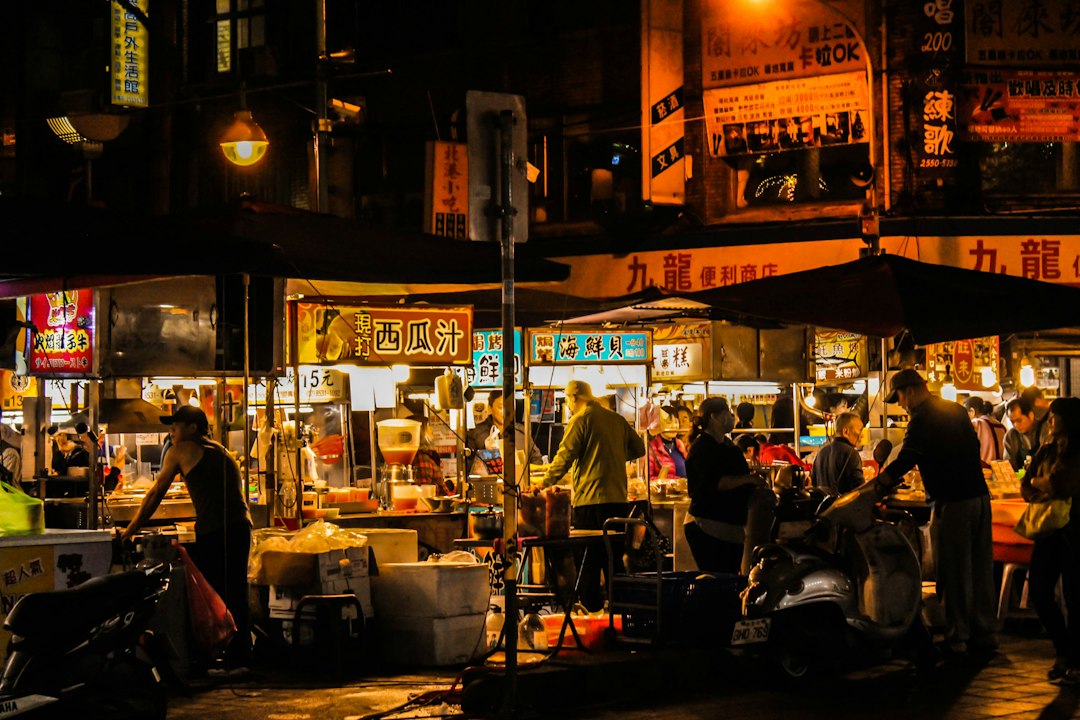
The Night Market of Luang Prabang takes place every evening along this central artery, just a few steps from the Royal Palace — now a museum — and from the peninsula where the Nam Khan river flows into the Mekong. The city has been a UNESCO World Heritage site since 1995, a recognition that has helped preserve the French colonial architecture mixed with Buddhist temples, creating the unique context within which this market moves every night like a living organism.
The fabrics of the hill tribes
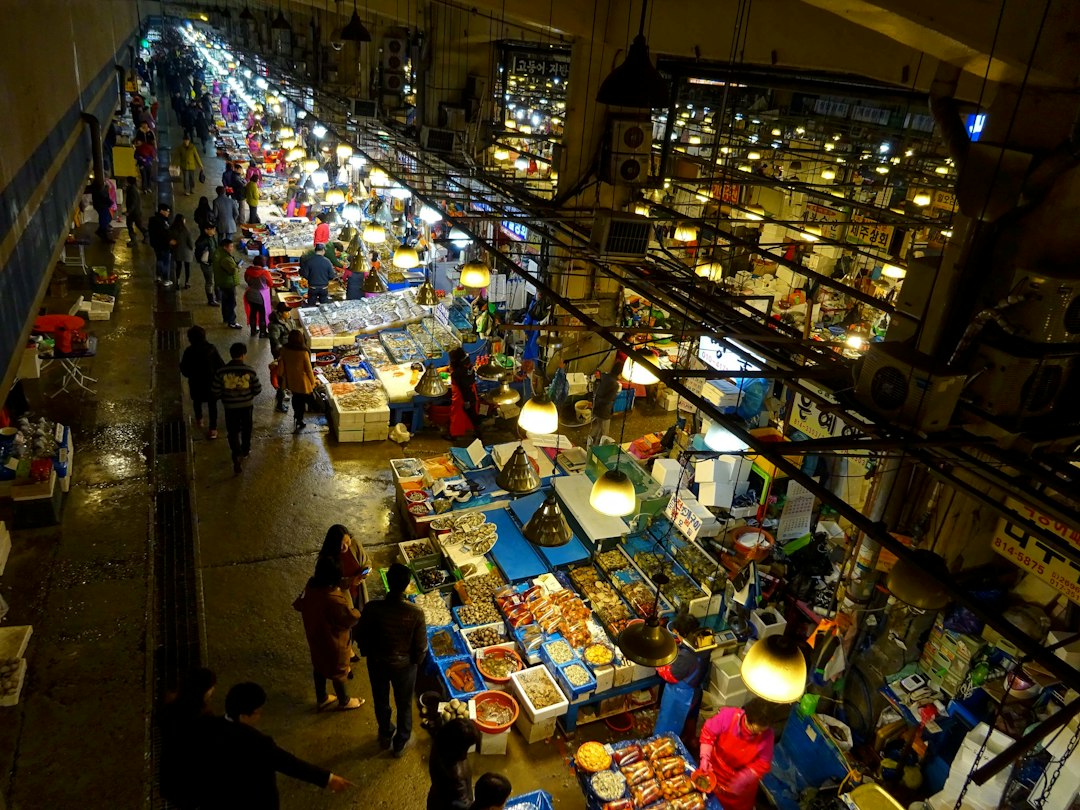
Most of the stalls are run by women from the surrounding Hmong and Lao hill communities, who come down to the city in the afternoon with their goods loaded in nylon bags. The displayed fabrics are almost all handmade: blankets with traditional geometric patterns, raw silk scarves, embroidered bags with colorful threads arranged in patterns that vary from village to village. Upon closer observation, subtle differences can be noticed between Hmong designs — more angular and symmetrical — and those produced by the Khmu or Tai Lue communities, which tend to have more floral patterns.
Next to the fabrics are silver jewelry, often made using techniques passed down from generation to generation. Bracelets, necklaces, and earrings with nature-inspired motifs are among the most sought-after pieces. Prices, expressed in Laotian kip or US dollars, are generally negotiable: a silk scarf can cost between 5 and 15 dollars, while more elaborate jewelry pieces can exceed 30 dollars.
Sounds and Stories Among the Stalls
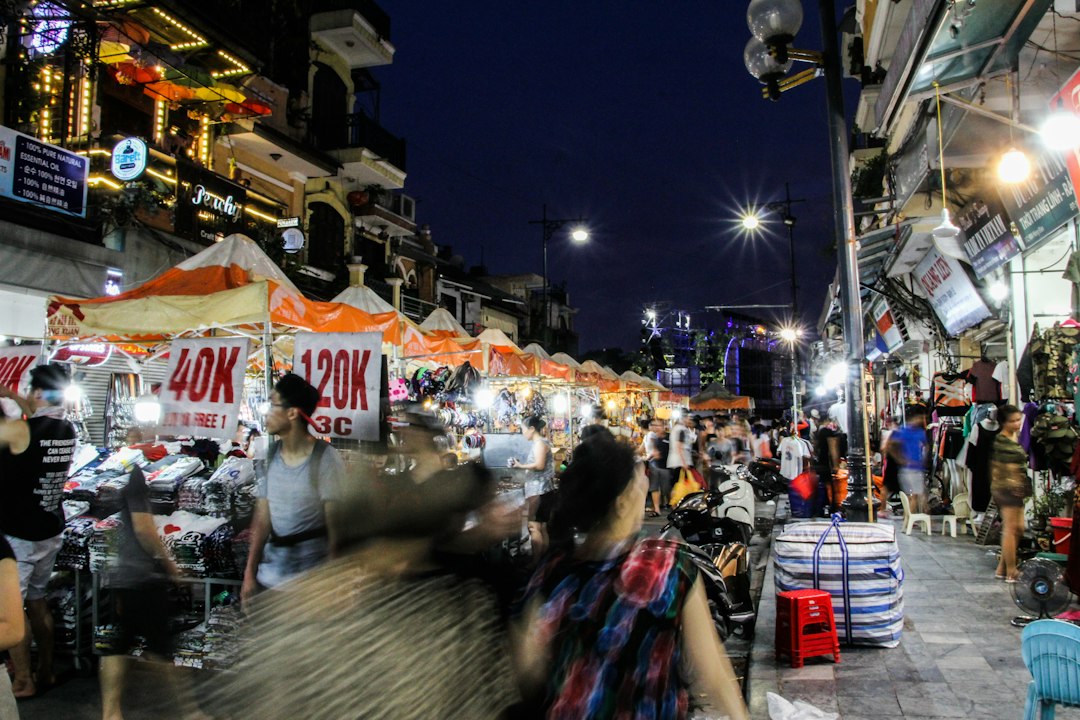
The market is not noisy in the conventional sense of the term. There are no loudspeakers or vendors shouting. The dominant sound is the subdued murmur of bargaining, the rustling of fabrics being handled by the buyers, the light jingling of silver bracelets hanging from wooden hooks. Every now and then, one can hear singing coming from a wat — a Buddhist temple — nearby, reminding everyone of where they are.
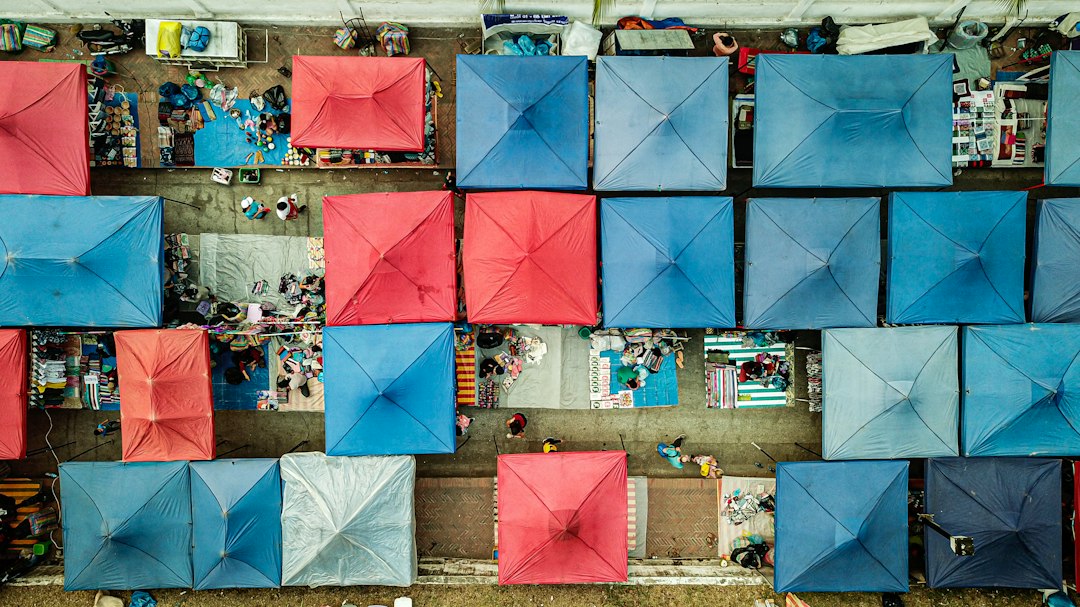
The female vendors often sit behind their goods with a composed expression, some with sleeping children on their laps wrapped in colorful cloths. They do not insist, nor do they call out to passersby. If one stops to look, they may explain in a few words in English or with gestures the meaning of an embroidered pattern, or show how a fabric is produced on the loom. These brief, almost silent exchanges are among the most authentic moments that the market offers.
Lanterns, food, and local crafts
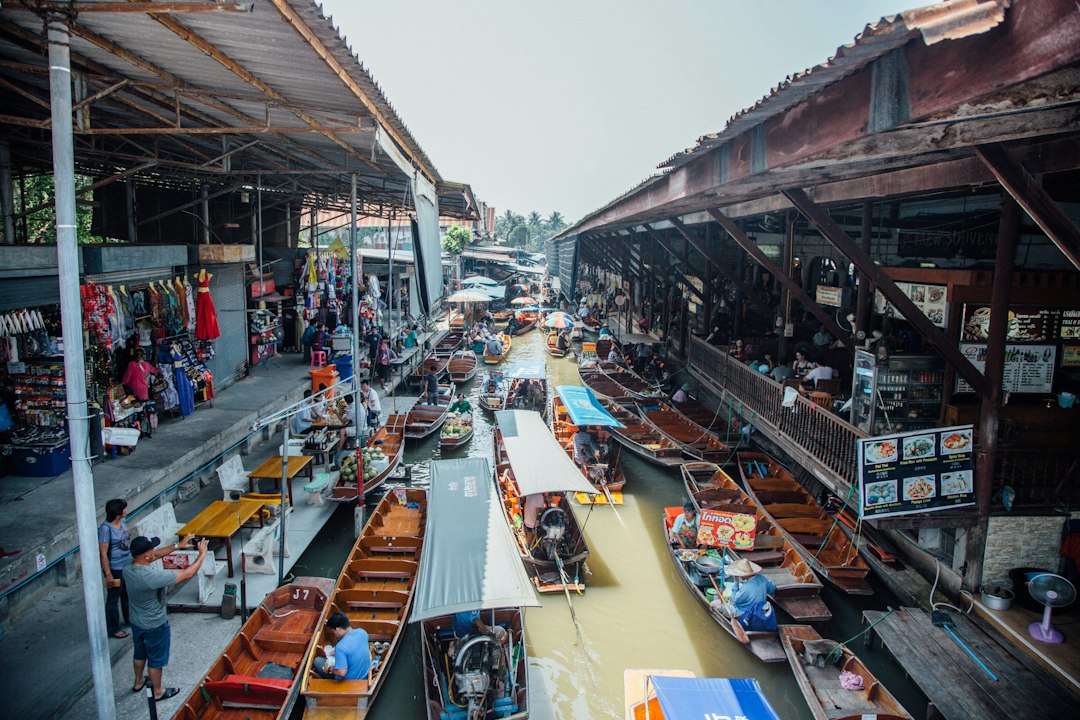
In addition to fabrics, the market offers paper lanterns in various sizes — some large enough to illuminate a dining table — and carved wooden items, including stylized elephants and decorative boxes. A section of the market is dedicated to food: here you can find stalls with buffets of local dishes at a fixed price, where for about 1-2 dollars you can fill a plate with sticky rice, stir-fried vegetables, fried tofu, and some protein of your choice. It is a practical and economical option for those who want to dine without straying too far.
The paper lanterns, in particular, hold symbolic value in the Laotian context: during the Boun Lai Heua Fai festival, usually celebrated in October, thousands of lanterns are released on the Mekong. Buying one at the market is a way to take home an item with a meaning that goes beyond just a souvenir.
Practical tips for visiting the market
The market opens around 6:00 PM and generally closes by 10:00-10:30 PM. The best time to visit is between 6:30 PM and 8:00 PM, when the remaining natural light mixes with that of the lanterns and the market is lively but not yet crowded. In the months of November and December, considering the dry season, the evenings are cool and particularly pleasant for a stroll.
The market can be reached on foot from the historic center in just a few minutes: it is located along Thanon Sisavangvong, the main street, easily identifiable even without a map. It is advisable to bring Lao kip in small denomination bills, as not all stalls accept dollars or credit cards. Avoid photographing the vendors without asking for permission: a smile and a gesture of request are almost always enough to get a yes.


