
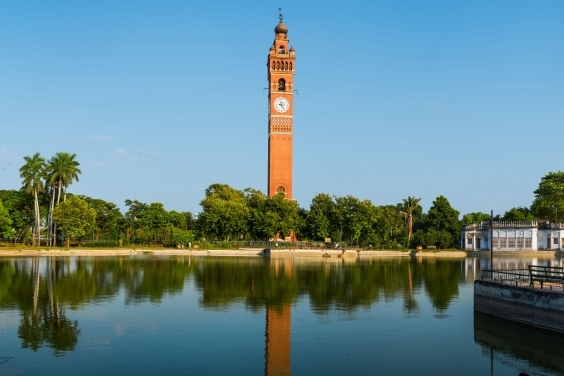

In the heart of Lucknow, where time seems to stand still amidst the whispers of history, the Ghanta-Ghar Clock Tower stands as a majestic sentinel, embodying the essence of this culturally rich city. Just a stone's throw away from the iconic Rumi Darwaza, this clock tower is a lesser-known gem that captures the imagination of those who venture to explore its storied past.
The Ghanta-Ghar Clock Tower was constructed in 1881, during the reign of the British Raj, to commemorate the arrival of Sir George Couper, the first Lieutenant Governor of the United Provinces of Oudh. Its construction marked a pivotal moment in Lucknow’s colonial history, symbolizing the fusion of British and Indian influences. The tower stands at an impressive 221 feet, making it the tallest clock tower in India. Its design was the brainchild of the talented architect, Richard Roskell Bayne, who infused the structure with a blend of Gothic and Victorian styles, reflecting the architectural trends of the era.
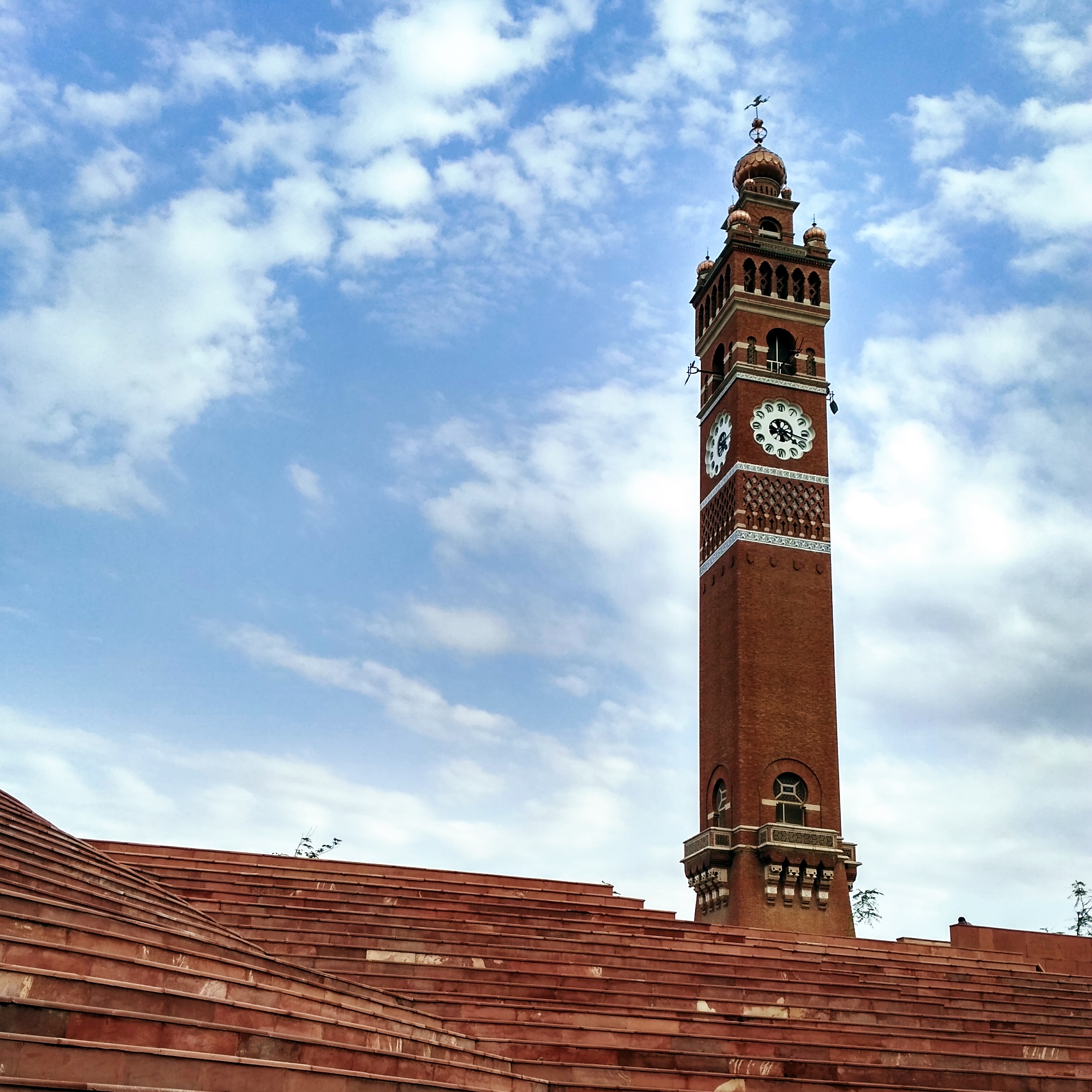
As you gaze upon its red brick façade, the intricate detailing becomes apparent—a testament to the craftsmanship of the era. The clock itself was designed by J.W. Benson of London, one of the most renowned clockmakers of the time. The clock’s mechanism is of enduring interest, with a 14-foot pendulum and 12-foot-long dials that still mark the passage of time with precision. The clock tower’s striking design and precision engineering make it an architectural marvel, offering a glimpse into the ingenuity of 19th-century artisans.
Surrounding the Ghanta-Ghar Clock Tower is a vibrant tapestry of local culture. Lucknow, known for its warm hospitality and rich cultural heritage, is often referred to as the ‘City of Nawabs’. The residents take immense pride in their history, and this tower is a point of local pride, symbolizing the city’s resilience and spirit. Visitors can often witness the hustle and bustle of daily life, as locals gather around the tower, exchanging stories and indulging in traditional pastimes. The nearby Chowk area is famous for its bustling markets and offers a glimpse into the city's thriving artisanal culture.
No visit to Lucknow is complete without indulging in its legendary Awadhi cuisine, which is a confluence of Mughal and Persian influences. The area around the clock tower offers a delightful array of street food options. Try the succulent kebabs, where the Galouti Kebab—a melt-in-the-mouth delicacy—reigns supreme. Pair it with a piping hot paratha and a cup of kulhad chai to savor the true flavors of Lucknow. For those with a sweet tooth, the Malai Ki Gilori, a delicate sweet wrapped in silver leaf, offers a perfect ending to a culinary adventure.
While the Ghanta-Ghar Clock Tower is a well-known landmark, there are lesser-known stories that add to its charm. Legend has it that the clock’s chimes once reverberated across the city, serving as the unofficial timekeeper for the locals. However, over the years, these chimes have fallen silent, adding a layer of mystery to the tower. Another interesting fact is that the clock tower is reputed to have one of the largest clock faces in India, yet many tourists overlook this detail amidst the grandeur of its surroundings.
For those planning a visit, the best time to experience the Ghanta-Ghar Clock Tower is during the cooler months from October to March. The weather during this period is pleasant, making it ideal for exploring outdoor attractions. Early mornings or late afternoons are perfect for a visit, allowing you to witness the tower bathed in the golden hues of sunlight. When visiting, take the time to wander around the adjacent Husainabad Imambara, another architectural marvel, to fully appreciate the historical depth of the area.
In conclusion, the Ghanta-Ghar Clock Tower is more than just a timepiece; it is a symbol of Lucknow's rich history and cultural tapestry. Whether you're drawn by its architectural grandeur or its historical significance, the tower offers a unique glimpse into the past while standing as a proud emblem of the city’s enduring spirit. As you stand before it, you’ll find yourself transported to a different time, where the echoes of history beckon you to explore further.


