
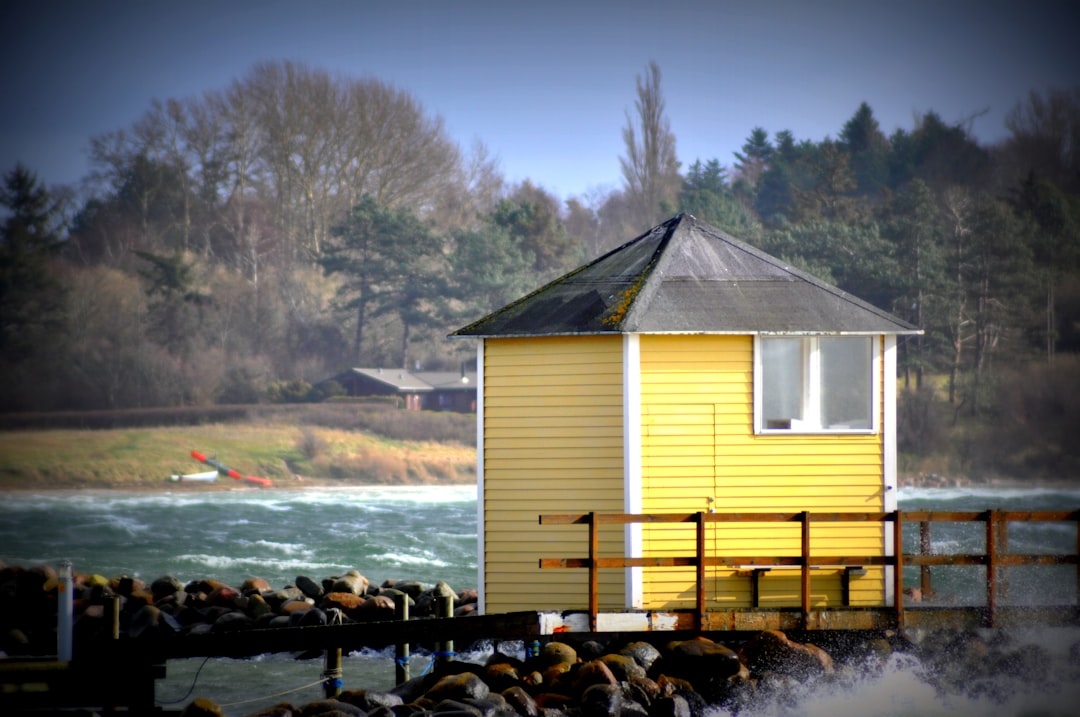

The light of the Lynæs lighthouse cuts through the mist of the Kattegat with the same determination for generations, guiding sailors through the shallow and treacherous waters that surround Læsø, the most remote island of northern Denmark. Getting here requires commitment: a ferry from Frederikshavn takes you to the island after about 90 minutes of sailing, and even during the crossing, one can sense the isolated and wild nature of this flat piece of land, surrounded by sandy shallows that have made adventurers tremble for centuries.
Læsø is an island that lives outside of ordinary time. Its most extraordinary feature is not the lighthouse itself, but the landscape that surrounds it: brackish marshes stretching towards the horizon, and scattered here and there the tang-tækkede huse, the traditional houses with roofs made of dried seaweed, a unique building tradition in the world that has survived only on this island. Walking towards the lighthouse means crossing a territory that seems drawn by a slow and patient hand.
The story of the lighthouse between wind and salt
The Lynæs lighthouse is located in the northern part of the island, in a strategic position that explains its existence: the waters of the Kattegat in this stretch are particularly difficult to navigate, rich in sandy shallows that change shape with the seasons. The current structure dates back to the 19th century, a period when Denmark systematically invested in the construction and modernization of its coastal lighthouses to protect maritime traffic in the Baltic and the North Sea.
The white brick tower is visible from afar even on a clear day, a visual landmark in the flat uniformity of the island landscape. Like many Danish lighthouses of the time, it is accompanied by a small complex of auxiliary buildings that once housed the keeper and his family, a life of isolation and responsibility that is now hard to fully imagine.
The climb and the view over the Kattegat
The lighthouse offers guided tours with the possibility of climbing up to the lantern, an experience that is worth the trip to Læsø by itself. From the top, on clear days, the view stretches across the entire island: the brackish marshes that shine under the sun like irregular mirrors, the low dunes that separate the mainland from the sea, and on the horizon, the Swedish coast that can be sensed as a dark line. The waters of the Kattegat appear from up here in a particular color, a pale blue-green that reveals their shallow depth.
During the climb, one traverses the wooden steps of the internal spiral staircase, narrow and steep like in many historic European lighthouses. The masonry walls retain moisture and coolness even in summer, and the small portholes that open at regular intervals along the tower offer increasingly wider glimpses as one ascends. It is a physical experience as well as a visual one, and those who suffer from claustrophobia or vertigo should consider limiting themselves to visiting the outdoor spaces.
The houses of seaweed: a unique context in the world
No visit to the Lynæs lighthouse is complete without spending time at the tangle-covered houses in the surrounding area. These homes, some dating back to the 17th and 18th centuries, are covered with thick layers of tangle, the seaweed Zostera marina collected from the shores of the island. The technique, born from the scarcity of straw on the island, produces roofs of dark gray-brown color, compact and waterproof, which can last up to three centuries if well maintained. Læsø still has several dozen of these buildings, and several are visible on foot or by bicycle starting from the lighthouse.
The entire island is designated as a protected area for its nature and cultural heritage, and this is reflected in the quiet and preserved atmosphere that can be felt everywhere. There are no large tourist infrastructures, and this is exactly its strength.
Practical tips for the visit
The best time to visit Læsø and the Lynæs lighthouse is between May and September, when the ferries from Frederikshavn operate more frequently and the weather conditions allow you to fully enjoy the outdoor scenery. During the high season, guided tours of the lighthouse are held regularly, but it is advisable to check the updated schedules through the island's tourist website before you leave, as they can vary from year to year.
The best way to explore the island is by bicycle: Læsø is flat and the distances are manageable, and several facilities on the island offer bikes for rent. Bring water and something to eat if you plan to spend the day in the lighthouse area, as services in the immediate vicinity are limited. The island has a population of a few thousand inhabitants and its tranquility is an integral part of the experience: do not expect the pace or comforts of a conventional tourist destination, and you will find something much more valuable.


