
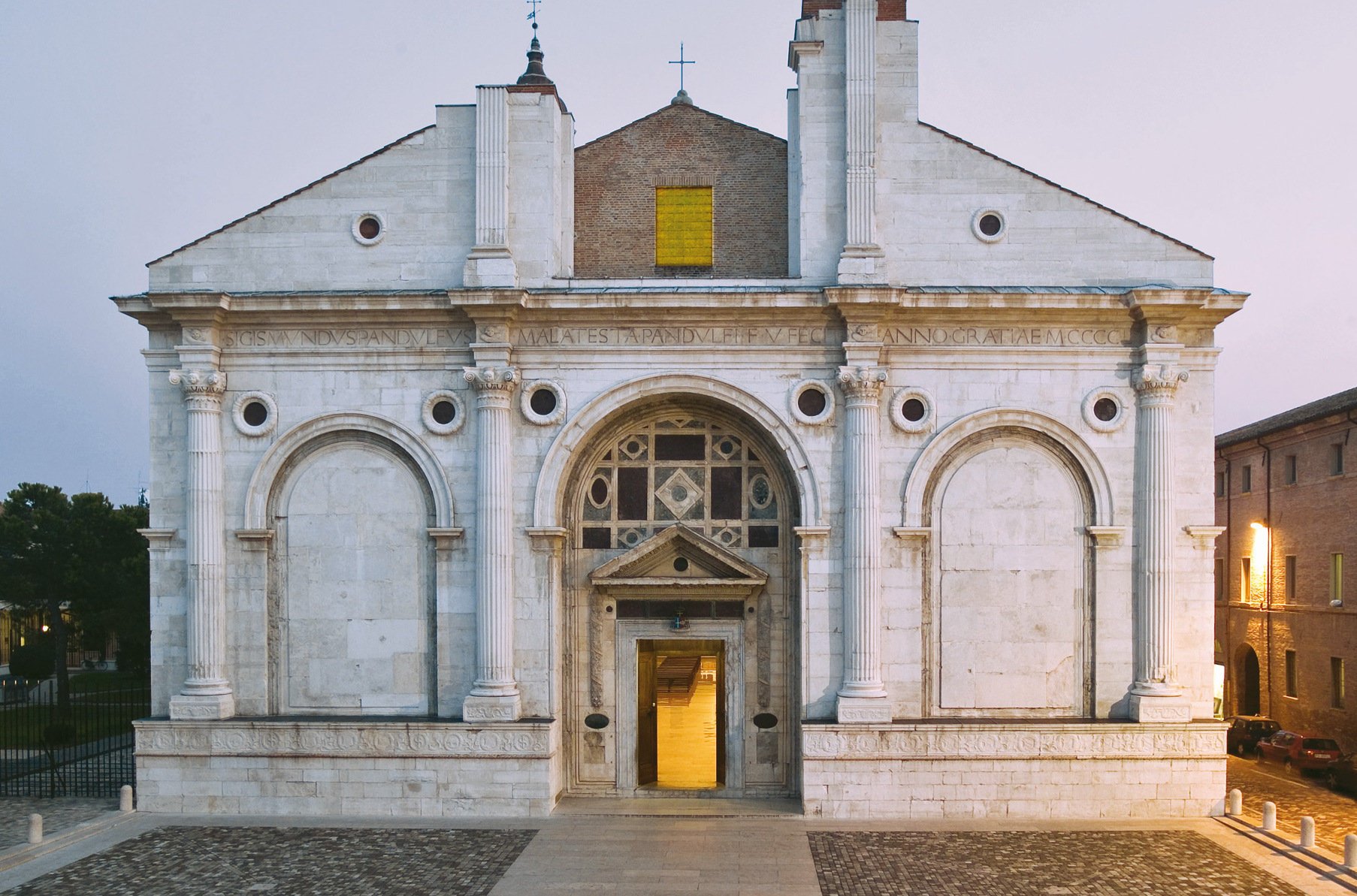

In the heart of Rimini, the Malatesta Temple stands as a testament to the city’s rich historical tapestry and architectural grandeur. This remarkable structure, originally dedicated to St. Columba, serves not only as a church but as a monument to the ambitions of Sigismondo Pandolfo Malatesta, the Lord of Rimini from 1432 to 1462. Commissioned to replace the earlier Church of San Francesco, the temple embodies the ideals of the Renaissance, reflecting both a spiritual and artistic rebirth.
The history of the Malatesta Temple is intertwined with the rise of the Malatesta family, who were influential in the region during the late Middle Ages. Sigismondo, a patron of the arts and a controversial figure, sought to create a lasting legacy through architecture. He enlisted the talents of Leon Battista Alberti, one of the foremost architects of the time, who drew inspiration from the Roman triumphal arch. The façade of the temple, adorned with marble from the Arch of Augustus, showcases intricate carvings and the Malatesta family symbols, such as the elephant, the intertwined initials “I” and “S” for Sigismondo and his beloved Isotta, and the double chequered band.
Stepping inside the temple, visitors are greeted by an interior that contrasts with the grand exterior. The Gothic style features a single nave flanked by six side chapels, each holding its own historical and artistic significance. Among these, the Chapel of the Planets is particularly noteworthy for housing the oldest known image of Rimini, while the Chapel of the Ancestors contains the Ark of the Ancestors and Descendants, sculpted by Agostino di Duccio. This chapel is a solemn tribute to the lineage of the Malatesta family, adding a layer of depth to the temple’s narrative.
Artworks within the temple further highlight its cultural importance. The crucifix by Giotto, crafted in 1312, exemplifies the master’s ability to convey emotion through form and color. Additionally, a fresco by the renowned Piero della Francesca depicts Sigismondo in a moment of reverence, kneeling before St. Sigismund. Such pieces not only enhance the spiritual atmosphere but also serve as reminders of the artistic prowess that flourished in Rimini during the Renaissance.
Rimini's local culture is vibrant, with customs and festivals that reflect its rich heritage. The Feast of St. Columba, celebrated in late November, draws both locals and visitors for a day of festivities, including processions and traditional music. The temple often serves as a focal point during these celebrations, reinforcing its role as a spiritual and cultural hub.
Culinary delights also abound in Rimini, where local gastronomy is a source of pride. Visitors should not miss trying piadina, a traditional flatbread filled with cheeses, meats, and vegetables, often enjoyed alongside a glass of Sangiovese, a red wine that perfectly complements the region’s flavors. The nearby Adriatic coast also offers fresh seafood dishes, connecting visitors to the region's maritime roots.
Despite its prominence, the Malatesta Temple holds lesser-known curiosities that intrigue those willing to look closer. For instance, the seven arches on the right side of the temple, which house the sarcophagi of notable figures from Sigismondo's court, are often overlooked. These intricately carved tombs tell stories of the past, providing a glimpse into the lives of those who shaped Rimini’s history. Additionally, the temple's design cleverly incorporates elements of both Gothic and Renaissance styles, making it a unique architectural hybrid that reflects the transitional period of its construction.
For those planning a visit, the best time to explore the Malatesta Temple is in the spring or early autumn when the weather is mild and the tourist crowds are thinner. It’s advisable to take a guided tour to fully appreciate the historical context and artistic details that may otherwise go unnoticed. Be sure to spend time examining the intricate carvings on the façade and the stunning chapels within, taking in the atmosphere that has inspired countless artists and historians.
Rimini's Malatesta Temple is not just a church; it is a captivating journey through history, art, and culture. To make the most of your visit to Rimini, consider using the Secret World app to plan a personalized AI itinerary that will guide you through this enchanting city.


