



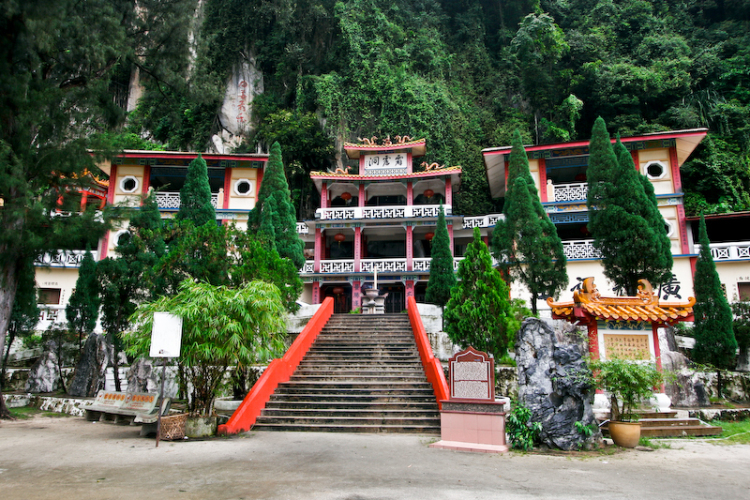
Tucked away in a tranquil corner of Ipoh, Sam Poh Tong Temple is a hidden gem steeped in history and mystique. Just a short drive from the bustling town center, this cave temple offers a serene escape for travelers seeking to explore Malaysia's spiritual heritage beyond its bustling cities.
The history of Sam Poh Tong dates back to 1912, when a Chinese Buddhist monk named Koh Sui Keng discovered a large limestone cave nestled in the hills of Kinta Valley. He chose this secluded spot as a retreat, living within its natural confines for nearly 20 years. The name "Sam Poh Tong" translates to "Cave of Triple Gems," a nod to the three core principles of Buddhism: the Buddha, the Dharma (the teachings), and the Sangha (the community). Despite the name, visitors will not find literal gems, but rather the true treasure lies in the temple's serene atmosphere and spiritual significance.
The art and architecture of Sam Poh Tong reflect a fusion of traditional Chinese designs and the natural beauty of the cave itself. As you approach the temple, intricate carvings and vibrant murals depicting Buddhist deities greet you, showcasing the artistic dedication of the monks who have inhabited this space. The temple's architecture is characterized by its harmonious blend with the surrounding limestone rock formation, creating an awe-inspiring ambiance. Among the notable features are the elaborately painted ceiling and the large Buddha statue that sits majestically at the temple's heart. The landscaped gardens, adorned with koi ponds and carefully curated flora, further enhance the temple's beauty, inviting visitors to pause and reflect.
Local culture thrives in this part of Malaysia, and Sam Poh Tong serves as a vibrant hub for spiritual traditions. Visitors may witness the practices of local devotees, such as lighting incense and offering prayers, which connect them to centuries of Buddhist customs. Festivals like Wesak, celebrating the birth, enlightenment, and death of Buddha, draw crowds to the temple, transforming the serene space into a lively celebration filled with colorful decorations and communal feasting. The temple is not just a place of worship but a vital part of the community, where locals gather for meditation, workshops, and cultural exchanges.
For those looking to indulge in gastronomy, Ipoh is renowned for its culinary delights, and Sam Poh Tong is no exception. The region is famous for its white coffee, a rich, aromatic brew made from beans roasted with palm oil margarine, giving it a unique flavor. Just a short drive from the temple, visitors can sample local favorites such as hor fun (flat rice noodles), ipoh chicken rice, and tau fu fah (soybean pudding). Engaging with local food vendors brings an added layer to the experience, as you savor the flavors while soaking in the rich culture surrounding the temple.
Beyond its surface beauty, Sam Poh Tong has its share of lesser-known curiosities. One fascinating tale involves the temple's solitary monk, who has dedicated his life to prayer and meditation within the monastery. This monk, the last of his kind residing in the temple, lives in isolation, embodying the essence of spiritual dedication. Visitors may find a sense of reverence in his commitment, which adds a somber yet profound layer to the temple's narrative. Additionally, the tortoise pond, while seemingly a tourist attraction, symbolizes longevity and wisdom in Chinese culture, and the practice of feeding the tortoises has become a way for visitors to earn merit.
When planning your visit, consider the best time to explore Sam Poh Tong. The temple is open daily, but early mornings or late afternoons provide a more tranquil experience, allowing you to appreciate the surroundings without the crowds. Dress modestly, as this is a place of worship, and be respectful of the spiritual practices occurring within. While wandering through the cave complex, take the time to admire the intricate details of the carvings and the peaceful ambiance of the gardens.
As you embark on your journey to discover Sam Poh Tong Temple, you’ll find that this hidden sanctuary is more than just a cave; it’s a testament to the resilience of faith and the beauty of solitude. To make the most of your time in Ipoh, consider using the Secret World app for a personalized AI itinerary that guides you through the city's best-kept secrets.
