
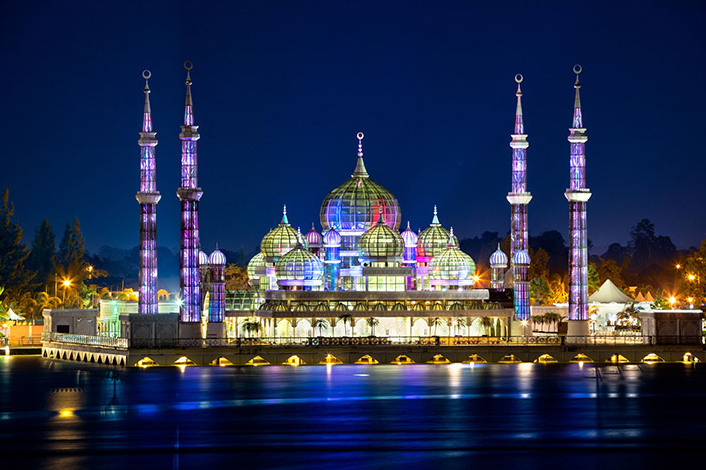

The Crystal Mosque in Kuala Terengganu is a stunning testament to modern Islamic architecture and stands as one of Malaysia's most iconic landmarks. Nestled within the Islamic Heritage Park on Wan Man Island, the mosque is a beacon of cultural significance and artistic brilliance, drawing visitors from across the globe.
History and Origins
The Crystal Mosque was conceived in the early 2000s as part of a broader initiative to promote Islamic heritage and culture in Malaysia. Construction began in 2006 and was completed in just two years, culminating in its inauguration on February 8, 2008, by Sultan Mizan Zainal Abidin, the 13th Yang di-Pertuan Agong of Malaysia. The mosque reflects Malaysia's commitment to embracing modernity while honoring its Islamic roots.
Historically, Kuala Terengganu has been a significant center of trade and Islamic education, flourishing since the 15th century. The establishment of the Crystal Mosque is a continuation of this rich legacy, showcasing the evolution of Islamic architecture in Malaysia, where traditional designs meet contemporary innovation.
Art and Architecture
The architectural style of the Crystal Mosque is nothing short of extraordinary. It utilizes a unique combination of steel, glass, and crystal, allowing it to embody a modern aesthetic while remaining faithful to Islamic design principles. The mosque's five towering domes are complemented by intricately designed minarets, which stand at an impressive height, creating a striking silhouette against the skyline.
When illuminated at night, the mosque transforms into a spectacular sight, with its glass domes shimmering like jewels. Inside, the main prayer hall is adorned with exquisite calligraphy and intricate patterns, reflecting the artistic traditions of Islamic culture. The mosque can accommodate up to 1,500 worshippers, making it not only a place of worship but also a venue for community gatherings and events.
Local Culture and Traditions
The surrounding community is deeply intertwined with the mosque, which serves as a focal point for various local customs and traditions. The annual celebration of Hari Raya Aidilfitri, marking the end of Ramadan, sees thousands congregate at the mosque for prayers and festivities. Local cultural events often include traditional music and dance performances, showcasing the vibrant heritage of the Terengganu region.
Visitors may also witness the practice of Zakat, an important Islamic custom of almsgiving, which is often facilitated through the mosque. This underscores the mosque’s role as both a spiritual and social hub where charity and community welfare are prioritized.
Gastronomy
No visit to Kuala Terengganu would be complete without indulging in the local gastronomy. The area is renowned for its Nasi Dagang, a fragrant rice dish served with fish curry, often enjoyed as a breakfast staple. Another local favorite is Keropok Lekor, a traditional fish cracker that is both a snack and a symbol of Terengganu’s coastal heritage.
For those with a sweet tooth, Bubur Lambuk—a savory porridge made with rice, spices, and meat—offers a delightful taste of local flavors. These dishes can often be found in nearby food stalls and markets, providing a rich culinary experience that complements the cultural visit to the Crystal Mosque.
Lesser-known Curiosities
While many visitors marvel at the mosque's exterior, few know about the intricate details embedded within its structure. For instance, the prayer hall’s acoustics are designed to enhance the sound of the Adhan (the call to prayer), allowing it to resonate beautifully throughout the area. Additionally, the Crystal Mosque is often referred to as one of the most photographed mosques in the world due to its breathtaking design, making it a favorite among photographers and architecture enthusiasts alike.
Visitors might also be surprised to find that the mosque features a small gift shop selling local handicrafts and Islamic art, providing an opportunity to take home a piece of this unique culture.
Practical Visitor Information
The best time to visit the Crystal Mosque is during the dry season, from March to October, when the weather is generally pleasant. Early mornings or late afternoons are ideal for photography, as the sun casts a warm glow on the mosque's reflective surfaces.
When planning your visit, consider dressing modestly and respectfully, as it is an active place of worship. Guided tours are available, offering deeper insights into the mosque's history, architecture, and cultural significance.
As you explore Kuala Terengganu, don’t forget to use the Secret World app to craft a personalized itinerary that highlights the best experiences this vibrant city has to offer.


