
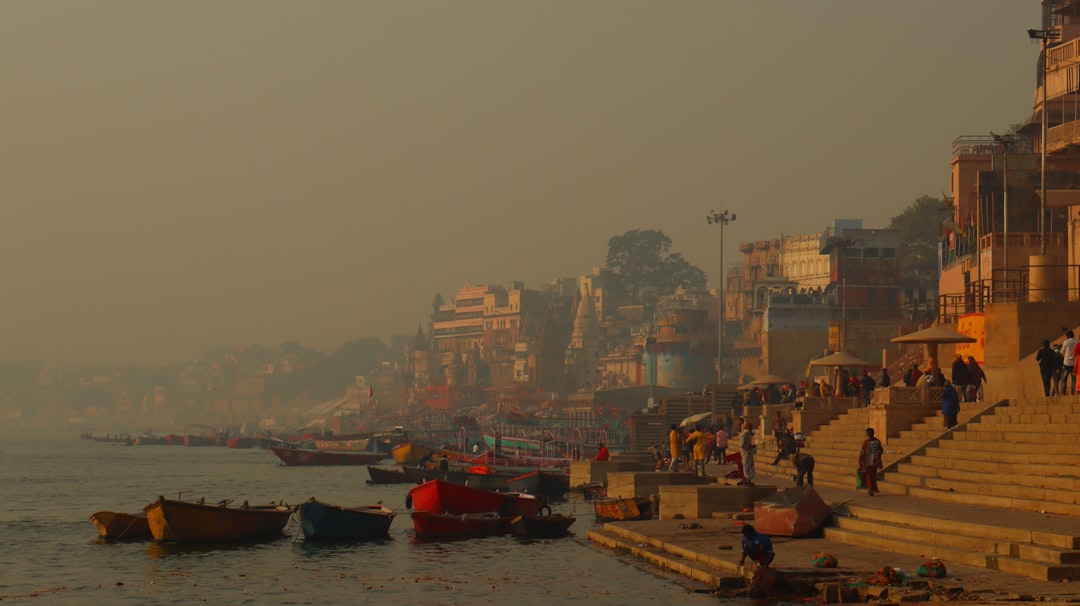

The smoke rises thick and continuous, day and night, without interruption for centuries. At Manikarnika Ghat, one of the oldest and most sacred cremation sites in India, funeral pyres burn twenty-four hours a day along the banks of the Ganges. Families carry their loved ones wrapped in white or orange shrouds, shouldered through the narrow alleys of the old city of Varanasi, accompanied by the rhythmic chant of Ram naam satya hai — the name of Ram is the truth. There is nothing theatrical about this: it is the daily life of one of the oldest cities in the world.
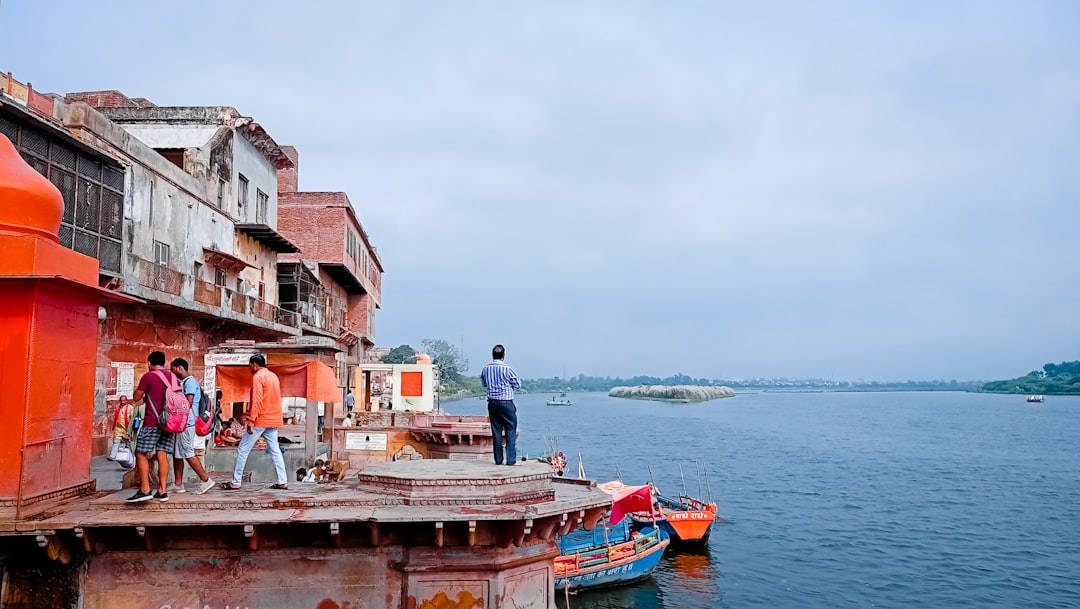
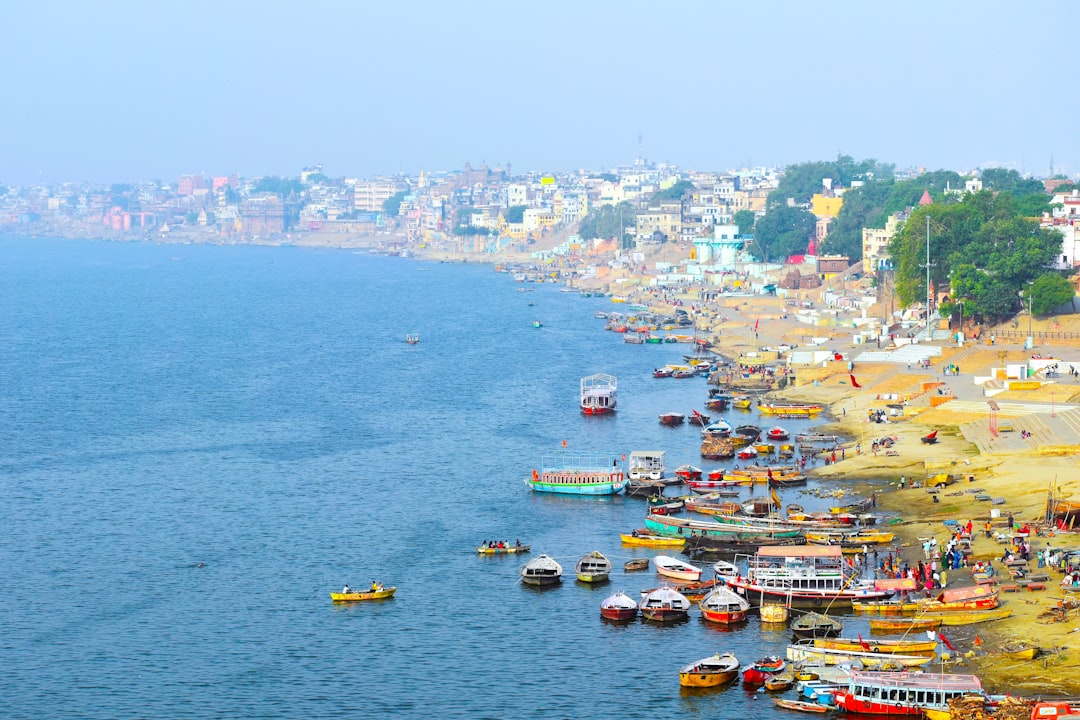
Varanasi, which ancient Sanskrit texts called Kashi, stretches along the western bank of the Ganges with a series of eighty-eight ghats — stone steps that descend directly to the river. Manikarnika is among the most significant of these landings, not for its monumental architecture, but for the function it performs uninterruptedly: it is the main cremation ghat of the city, and according to Hindu tradition, those who are cremated here attain liberation from the cycle of rebirths, moksha.
The structure of the ghat and its visible elements
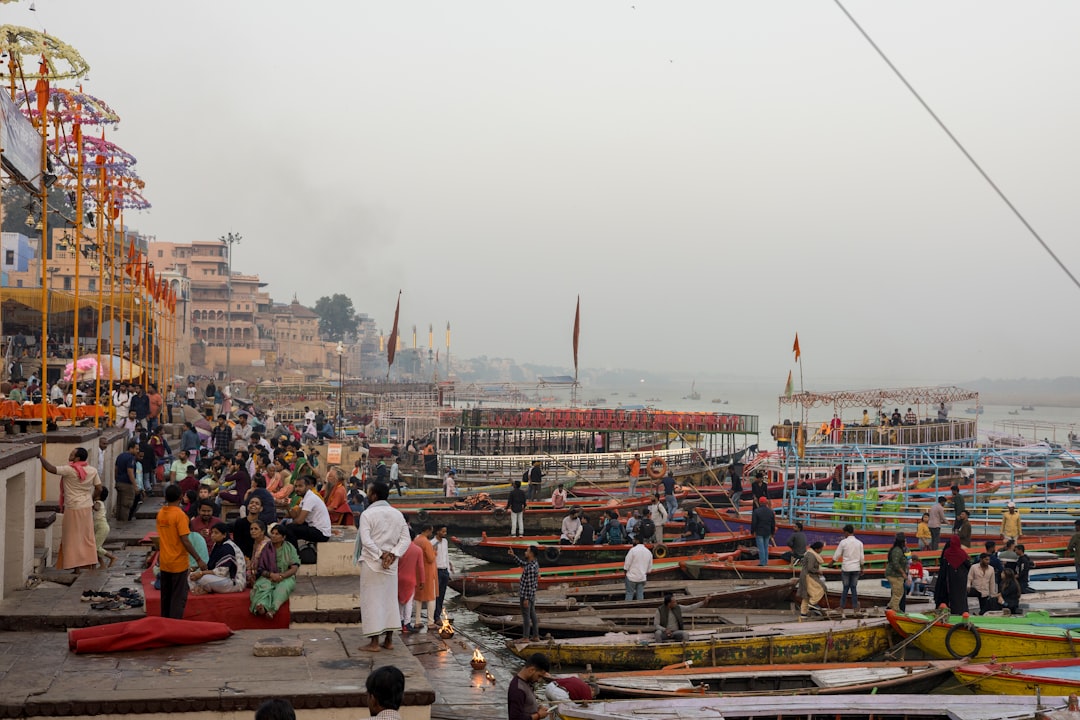
Descending the stone steps worn by millennia of footsteps, one encounters precise and recognizable structures. The stacks of wood — mainly sandalwood, mango, and banyan — are weighed and sold in the immediate vicinity: the cost of cremation largely depends on the type and quantity of wood used, and less affluent families purchase smaller amounts. On the ghat, two elevated platforms where cremations take place are clearly distinguishable, surrounded by gray ash and embers. The Dom, the caste traditionally responsible for managing cremations, maintain the sacred fire from which each pyre is lit: it is said that this flame has not gone out for over three thousand years.
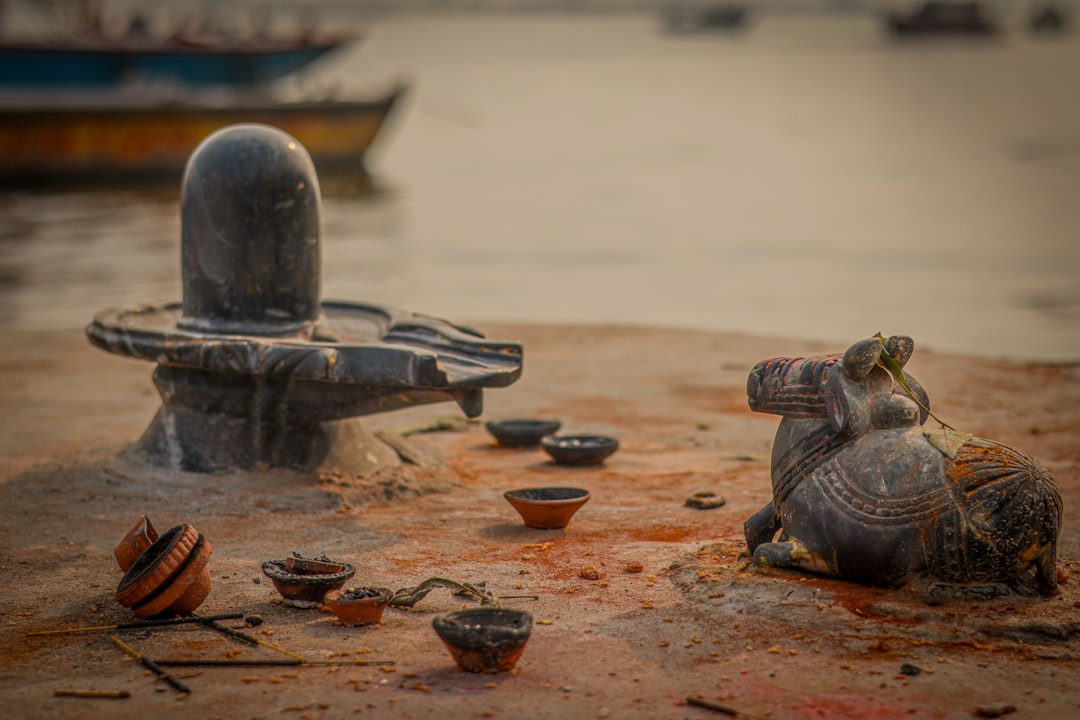
Just above the main ghat is a temple dedicated to the goddess Manikarnika, and according to Hindu mythology, this is the point where the earring — or the wrist — of the goddess Sati fell, granting the place its original sacredness. The surrounding area is a labyrinth of alleys, flower vendors and marigold garlands, wood shops, and small side temples that unexpectedly open between the crumbling walls.
The Ganga Aarti ceremony at sunset
Every evening, as the sun sets, the main ghats of Varanasi transform into a scene of light and ritual. The Ganga Aarti — the fire offering ceremony to the river — takes place with greater spectacle at the nearby Dashashwamedh Ghat, just a few minutes' walk from Manikarnika. Priests dressed in orange perform synchronized movements with large multi-flame lamps, accompanied by chants, bells, and conch shells. The ceremony generally begins around 7:00 PM and lasts about forty minutes, although the times vary slightly with the seasons.
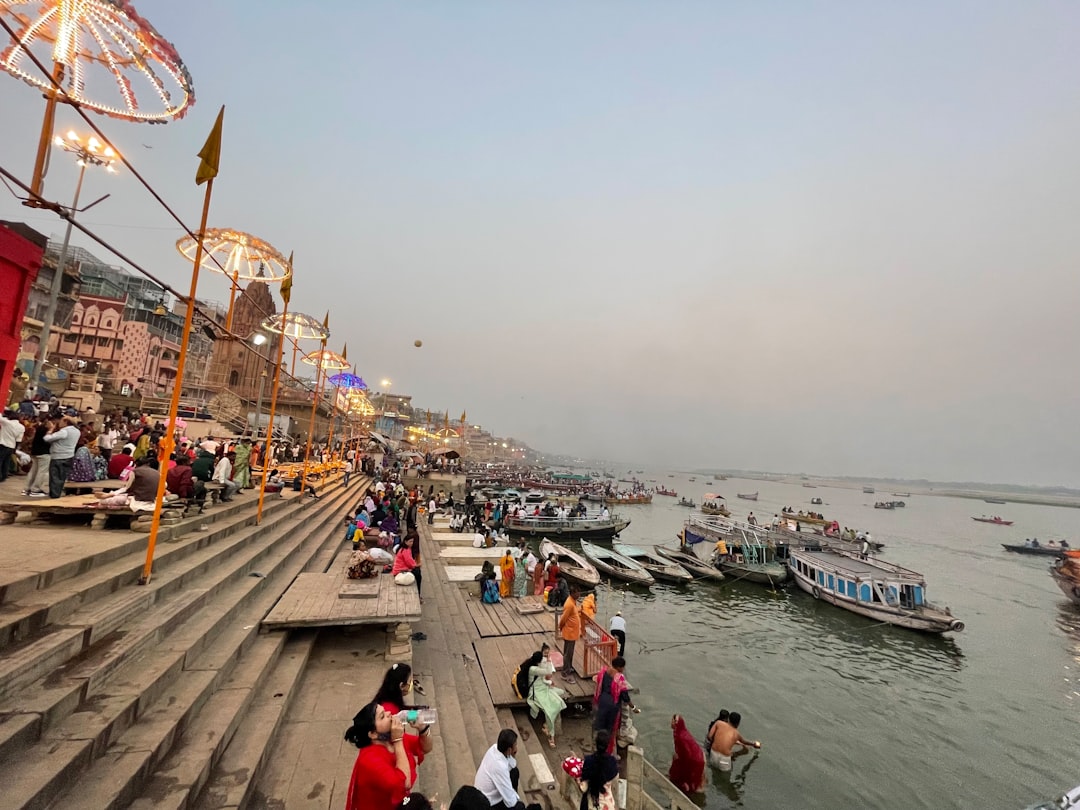
Watching the Aarti from a boat on the Ganges offers a different and less crowded perspective compared to the riverbank: boats are easily rented along the river, and many visitors prefer to observe both the cremation ghats and the evening ceremony during a single sunset cruise. The contrast between the pyres of Manikarnika and the ritual lights of the Aarti, seen from the same point on the river, visually synthesizes the philosophy of the place: death and devotion as inseparable aspects of the same reality.
How to visit Manikarnika Ghat respectfully
Access to the ghat is free and open, but it is essential to observe some unwritten rules that visitors should be aware of before arriving. Photography of cremations or grieving families is not allowed: this is not just a formal prohibition, but a matter of basic respect for people who are experiencing a moment of private sorrow. Some men present in the area will approach tourists offering explanations: it is acceptable to listen, but be wary of those who ask for money in exchange for access to special areas or information.
The best time to visit is early in the morning, between 5:30 and 7:00, when pilgrims immerse themselves in the Ganges during the ritual bath at dawn and the light is extraordinary. At this time, the ghat is lively but less chaotic compared to the central hours of the day. Varanasi is not a destination that can be understood in a single visit: most travelers recommend spending at least two or three nights in the city to absorb the rhythms of the place without haste.
Arriving in Varanasi and Moving to the Ghats
Varanasi is connected to the main Indian cities by direct flights through the international airport Lal Bahadur Shastri, located about twenty-five kilometers from the center. The Varanasi Junction railway station is well connected to Delhi, Mumbai, and Kolkata through numerous express trains. From the arrival points, the ghats can be reached by rickshaw or on foot through the maze of alleys in the old city — no motor vehicles can enter the narrower streets near the river. Manikarnika is located in the central part of the sequence of ghats and can be easily reached on foot by following the path along the river.


