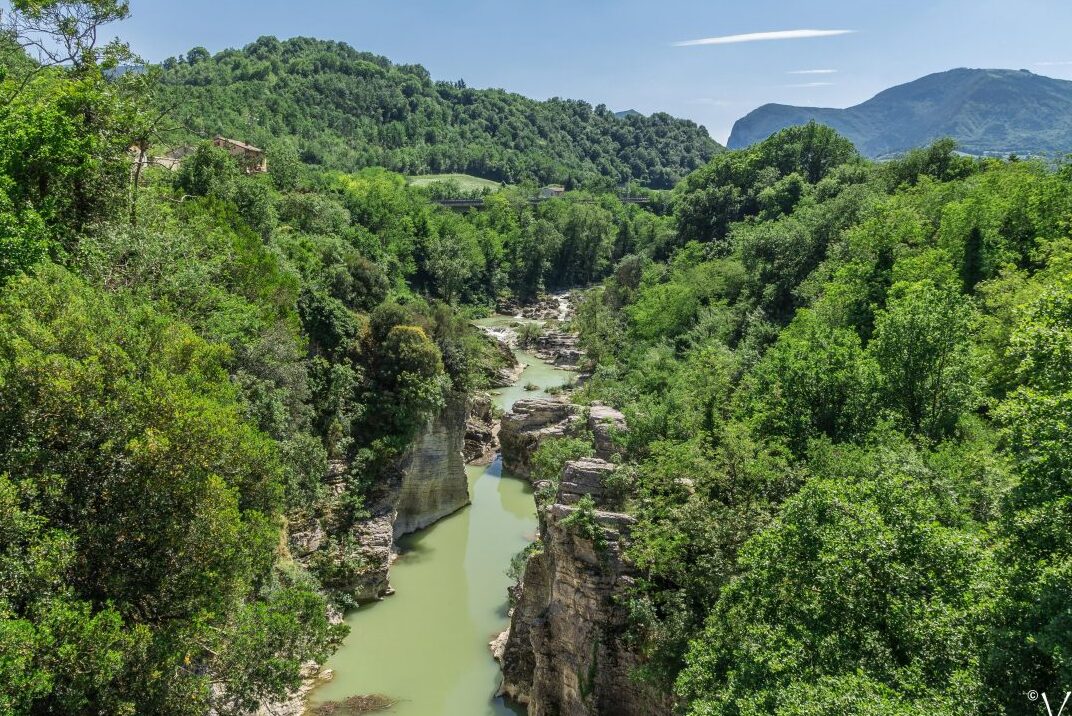

Nestled in the heart of Marches, just a stone's throw from the majestic Furlo Gorge, lies the captivating Marmitte dei Giganti. These natural wonders, resembling enormous cooking pots, are part of the San Lazzaro Gorge, a striking natural canyon carved by the relentless flow of the Metauro River. The legends surrounding these peculiar formations add an air of mystique, as local folklore suggests that giants once used them to prepare massive soups.
### History and Origins The San Lazzaro Gorge and its Marmitte dei Giganti have a history that stretches back to ancient times. The gorge derives its name from the nearby hamlet of San Lazzaro, which itself has roots tracing back to the Roman Empire. Historical evidence indicates that this area was populated by the Piceni, an ancient Italic tribe known for their warrior culture and artistic achievements. Over the centuries, the gorge has been shaped not only by natural forces but also by human activity, especially during the Middle Ages when it served as a strategic passage for travelers and merchants.
One of the most significant historical events tied to this region is the Battle of Fossombrone in 1815, which marked the end of Napoleonic rule in Italy. This battle brought a wave of change to the region, influencing its political landscape and the development of towns around the gorge.
### Art and Architecture The Marmitte dei Giganti attract not only nature lovers but also artists and photographers who are drawn to the stunning visual contrasts offered by the high vertical walls of the gorge, which soar up to 30 meters. The rock formations, shaped by millennia of erosion, present an array of textures and colors, making them a favorite subject for landscape painters and photographers.
While the gorge itself is a natural masterpiece, the nearby towns, like Fossombrone, boast architectural gems from the Renaissance and Baroque periods, including the Church of San Filippo and the Palazzo Comunale. These structures, with their intricate facades and historic significance, offer a glimpse into the rich artistic heritage of the region.
### Local Culture and Traditions The culture of Marches is deeply rooted in its medieval past, with many festivals celebrating local customs and traditions. One notable event is the Festa di San Lazzaro, held in early June, where locals partake in a vibrant procession, honoring the patron saint of the area. This celebration is characterized by traditional music, dance, and culinary delights, bringing together the community in a spirit of festivity.
Furthermore, the region is known for its craftsmanship, particularly in pottery and textiles, with artisans often showcasing their work at local markets. Visitors can experience firsthand the passion and skill that goes into each creation, making it a significant part of the local identity.
### Gastronomy The culinary offerings of Marches are as diverse as its landscape. Here, visitors can savor traditional dishes such as vincisgrassi, a rich lasagna-like dish layered with béchamel sauce, and brodetto, a fish stew that reflects the coastal influence of the region. Locally produced wines, particularly Verdicchio and Sangiovese, pair beautifully with these dishes, highlighting the agricultural abundance of the area.
Don’t miss the chance to try crescia, a savory flatbread that is often stuffed with cheeses or meats, and is a beloved staple in local cuisine. Markets in nearby towns also offer a variety of artisanal cheeses and cured meats, perfect for a picnic in the breathtaking surroundings of the gorge.
### Lesser-Known Curiosities While the Marmitte dei Giganti are the main draw, many visitors overlook the fascinating geological history that led to their formation. The cylindrical cavities were created by the swirling currents of the Metauro River, which carved the rock over thousands of years. Additionally, the gorge is home to a variety of flora and fauna, including several rare plant species and birds of prey, making it a hidden gem for nature enthusiasts.
Another intriguing fact is that the gorge has served as a backdrop for various film and photography projects, showcasing its dramatic landscapes. The interplay of light and shadow on the canyon walls creates a captivating atmosphere that filmmakers find irresistible.
### Practical Visitor Information The best time to visit the Marmitte dei Giganti is during the spring and early autumn months when the weather is mild, and the natural beauty of the gorge is at its peak. The San Lazzaro Gorge can be accessed via well-marked hiking trails, making it accessible for both seasoned hikers and casual walkers. As you explore, keep an eye out for informational signs that provide insights into the area's history and ecology.
For those looking to capture the perfect photograph, early morning or late afternoon light will provide stunning visuals of the gorge’s towering walls. Don’t forget to bring plenty of water and snacks, as amenities are limited within the gorge itself.
### Conclusion A visit to the Marmitte dei Giganti offers an unforgettable experience, blending natural beauty, rich history, and vibrant culture all in one breathtaking location. As you plan your journey, consider using the Secret World app to create a personalized itinerary that ensures you don’t miss any of the unique treasures this region has to offer.
