



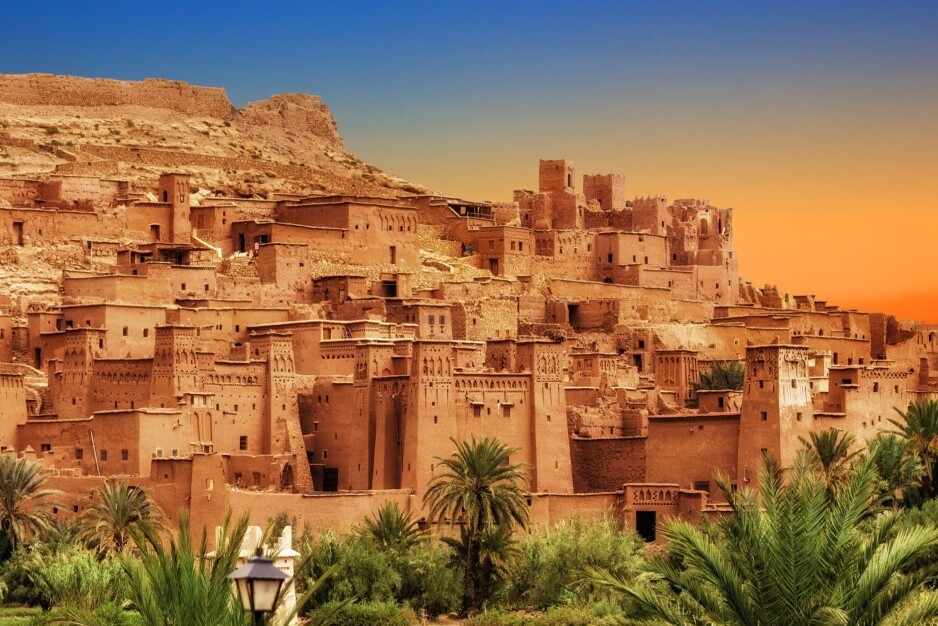
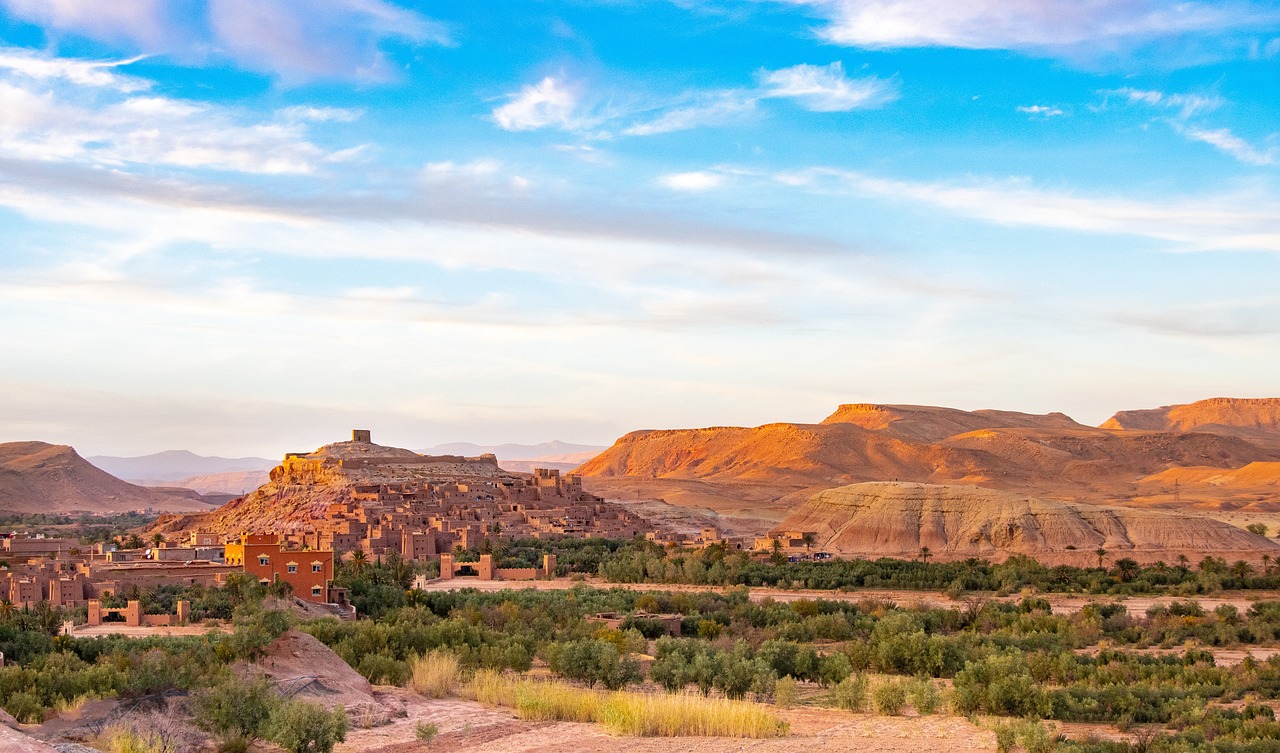
Nestled in the stunning Ouarzazate region of Morocco, Ait-Ben-Haddou stands as a remarkable testament to the region's rich history, culture, and architecture. This earthen village, constructed from clay bricks, has a history that stretches back centuries. Positioned strategically along the ancient Sahara Trade Route, it became a vital stop for traders transporting spices, gold, and other goods between sub-Saharan Africa and the Mediterranean. Its origins date back to the 11th century, when it was founded by the Almoravid dynasty, serving as a fortified caravanserai to protect travelers from the harsh desert environment. Over the years, Ait-Ben-Haddou flourished, witnessing many key historical events, including the rise of the Saadian dynasty in the 16th century, which further solidified its significance in the region.

The architectural style of Ait-Ben-Haddou is strikingly beautiful, characterized by its ksar (a group of earthen buildings surrounded by defensive walls) and kasbahs. The buildings, made from a mixture of clay, straw, and water, blend harmoniously with the surrounding landscape, reflecting the ancient techniques of construction that have been passed down through generations. The most iconic structure is the Ksar of Ait-Ben-Haddou, a UNESCO World Heritage site since 1987, which showcases intricate decorations, high towers, and mud-brick walls that tell the story of its storied past. The village's maze-like streets and narrow alleyways evoke a sense of stepping back in time, while the vibrant colors of the earthen walls change throughout the day, creating a stunning visual spectacle.
Local culture in Ait-Ben-Haddou is vibrant and deeply rooted in tradition. The village is home to a small community that continues to uphold age-old customs and practices. Traditional crafts, such as weaving and pottery, are still practiced, with artisans creating beautiful rugs and ceramics that reflect the rich heritage of the Berber people. Festivals are integral to the community’s culture; the Gnaoua World Music Festival, held annually in nearby Essaouira, attracts international visitors and showcases the region's musical heritage, including the traditional Gnaoua music that has its roots in West African culture.
Gastronomy in Ait-Ben-Haddou offers a delightful array of flavors that reflect the region's history and agricultural bounty. Traditional dishes include tagine, a slow-cooked stew typically made with meat, vegetables, and a blend of aromatic spices. Visitors can also savor couscous, a staple in Moroccan cuisine, served on Fridays as a symbol of community and family gatherings. For a sweet treat, try baklava or shebakia, a honey-soaked pastry often enjoyed during festivals. The local mint tea, served with a generous amount of sugar, is a staple of hospitality and is a must-try for anyone visiting the village.
Despite its popularity, Ait-Ben-Haddou holds many lesser-known curiosities that enrich its appeal. One fascinating detail is that the village has served as a backdrop for numerous films and television series, including Gladiator, Game of Thrones, and The Mummy, making it a significant location in cinematic history. Additionally, many visitors are unaware that the village’s inhabitants still live and work in the area, maintaining their customs and lifestyle amidst the influx of tourists. The stunning landscapes surrounding the village, including the Draa Valley and the Atlas Mountains, offer breathtaking views and opportunities for hiking and exploration, often overlooked by those who only visit the village itself.
For those looking to visit Ait-Ben-Haddou, the best time to go is during the spring (March to May) or autumn (September to November), when the weather is mild and pleasant. It’s essential to wear comfortable walking shoes as the terrain can be uneven, and don’t forget to bring a camera to capture the stunning vistas. Visitors should take the time to explore the narrow alleys, interact with locals, and perhaps enjoy a traditional meal at one of the village's cozy restaurants.
In conclusion, Ait-Ben-Haddou is more than just a picturesque village; it is a living museum that tells the story of Morocco's rich heritage and cultural diversity. The blend of history, stunning architecture, and vibrant local customs creates an unforgettable experience for any traveler. Whether marveling at the earthen structures, savoring the local cuisine, or simply soaking in the ambiance of this ancient oasis, visitors will leave with memories that last a lifetime. For a personalized itinerary to make the most of your visit, consider using the Secret World app.
