



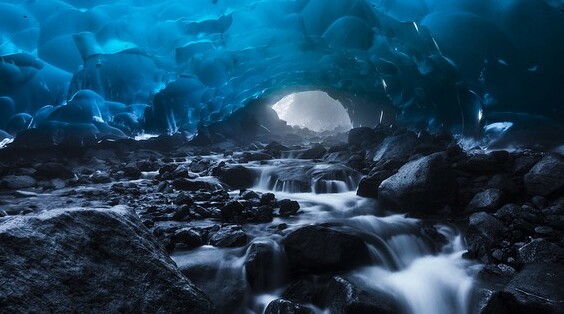
Beneath the icy façade of the Mendenhall Glacier lies a world so ethereal, it appears to be sculpted by the hands of mythical beings. The Mendenhall Ice Caves, located just 12 miles north of Juneau, Alaska, offer an otherworldly experience where azure blue walls and shimmering ceilings create a surreal landscape, constantly shifting with the glacier's ebb and flow.
The history of the Mendenhall Glacier dates back over 3,000 years, forming during the Little Ice Age. As part of the expansive Juneau Icefield, the glacier has been a silent witness to nature's grand design. Originally known to the indigenous Tlingit people as "Sitaantaagu" (the "Glacier Behind the Town"), the glacier has long been a part of local lore and survival, providing a wealth of resources and inspiring countless stories. European exploration in the late 19th century brought further attention, with the glacier being named after Thomas Corwin Mendenhall, a prominent scientist who contributed to the boundary survey between Alaska and British Columbia.
Architecturally, the ice caves are nature's masterpiece. There is no human hand involved in crafting the stunning arches and tunnels. Instead, these formations are a result of meltwater carving pathways through the glacier, leaving behind translucent corridors that glow with an unearthly light. The colors, ranging from deep indigo to bright turquoise, shift with the angle of the sun and the density of the ice, offering a dynamic visual feast that changes with each visit.
In the cultural tapestry of Juneau and the surrounding areas, the glacier and its caves hold a special place. The Tlingit people, who have inhabited the region for thousands of years, celebrate the land and its phenomena through art and ceremony. While there are no specific festivals dedicated solely to the glacier, the Tlingit culture emphasizes the interconnectedness of all natural elements, a theme that permeates local storytelling and traditional gatherings.
Gastronomically, Juneau offers a taste of the region's bounty, with local cuisine deeply connected to the land and sea. Visitors can savor dishes featuring fresh Alaskan salmon, halibut, and king crab. For a true taste of Alaska, try the smoked salmon, a staple in Tlingit culinary tradition, paired with locally brewed ales that capture the flavors of the rugged terrain.
One lesser-known curiosity of the Mendenhall Ice Caves is their transient nature. The caves you visit today may not exist tomorrow, as the glacier is currently receding at a notable pace, losing an average of 30-50 feet per year. This dynamic environment means that each expedition offers a unique experience, making them a living canvas for both scientists and adventurers to explore. Another fascinating aspect is the elusive creatures inhabiting this icy realm, such as the ice worm, a small annelid that thrives in the glacier's cold environment, adding a touch of mystery to the frozen landscape.
For those planning a visit, timing and preparation are crucial. The best time to explore the Mendenhall Ice Caves is during the late spring to early fall months when access is safer and the weather is more forgiving. However, reaching the caves requires a blend of determination and respect for the natural elements; a journey that involves kayaking across Mendenhall Lake or hiking the rugged West Glacier Trail, followed by navigating the glacier's surface with crampons and ropes.
Visitors should enlist the services of experienced guides, as the path can be treacherous and conditions unpredictable. Safety gear is essential, and it's advisable to dress in layers to accommodate the varying temperatures within the glacier. Once inside, keep an eye out for the intricate patterns formed by trapped air bubbles and mineral deposits, subtle details that reveal the glacier's ancient history.
The Mendenhall Ice Caves are not just a destination; they are a testament to the relentless beauty and power of nature, a place where time seems to stand still, offering an unforgettable journey into one of Alaska's most magical landscapes.
