

In the heart of Ypres, a town in Flanders, Belgium, stands the Menin Gate, a war memorial dedicated to the British and Commonwealth soldiers who lost their lives during World War I. This monument not only serves as a tribute to the fallen but also symbolizes peace and reconciliation, making it a must-visit for anyone traveling to the region. Located at the eastern exit of the city, the Menin Gate marks the starting point of one of the main roads that led soldiers to the front lines.
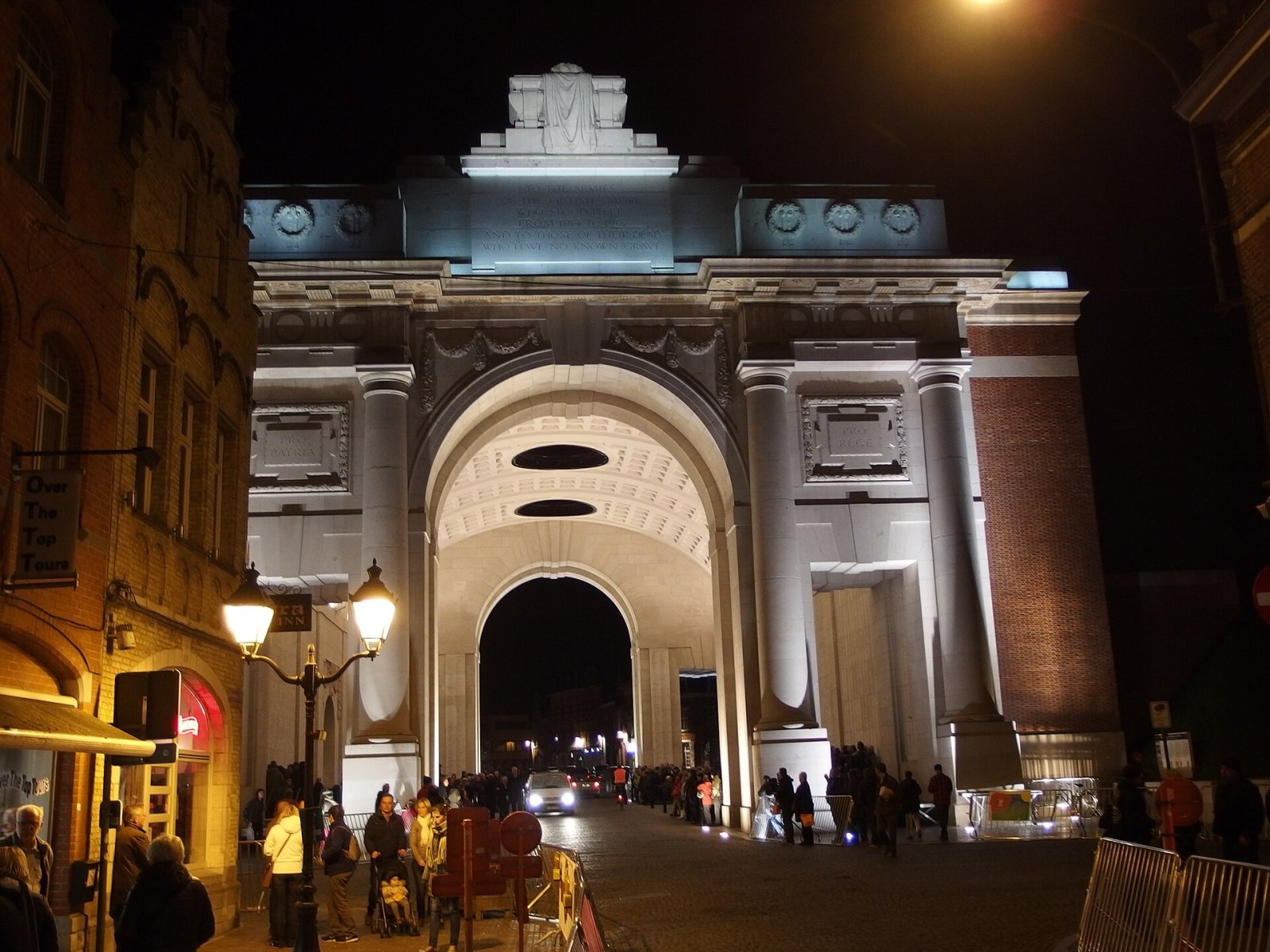
Inaugurated on July 24, 1927, the Menin Gate was designed by Sir Reginald Blomfield and constructed by the Imperial War Graves Commission, now known as the Commonwealth War Graves Commission. This monumental structure underwent significant restoration, completed in 2025, to preserve its integrity and beauty for future generations.
History and Origins
The origins of the Menin Gate date back to medieval times when the gate was known as Hangoartpoort. During the 17th and 18th centuries, the city of Ypres underwent significant fortifications under the occupation of the Habsburgs and the French. The French military engineer Sebastien Le Prestre, Seigneur de Vauban, completed important fortification works at the end of the 17th century. With the onset of World War I in August 1914, Ypres became a crucial site of bloody battles, and the need for a memorial honoring the fallen soldiers became increasingly evident.
The Menin Gate was built to commemorate the soldiers whose burial places are unknown. Every evening, the sound of the Last Post resonates under the arch of the memorial, a ritual that has taken place since 1928 and continues to this day, attracting visitors from around the world. This moment of commemoration represents a link between the past and the present, an opportunity to reflect on the sacrifice of those who fought for freedom.
Elements to Observe
Inside the Menin Gate, visitors can admire the over 54,000 inscriptions of the names of missing soldiers, a touching tribute that testifies to the vastness of the loss. Each name is engraved in stone, creating a profound visual and emotional impact. The design of the memorial features majestic architecture, with an arch rising over 10 meters high, making it a recognizable landmark in the city of Ypres.
Surrounding the Menin Gate, the landscape is enriched by various commemorative monuments and cemeteries, providing significant historical and cultural context. The presence of these memorial sites invites deep reflection on war and its consequences, making the visit not only educational but also emotionally engaging.
Why It Is Interesting Today
Today, the Menin Gate is not just a memorial but also a symbol of peace and reconciliation. Its historical significance makes it a pilgrimage site for many, not only for those seeking to honor their ancestors but also for anyone interested in understanding the complexities of European history. The city of Ypres, with its architectural heritage and troubled past, offers a fascinating context to explore themes of war and memory.
Moreover, the Menin Gate is an ideal starting point for exploring the surrounding region, rich in museums, cemeteries, and other memorials that tell the story of World War I. The increasing influx of visitors demonstrates that the memory of these historical events is alive and relevant, contributing to building a culture of remembrance that is essential for the future.
Practical Information for Visitors
To visit the Menin Gate, it is advisable to plan your visit to attend the Last Post ceremony, which takes place every evening at 8:00 PM. Entrance to the memorial is free, and visitors can freely explore the surrounding area. Ypres can be reached by train or car, and the city is well-served by accommodations and restaurants offering warm hospitality.
Additionally, the city of Ypres is an excellent starting point for visiting other historical sites of World War I, making a visit to the Menin Gate part of a broader experience. Don't forget to download the Secret World app to discover more details and curiosities about this extraordinary place and the history surrounding it.


