



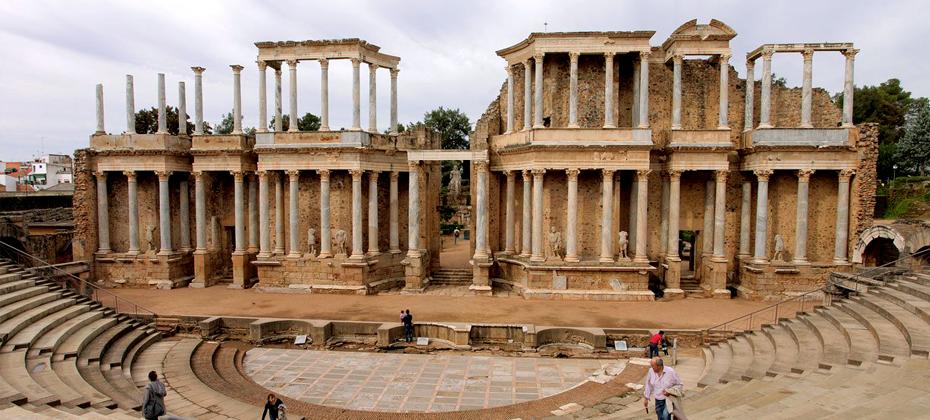
Amidst the rolling landscapes of Extremadura in western Spain lies Mérida, a city where the echoes of ancient Rome resonate through time. Founded in 25 BC by Emperor Augustus as Emerita Augusta, this city was the capital of the Roman province of Lusitania and one of the most significant cities within the Roman Empire. Built as a retirement settlement for veteran soldiers of the legions, Mérida was designed to mirror the grandeur of Rome itself, and today, it boasts more Roman monuments than any other city in Spain.

The architectural prowess of ancient Rome is on full display in Mérida. The Roman Theatre, built in 15 BC, is a stunning testament to Roman engineering and culture. This well-preserved structure could originally accommodate up to 6,000 spectators and is still used today for performances, blurring the lines between past and present. Nearby, the Amphitheatre, constructed in 8 BC, once hosted gladiatorial contests and can house over 15,000 people. Walking through these ancient venues, one can almost hear the roar of the crowds and the clashing of blades.
Another architectural marvel is the Puente Romano, a magnificent bridge spanning the Guadiana River. Stretching an impressive 792 meters, it was once the longest bridge in ancient Hispania and remains an active pedestrian crossing, a testament to its enduring strength. The Temple of Diana, with its Corinthian columns, adds a sacred aura to the cityscape, while the Aqueduct of Los Milagros showcases the Romans' ingenious water engineering, with towering arches that once carried water over long distances.

Mérida’s rich history extends beyond its ruins; it’s a city where ancient traditions blend seamlessly with modern life. The Festival Internacional de Teatro Clásico de Mérida, held every summer, revives classic Roman and Greek plays within the ancient theatre, drawing visitors from around the globe. This festival not only celebrates the city’s Roman heritage but also fosters a vibrant cultural exchange.
The local gastronomy is a delightful blend of Roman influences and regional flavors. Migas, a dish made from leftover bread, is a hearty staple that dates back centuries. Cochinillo asado, or roast suckling pig, is another traditional dish that has been enjoyed since Roman times. For a sweet treat, Torta de la Serena, a creamy sheep's cheese, is a must-try. Pair these with a glass of local Ribera del Guadiana wine for an authentic taste of Extremadura.
Beyond its well-trodden paths, Mérida holds lesser-known treasures waiting to be discovered. The Casa del Mitreo, a Roman villa, features intricate mosaics and provides insight into the opulent lifestyles of the Roman elite. Meanwhile, the Crypt of Santa Eulalia offers a glimpse into early Christian worship, with its beautifully preserved frescoes and chapels.
For those planning to visit, the best time to explore Mérida’s ruins is in the spring or fall, when the weather is mild and crowds are thinner. The city offers a variety of guided tours, but wandering on your own can lead to unexpected discoveries. Wear comfortable shoes, as the ancient stone paths are uneven, and bring a water bottle to stay hydrated under the Iberian sun.
As you stroll through Mérida, take the time to appreciate the details—like the intricate carvings on the Arch of Trajan or the way the evening light casts long shadows on the ancient stones. Each corner of this city tells a story, from its days as a bustling Roman metropolis to its present as a UNESCO World Heritage site. In Mérida, the past isn’t just remembered; it’s lived.
