



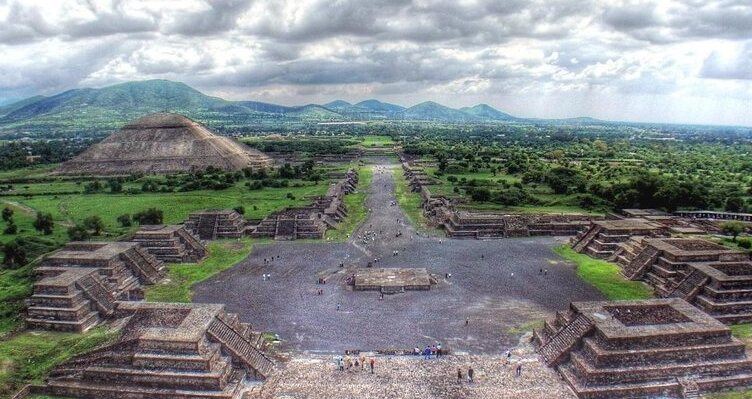
The terraced Pyramids of the Sun and Moon dominate the ancient plaza of this sacred city built between the first and seventh centuries. Located in San Juan Teotihuacán, these monumental structures speak to a civilization that flourished long before the rise of the Aztecs. The Pyramid of the Sun, measuring 250 yards on each side and standing 200 feet tall, ranks as the third largest pyramid in the world. Its sheer size and grandeur are matched only by the intricate artistry of the Temple of Quetzalcoatl, dedicated to the plumed serpent god. This sacred site, once bustling with life, encapsulates the spirit and ingenuity of its builders who remain anonymous to this day, leaving behind a legacy that continues to intrigue and inspire.

History and Origins The origins of Teotihuacán can be traced back to around 100 B.C. At its zenith, between 100 and 650 A.D., it became one of the largest urban centers in the pre-Columbian Americas, housing perhaps 100,000 inhabitants. The name Teotihuacán translates to “the place where the gods were created,” a fitting title for a city that served as a significant cultural and religious hub. During its peak, Teotihuacán was a melting pot of various ethnic groups, which is reflected in its diverse architectural styles and artistic expressions. Significant events include the city’s mysterious decline around 700 A.D., which remains a subject of scholarly debate, with theories ranging from internal strife to resource depletion.
Art and Architecture The architectural style of Teotihuacán is characterized by its monumental scale and geometric precision. The Pyramid of the Sun is notable for its alignment with the sun, with its peak perfectly oriented towards the setting sun on certain dates. The Temple of Quetzalcoatl, also known as the Temple of the Feathered Serpent, showcases intricate stone carvings of serpents, adorned with masks and symbols that highlight the city's religious significance. The city's layout features a grid pattern, with the Avenue of the Dead acting as the main thoroughfare, leading visitors through a journey of discovery. The artistry of Teotihuacán reflects a society deeply connected to its spirituality, with murals and sculptures depicting deities, rituals, and daily life.

Local Culture and Traditions Despite the passage of centuries, the influence of Teotihuacán can still be felt in contemporary Mexican culture. Local customs often draw on the ancient traditions of the site, particularly during festivals that celebrate the equinoxes when thousands gather to witness the sun rise over the pyramids. These gatherings often include traditional dances, rituals, and music that pay homage to the site’s ancient significance. The Day of the Dead is also celebrated in nearby communities, where the spirits of ancestors are honored, echoing the reverence for the past that was so crucial to the Teotihuacán civilization.
Gastronomy Visiting Teotihuacán offers a chance to savor local gastronomy, which is rooted in ancient practices. Street vendors near the site sell local delicacies such as tlacoyos (oval-shaped corn cakes filled with beans or cheese) and quesadillas (tortillas filled with cheese and other ingredients). A must-try drink is atole, a warm corn-based beverage that has been consumed since ancient times. The region is also known for its mole sauces, rich with spices and flavors, showcasing the culinary heritage that remains strong in modern Mexican cuisine.
Lesser-known Curiosities While many tourists flock to the main pyramids, fewer know that beneath the Pyramid of the Sun lies a network of caves, believed by some to have held spiritual significance. Additionally, the city was home to one of the first known urban drainage systems, showcasing advanced engineering capabilities. Some speculate that Teotihuacán may have been a cosmopolitan city with influences from distant cultures, including the Olmecs and Zapotecs, as evidenced by the diversity in artifacts found at the site.
Practical Visitor Information The best time to visit Teotihuacán is during the spring and fall, when the weather is pleasant and crowds are manageable. Early morning visits can provide a serene experience, allowing you to witness the pyramids in the soft glow of dawn. Don’t forget to wear comfortable shoes, as exploring the expansive site involves significant walking. Look for the lesser-known murals in the Palace of the Jaguars and take time to sit and reflect in the Plaza of the Moon, where the energy of the past can still be felt.
To fully appreciate the rich tapestry of history, culture, and artistry of San Juan Teotihuacán, consider using the Secret World app to curate a personalized itinerary that highlights the best of this ancient wonder.
